Showing posts with label great white sharks. Show all posts

Sunday, October 28, 2012

Sharks At Risk In Australia: tagged sharks may be victims of Western Australia hysteria

Researchers in Australia are trying their best to foster calm and rational thinking in the wake of five fatalities in Western Australia due to great white sharks in the past 12 months.  As the number of human-shark interactions increased, so did the demand for some kind of action to be taken by the Australian government.

It's really a classic and unfortunate case of public concerns for safety mixed with businesses concerned over loss of potential business that has fueled, ala Jaws, demands for action ranging from protecting beaches with shark nets and drum lines to actively pursuing sharks that are spotted close to shore to culling sharks in the hopes of reducing the potential for deadly encounters.

The media is subtly fueling the hysteria with reports (see below) of sharks "lurking" off local beaches.  Yes, lurking.  Not swimming  as they have for hundreds of thousands of years in oceans that were always meant for their existence, but lurking.


According to a report in Australia's Herald Sun, in September the Western Australia government authorized $4 million to use drum lines and track any sharks that come close to beach swimmers.  This decision came, in contradiction, on the heels of a government-funded report by Queensland's Bond University that found that drum lines provided no discernible measure of safety from sharks and, in fact, would succeed in catching many other unintended species.  Drums lines are floating drums anchored to the bottom with baited lines attached.  The idea behind them is that, unlike shark nets which are designed to prevent sharks from entering an area or that inadvertently ensnare them, drum lines are specifically designed to hook and kill a shark.

The random killing of white sharks threatens the efforts of researchers who tag and track sharks using various telemetry devices that can provide information on the shark's location.  In fact, the Western Australia government has even voiced an interest in killing tagged sharks when their studied movements bring them close to populated beaches.  But with ongoing tracking information of Western and Southern Australia's white sharks (a population reported to be only around 1,000), scientists can learn more about their movements - seasonal patterns, migration routes, and more - and in so doing can best advise as to methods that would provide for public safety while also protecting the sharks as they roam within the environment nature intended.

"Killing tagged sharks is the worst thing we could do right now,'' said Tim Nichol, marine coordinator for the Conservation Council of Western Australia. "We need to learn more about white sharks and these are the sharks giving us information about their movements.  It is very expensive and difficult to tag white sharks and only a small proportion of the population is currently tagged.''

I can hear the voice of Amity mayor Larry Vaughn, "Now you do what you have to to make these beaches safe, but these beaches will be open for business." 

Source: Herald Sun

Wednesday, October 10, 2012

About White Sharks & Conservation: presentation at the Explorers Club in San Diego

This coming Tuesday, October 16th, I will be giving a presentation at the San Diego Chapter of the Explorers Club.  The presentation will be "Understanding Great White Sharks and the Future of Shark Conservation."  I will be recalling some of my experiences from over 7 years of filming the white sharks at Isla Guadalupe. Also, I will be touching on some of the important issues facing shark conservation as it evolves from a grass roots cause to an international movement, involving new players both pro and con and new strategies.

I have been a member of the Explorers Club, Southern California Chapter, for several years and I find the members to be a varied and interesting bunch.  There are well known members like Dr. Sylvia Earle, Buzz Aldrin, Don Walsh, James Cameron, and many others.  But there are many others who are simply die hard explorers at heart, travelling all around the globe and gaining a great appreciation for the environment and the people that call it home.

The evening starts with a reception followed by dinner, and then it's my turn.  Click here for a PDF that has all of the details if you happen to be in the San Diego area. Or for more information or questions, you can email sandiegoexplorersclub@gmail.com.

Tuesday, August 14, 2012

California's White Sharks: groups petition NOAA to protect a threatened population

Much of my experiences with sharks over the past seven to eight years has been centered on the great white shark, in particular the white sharks that congregate annually at Isla Guadalupe off the coast of Baja, California.  The documentary film, Island of the Great White Shark, that I completed early on during this period, came about during a very exciting time in white shark research.

Dr. Barbara Block of Stanford University and head of TOPP (Tagging of Pacific Predators) had compiled enough preliminary tracking data to propose an amazing theory regarding white shark migratory patterns.  Using various telemetry transmitters attached to sharks, Block and her team were able to determine that the great white sharks found at Isla Guadalupe and off the Central California coast appeared to migrate to an area in the mid-Pacific.  They humorously nicknamed it the "White Shark Cafe."

This was heady stuff.  To think that two populations of white sharks were taking the same journey to one central, albeit rather vast, location - well, this had the imaginations of many shark researchers and advocates in overdrive.  What was attracting them to this area?  A food source?  A potential breeding ground?  And if so, were the Baja sharks and the California sharks related?

One of the next steps, then, was to determine if any mutual DNA traces could be matched between the two groups.  My friend, Dr. Mauricio Hoyos, at the time a young graduate student working under the guidance of Dr. Peter Klimley of UC Davis in Sacramento, California and Dr. Felipe Galvan of the marine institute, CICIMAR in La Paz, Baja, continued his work tagging and tracking the regional hunting patterns of Isla Guadalupe's white sharks, but he also began taking biopsy samples for DNA studies.

As my documentary showed, taking a biopsy sample was not always easy.  It entails getting very close to a shark and poking through the shark's tough skin with a small spear outfitted with a tip that would remove a small plug of flesh.  Over time, many samples were analyzed and compared with biopsy samples that were taken of white sharks in California.  As a filmmaker, I was rooting for a genetic connection as I was hoping that the White Shark Cafe would prove to be some monumental white shark breeding ground.  With that fact, I was contemplating a pitch for a film project to document heretofore unseen white shark breeding behavior.  (Typical for an ambitious producer, I was conveniently ignoring the fact that the White Shark Cafe covers an area the size of Texas, so finding white sharks actually engaged in mating would be like finding a needle in an oceanic haystack!)

The results of the DNA studies found that there were no genetic markers, no familial connection between the two populations of white sharks.  Well, there went my documentary pitch, but far more important than my self-serving interests was the fact that researchers now knew these two groups of white sharks were unique to themselves.  And that made them all the more priceless.  But just how many white sharks are we talking about?

At Isla Guadalupe, several research groups, including the Pfleger Institute in San Diego, had photographically cataloged many of the the island's sharks.  This family album, as it were, has grown over the years and has proved to be a valuable reference guide in identifying sharks as they return year after year to Isla Guadalupe in the fall months.  The current number of sharks at Isla Guadalupe is estimated to be around 100 to perhaps as many as 130 individuals.

However, there was no accurate count for the white sharks of Central California.  In 2006, I interviewed Dr. Klimley for my film and he mentioned that a population study was about to get underway.  Subsequent to that interview, I kept in touch with Peter and a couple of years later, he mentioned to me that one of his students, Taylor Chapple was going to begin the study but they were coming up short on cameras.  I offered Pete and Taylor the use of a spare still camera and underwater video camera, and Taylor began his research in earnest.

Taylor's results were made public last year and the numbers were disconcerting.  Taylor's estimated size of California's adult and juvenile white shark population combined was only 219.  This was far less than anticipated by many shark advocates and it highlighted the perilous nature of the white shark in a world where sharks are either commercially hunted or caught as accidental bycatch in drift and gill nets set to catch other fish commercially sought after.  With great white sharks being slow to mature and reproduce (females typically reproduce every other year and give birth to perhaps 2 or 3 pups), the loss of even one mature white shark can have a profound impact on the population's ability to sustain itself.

In Tuesday's Washington Post, environmental writer Juliet Eilperin reported that three major conservation groups involved in shark conservation have petitioned the National Oceanic and Atmospheric Administration (NOAA) to list the West Coast population of great white sharks as endangered under the Endangered Species Act.

Oceana, the Center for Biological Diversity, and Shark Stewards made their case citing the various genetic studies undertaken by researchers like Mauricio Hoyos, Taylor Chapple, and others.

“The new science sets off alarm bells for all of us, as no one expected the population to be so dangerously low,” said Geoff Shester, who directs Oceana’s California program. “Great white sharks are powerful allies keeping our oceans healthy, and they need us to protect them far more than we should fear them.”

Now the bureaucratic process begins, as the petition and all the research information provided will be reviewed by NOAA.  Should the agency find the petition actionable, then a status review will commence.  This is where an organization like the Center for Biological Diversity will sinks its teeth into the case (pardon the pun), as they are known for wielding the law and the courts to push federal environmental agencies to fulfill their legal obligations and not let issues fall through the governmental cracks.

But it is important for the U.S. to take this issue seriously, not only for the sake of the sharks but for the country's conservation image as a whole and its ability to prod and negotiate other nations to take proactive steps to preserve natural resources.

As Juliet Eilperin reported, "The petition came on the same day that a group of leading American shark and ray scientists, the International Union for Conservation of Nature Shark Specialist Group, issued a report saying 13.5 percent of shark, skate and chimaera species in North and Central America face the threat of extinction."

With the facts at hand - with other nations contemplating white shark hunts as emotional, knee jerk reactions to several unfortunate attacks - this could be a defining moment for the future of California's white sharks and for U.S. credibility as a true ocean conservation advocate.

Source: The Washington Post

Monday, July 30, 2012

From Shark Teeth To Shark Cage: some interesting items in the news

As we approach Discovery's Shark Week, here are a couple of interesting shark items that have been traveling the Internet.

First, a study by chemists from the University of Duisburg-Essen found that the teeth of mako sharks and tiger sharks contain the mineral fluoroapatite (fluorinated calcium phosphate).  Humans' and other mammals' teeth contain an inorganic, bone-like compound, hydroxyapatite.  as we all known from or fluoride toothpaste, mouthwash, and water, there is an advantage to having some fluoride protecting our chompers.

“In order to make teeth more acid resistant, toothpaste often contains fluoride,” Matthias Epple, a professor of inorganic chemistry at the University of Duisburg-Essen, told Discovery News. “In the surface of human teeth after brushing, a small amount — much less than 1 percent — of hydroxide is exchanged by fluoride. In contrast,(the surface of) shark teeth contains 100 percent fluoride. In principle, sharks should not suffer from caries. As they live in water and as they change their teeth regularly, dental protection should not be a problem for sharks.”

So, sharks have built-in cavity protection.  And, as the professor mentioned, they replace their teeth regularly.  A shark can contain as many as several hundred teeth in it's jaw at any one time, with rows of fresh new teeth ready to come to the fore as older teeth are pushed out.  Which brings me to the second interesting shark item.

Many of you have seen images of the white sharks at Seal Beach, South Africa leaping out of the water attempting to either bite down on an unsuspecting seal - or a seal decoy placed in the water by crews hoping to grab some spectacular video or still photos.  South Africa's Chris Fallows has built a respected career out of documenting white sharks going airborne with videos like the "Air Jaws" series and some amazing photographs.

Australia's The Daily Telegraph ran a brief article on Seal Beach with photographer Dan Callister taking his own memorable photographs of airborne white sharks.  As dramatic as his shots were, what caught my eye in several rapid-fire images of a shark grabbing a seal decoy was the clear evidence of the shark shedding a tooth.  You can see it airborne in the image below.

Lastly, for those of you who have ever wondered what it would be like to see a great white shark up close, but decided you had to be an experienced diver or half crazy, Kevin Richberg wrote in The Huffington Post's Travel Blogs his experiences cage diving in Australia as part of his 30 Postcards Project.  What caught my attention was how he described the experience.

When doing any public speaking about white sharks, I often recall the word that first came to mind when I saw my first great white shark.  Serene.  There is a calm majesty to these animals; not a frantic, teeth gnashing demeanor at all.  And that was exactly how Richberg saw it.

"What surprised me was that following the initial excitement of seeing the sharks up close, my mood turned quite quickly to being calm and peaceful. I know you're probably thinking that 'peaceful' is the last word you'd use to describe a great white shark encounter, but for me it was true."


Source: Discovery News
Source: The Daily Telegraph
Source: The Huffington Post

Sunday, July 22, 2012

A Busy (and Bad) Year For White Sharks: shark attack survivor makes a case for calm & conservation

This year has been an unusual one for white shark activity as far as their appearance in coastal ocean areas visited by humans.  There have been reports of white sharks with greater frequency along the California coast and the northeast, off Massachusetts.  And then there are the five fatalities that have occurred this year in Western Australia.

It is too soon to make the assumption that white shark populations have grown significantly since conservation measures have been put in place for both the United States and Australia.  That would take several years of reporting to establish a definitive trend.  Are there changes in the white shark's primary food source that might bring them into greater contact with humans?  Are there more people entering the water, thereby increasing the odds of an encounter?  Or is it all just a statistical anomaly and next year we will all be wondering whatever became of the great white shark?

It's just all too early to tell, but in an event like this, emotions can begin to run high and the demand for some kind of demonstrative, curative action mounts.  The Western Australia Fishing Minister, Norman Moore, is feeling pressure from some segments of the public and is looking into whether he would be justified in declaring, at least temporarily, a suspension of Australia's regulations against catching white sharks.  The thought is that a culling of sharks in local waters will solve the problem.  Typically, when such actions have been initiated, they produce a much greater loss of shark species than is in any way reasonable.  Often, all sharks, whether dangerous or directly implicated, become targets.

In today's online CNN Opinion section, there is a calm, well-reasoned commentary as to why Western Australia should not resort to a knee-jerk reaction in response to the unfortunate events that have occurred this year.  It is a particularly noteworthy opinion as it comes from Mike Coots, a surfer who lost a leg to an encounter with a tiger shark in Hawaii.

I prefer not to editorialize Mike's rational argument in this post, so take a moment and read what he has to say from his very unique perspective.  Click here.

Thanks, Mike.  I hope the good people of Western Australia can see things in the same light as you do.

Source: CNN Opinion

Sunday, January 29, 2012

Expedition White Shark: iTunes app on controversial tracking of white sharks

For those who watched National Geographic Channel's limited series Expedition Great White, where marine biologist Dr. Michael Domeier tagged great white sharks with satellite tracking tags, there is now a companion app for iPhone, iPod, and iPad that allows you to see, in real time, the latest progress in monitoring the location and migratory routes of the sharks that were tagged.
The Expedition Great White series generated considerable controversy among many shark advocates and shark researchers in large part due to the methods used to capture and secure the animals so that tags could be attached and other tests could be performed, like blood and sperm samples. There were issues raised as to whether the elaborate procedure employed to corral the sharks was causing more harm than good and Domeier is currently evaluating the capture procedure and the method of securing the tags themselves to hopefully minimize short- and long-term harm.

While Domeier's current and future methodologies will be scrutinized by many in the shark research and conservation community, the new app does provide some interesting information for the curious that might not be obtained unless a deliberate effort was made to seek it out and and read about it. Such is the clever attraction of many of today's apps.

With Domeier's app, called Expedition White Shark, you can view the latest position data for a group of tagged sharks and examine their past tracking patterns over time as they migrate between either Isla Guadalupe (off Baja, Mexico) or the Farallon Islands (off Central California) and the mid-Pacific area Domeier refers to as the Shared Offshore Foraging Area (SOFA), also referred to as the "White Shark Cafe" by other researchers.

There are other features to the app including pictures and videos - although their operations were a bit clunky in actual use; videos did not present themselves in the right aspect ratio or screen size, so some distortion occurs and many of the other images are of lower resolution. Perhaps that will be corrected in future updates. The app also includes some interesting great white shark facts and a game for children that takes a juvenile white shark through its early years to sub-adult.

Personally, I find the real time tracking of the sharks to be the most interesting feature. My primary concern is that to gain this kind of information, which other researchers have also provided by using more "conventional" means, I hope that, in the future, Dr. Domeier will be able to develop capture techniques that will prove less traumatic for the animals thereby garnering more support from the shark community as a whole.

Available on iTunes, proceeds for the $3.99 app go to Domeier's San Diego, California-based research organization, Marine Conservation Science Institute. The institute is currently working with the Guy Harvey Ocean Foundation on tracking tiger sharks in and around Florida and the Caribbean.

Source:
10News.com
Source: NorthCountyTimes.com

Monday, October 24, 2011

Western Australia's White Sharks: recent fatal encounters bring calls for shark witch hunts

With three fatal encounters with white sharks occurring in just the past few weeks, officials in Western Australia (WA) are reacting, or shall I say overreacting, by suggesting that efforts get underway to catch and kill the shark or sharks responsible.

In the end, this is nothing more than a political attempt to appease the public, to show that the government is doing something to ensure the safety of its citizenry. If Australian officials want to do something that is realistic, you close the beaches, do a shark survey of the area which includes tagging so as to better understand where local white sharks are traveling. And you re-educate, reinforce in the minds of the public that these waters do not belong to mankind; they belong to the animals that normally inhabit them. Man is the intruder, not the sharks.

As reported in the Science Network/Western Australia, shark experts are making their opinions known about any wholesale taking, or culling, of sharks.
"WA Premiers Research Fellow and Professor of Neuroecology in the School of Animal Biology and UWA Oceans Institute, Professor Shaun Collin says the culling of any species of sharks is not the solution. 'Not only will this be indiscriminate killing of a protected Australian species (under both the EPBC Act and state legislation), there is no way of being sure the sharks caught will be those responsible for the attacks.'"

"Shark Ecologist within the Marine and Ecology Program at the South Australian Research and Development Institute Dr Charlie Huveneers says shark attacks are still very rare events with a low probability of occurrence. 'There is no scientific evidence to suggest that the short time period between the recent attacks is a reflection of an increased population of [great white] sharks,' Dr Huveneers says."
The office for the Minister of Fisheries has reported that while the great white shark is protected under the Environmental Protection and Biodiversity Conservation Act of 1999, there is an exemption for the killing of a shark if a human life is in danger.

But one has to examine the actual application of such an exemption. Does it refer to defending a human who is about to be bitten or has just been bitten by a shark and, therefore, it becomes more a case of immediate self-defense? Or does it get broadly applied as a perverse preventative measure: mankind versus the shark, who has the greater right to be there in the ocean? Man?

It all seems to be taken right out of the script for Jaws: an incident followed by public outcry and officials trying to appear as if they are doing something to make the beaches safe once again.

“It sounds a little bit like taking revenge, and we’re talking about an endangered species,” said marine zoologist and shark researcher Barbara Weuringer of the University of Western Australia.

However, unlike the Hollywood movie, there isn't a shark swimming in the waters off Australia with a taste for human blood. While that can be said of rare documented experiences with other land predators like lions or bears, thereby necessitating the removal of that particular animal; it is not the case with sharks - ever.

Hopefully, shark experts will be able to have sufficient influence with government officials, so that some ridiculous oceanic witch hunt does not transpire. What has occurred in Western Australia is a statistical anomaly - to be sure, a tragic one - but an anomaly nonetheless. And tracking down and killing numbers of white sharks may, perhaps, quell any public outcry, but by no means will it guarantee that there won't be another shark-human interaction tomorrow.

If you would like to make your opposition to any shark culling in Western Australia brought to the attention of officials of the Australian fisheries department, David Shiffman of the RJ Dunlap Marine Conservation Program at the University of Miami, brought to my attention a petition site. Click here to visit the website.

Read about scientific opposition to shark culling in the Science Network/Western Australia.
Read more about the recent fatal shark encounters in Western Australia in The Washington Post.
Visit the Care2 petition website.

Saturday, October 8, 2011

A Week for Sharks: CA shark fin ban is now law, Australia concerned over shark diving

It's been a week for sharks, particularly in California. Governor Jerry Brown signed AB 376 into law which bans the trade and possession of shark fins in California. This was a critical piece in a mosaic of shark fin distribution in the northern Pacific ocean.

As reported by COARE (Center for Oceanic Awareness Research and Education), "California's ban complements bans in place in Hawaii, Washington, and Oregon, effectively shutting the west coast of the United States to fin traders. It is estimated that the United States is responsible for 70% of the world's fin imports outside of Asia. With a staggering 85% of those U.S.-bound fins passing through California, AB 376 will have a tremendous impact on shark conservation."

Now we must watch for where the next distribution hubs will appear - there's too much at stake financially for some of these shark fin distributors to simply throw in the towel. And there is also the concern over illegal activities.

But the tide does seem to be turning and other nations are considering tighter regulations or out right bans on shark products. My personal concern is that, for some of the general public, sharks have become the cause d'jour and while there are some hard working advocates who, I am sure, will keep the fires burning for more conservation and regulation, I worry that the general public might tire of the cause - in today's Information Age, attention spans can dry up in the blink of an eye - and without public support, commercial shark fishing lobbyists and business representatives will jump on the opportunity to sway politicians in their favor. Only time will tell.

"The world has been watching and waiting. With similar efforts underway in parts of Canada, and with a ban proposed in China, California's efforts hopefully will ripple into many other places," said COARE.

However, one avenue whereby people can appreciate sharks up close in the wild may soon be curtailed or at least limited. Australia is one of three or four primary locations in the world where people can cage dive to view great white sharks. But Australia's ABC News reports that there
are new findings that white sharks are staying in close to coastal areas, where they are often baited for the shark diving operators, and anecdotal reports of an increased number of shark/surfer encounters has some saying that the number of operators should be halved from four to two and that the number of days in which they can chum for sharks should also be reduced. (Click image to view video.)

There have been studies, both in Australia and Hawaii, that show that the sharks' response to chumming over a given period is a transitory behavior and does not equate into 1.) a significant change in the shark's normal feeding behavior and 2.) that the sharks do not equate the boat-supplied food with humans. However, some thought should be given to the fact that in Australia, they are currently chumming for white sharks as much as 270 days a year - double that of just a few years ago.

On a personal note, today I am leaving for San Diego, California to embark on my seventeenth trip to Isla Guadalupe off the coast of Baja, Mexico, compliments of Shark Diver. Isla Guadalupe is one of the world's premier sites for viewing great white sharks. A population migrates to the
island in the fall months and though Mexican government regulations have greatly scaled back any baiting of the sharks, there are still plenty of encounters to keep the cage-bound divers thrilled and satisfied. I will be accompanying my friend and photojournalist, Budd Riker on his inaugural trip as he takes notes and pictures for a future photo magazine article.

While some zealous Mexican conservation groups have expressed concern that the shark diving operators at Isla Guadalupe have, over the years, disrupted the normal behavior of these sharks; in the seven years that I have been coming to the island I have yet to see any evidence or reason for concern. When the sharks were more vigorously chummed and baited in the past, the sum total of what they consumed was a mere drop in the bucket compared to the normal requirements for their diet which, for adults, consists of primarily seals and sea lions. And as the sharks would inhabit the waters around Isla Guadalupe for just three to four months, it is reasonable to assume that they didn't spend the next eight months wasting away, waiting for when they would return to Mexican waters for some leftover fish parts.

So, I will be heading out in just a few minutes and will post a follow up when I get back in a few days. In the meantime, shark advocates, no time to rest on our California legislation laurels. There's still more work to be done.

Thursday, May 19, 2011

Shark Tagging Controversy: permits are being sought for a hotly contested technique

The controversy regarding shark researchers who were tagging great white sharks with satellite tags by virtue of a very elaborate and hotly contested technique just does not seem to want to go away. In part, that is due to the indignation of many shark advocates who feel that the sharks were unnecessarily exposed to risk that was not justified by the data that was obtained. And, in part, it is due to the hard line position taken by many of the participants involved and the government officials who provided the permits to allow it to take place.

While there were those who questioned the technique - hooking a white shark, tiring it out and hoisting it aboard the deck of a ship, bolting on a satellite tag, and hopefully releasing the animal unharmed in a matter of minutes, the situation became a major media disaster when one capture went terribly wrong and a white shark may have been traumatized and left mortally injured. A year later, the shark was videotaped looking emaciated and apparently severely injured from various shark bites. While some gave the lead shark researcher, Dr. Michael Domeier, the benefit of the doubt, others accused Domeier's technique of injuring the shark and setting it on a course of poor health and a bleak outlook.

Recently, San Francisco's ABC News station KGO-TV ran a report on the entire controversy as a follow up to the news that Michael Domeier had requested another permit from the National Marine Sanctuaries, which is entrusted with the conservation and protection of the great white sharks at Northern California's Farallon Islands.

Here's the report. You can make up your own mind as to what the future action of the government agency should be regarding permits. And, you can let your opinion be known to the Farallon Marine Sanctuary Superintendent Maria Brown at maria.brown@noaa.gov.


Thursday, December 9, 2010

Filmmaker's Journal: Mystery, a white shark never to be forgotten

In 2005, I began filming what was to become Island of the Great White Shark, a documentary on the white sharks of Isla Guadalupe, Baja and the important working relationship that exists between the shark diving operators and Mexican researchers. It took several seasons of filming at Isla Guadalupe, returning year after year, looking to grab one more shot that was needed for editing - at least that was always the excuse. Actually, any chance I got to see these amazing predators first hand and up close, eye to eye - well, I took it.

During one particular trip to the island, during the second season of filming, I had one of those special encounters, the memory of which has stuck in my mind and I hope I never give it up. We had been seeing sharks all day and, as is the case at Isla Guadalupe in the latter part of the season, they were mostly large females. Due to the rough and tumble nature of shark mating, mature females are often badly scarred. This comes from amorous males who secure their grip on the female prior to mating by biting her around the head and gills.

On this trip, I was filming within the cage - although I use that term rather loosely. Professionally, I tend to not use a cage but in my earlier years working with white sharks I would at least use the cage as a secure platform from which I would lean out into open water to get striking close-ups of the sharks as they pass by. Familiar and, for the most part, totally disinterested in the cages or the divers inside, the sharks, however, would become curious about this large protrusion (me!) extending from the cage into their domain.

Following a lull in shark activity, I was about to surface when out of the depths below a large female rose up to see what was going on. Attracted by the scent of fish (this was before restrictions were imposed on chumming), this 16-foot leviathan came into view and she was truly magnificent. At around 3,000 pounds, she was fully mature and perfect in shape and proportions, with hardly a scratch on her - absolutely stunning. I started to roll tape, hoping I would get a shot or two before she moved on.

Her name was "Mystery", given to her by researchers who have studied and cataloged the great white sharks of Isla Guadalupe. Sharks can be easily identified by various body markings and scars. Even the pattern of gray above and white below that runs along the side of the shark's body acts like a lasting fingerprint.

Mystery was quite curious with me and provided me with a wonderful close pass right in front of my lens before sniffing the bait floating in the water and then gliding off into the gloom, out of sight. "That was a really great shot," I thought.

And then she returned. Another close pass, another swing by the bait, and then you could see her cruise just along the edge of visibility. I was beginning to get a feel for her whereabouts, her preferred movement patterns, so I could anticipate her approach and ready myself for when she either approached the bait and then swung by to take another look at me, or vice versa.

Each encounter I expected to be the last and she would then move on to more interesting opportunities. But she stayed. And for the next hour and a half, I had an ongoing love affair with a gorgeous animal, the likes of which I have never seen since. When I returned home, I had marvelous new footage to add to my documentary. Mystery became the leading lady of Island of the Great White Shark and much of the natural beauty of these animals that I was able to convey to the viewer I owe all to her.

Mystery appeared the following season at Isla Guadalupe but, sadly, I have not seen her since nor have I heard of any reports of her being seen by other divers. The great white sharks of Isla Guadalupe are pretty regular in their migrations - from the island to the mid-Pacific and back again, over and over. It's been several years since I have last seen her and I worry that she may have met her end, perhaps at the hands of poachers or illegal shark fishing operations. White sharks are protected at Isla Guadalupe and within U.S. territorial waters, but their annual migrations take them well into unprotected waters.

Mystery. She may truly be a mystery now, but the memory of our brief time together - not as predator and prey, but as two intensively curious fellow creatures - will always remain as one of the highlights of my underwater filming career.

Island of the Great White Shark is available on DVD at Amazon.com and in gift shops at several major aquariums across the country. Learn more about the film and the white sharks of Isla Guadalupe at www.islandofthegreatwhiteshark.com.


Wednesday, July 14, 2010

Filmmaker's Journal: Shark Diver - the Movie

This past December, I had the pleasure of working on a film project that was the brainchild of marine biologist Luke Tipple and his director/brother Mark Tipple. It was to be the pilot episode of a proposed series titled Shark Diver. In this opening segment, it sets the stage for a series of worldwide shark encounters with Luke as the central figure, supported by a cast that includes an investigative reporter, a zen-like scuba master, and more. I was on board as Director of Underwater Photography and topside "B" camera operator.

The end result is a very entertaining piece that sets the stage for more adventures while also providing an important insight into shark ecotourism, research, and conservation.

The production company, What We Do Media, has set up a web site where you can view the pilot episode or order an HD-quality download or DVD. It's a different twist on providing both entertainment and education, so check it out.


View or download the film at SharkDiverMovie.com.

Wednesday, July 7, 2010

Shark Week Approaches: annual event nears; alternatives to sensationalism

Over the next couple of weeks, those of you who watch Discovery will be seeing advertising for the channel's annual Shark Week programming that takes place in the first week of August. For over 20 years this has been one of Discovery's most successful programming events with tens of millions of viewers - from die hard fans to the mildly curious.

For some shark advocates, the week's programs and the images they convey of the shark have been a source of disdain. Over-sensationalized programs that focus on shark attacks involving humans perhaps appeal to a dark, lower common denominator interest in sharks but it is one that represents, unfortunately, a wide segment of the Shark Week viewing audience. Discovery knows this very well.

What is in store for Shark Week 2010 is, at this point, anyone's guess - the Discovery Shark Week website is currently still listing last year's show schedule. Whatever it turns out to be, there are alternatives that can provide accurate representations of sharks and the efforts of those scientists dedicated to studying them - educational, enlightening presentations while still entertaining.

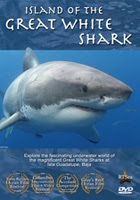
So, in a shameless plug, may I suggest Island of the Great White Shark. This award-winning documentary, which I produced in 2008, features the great white sharks of Isla Guadalupe, Baja, where I have been filming these magnificent predators/scavengers for over 6 years. The film paints a more realistic and natural portrait of the feared and often misunderstood white shark, while also documenting the efforts of dedicated researchers who study the sharks' day-to-day behaviors to better understand how best to protect and conserve them. The film also shows shark eco-tourism operators supporting the researchers' efforts while providing divers with a unique experience to see white sharks in the open ocean - something that has been responsible for generating many new shark supporters.

The Island of the Great White Shark DVD is available through Amazon.com and several aquarium gift shops nationwide. If you have purchased the DVD in the past, my thanks. If not, then learn more at the film's website and think about adding it to your DVD collection. Independent documentaries are generally not big money-makers for those involved - they usually are labors of love with participants dedicated to getting their message across. With Island of the Great White Shark, I am always hoping that someone will see these animals that are so critically important to a healthy marine ecosystem in a different light - one that will help to insure their continued survival.

Learn more at the Island of the Great White Shark website.
Learn more about the film at Amazon.com.

Wednesday, May 12, 2010

Underwater Video Boot Camp: better videos and beautiful sharks

If you or any of your friends have been tinkering with underwater video - either as a hobby or with hopes of becoming a serious filmmaker, here's an opportunity to learn some skills while at the same time getting a chance to behold one of the most magnificent of ocean predators.

In association with Shark Diver, I will be holding an Underwater Video Boot Camp aboard the MV Horizon as we make our way to Isla Guadalupe, Baja to cage dive with great white sharks. These amazing sharks migrate to Isla Guadalupe during the fall months and we will be there during the height of the season (Oct. 10th thru 14th); so you can expect plenty of frisky male and large female sharks.

The Underwater Video Boot Camp is a comprehensive look at underwater documentary filmmaking, designed to not only help make your videos technically better but to also deliver powerful and dramatic messages to best suit your medium of interest: television, online, and more. In fact, much of what you'll learn is just as applicable above the waterline as below.

In addition, Boot Camp members will be eligible for a "mini-film festival" by submitting a 5-minute video of their trip. The videos will be judged by a panel of independent UW videographers and the winner will receive a FREE trip to Isla Guadalupe in 2011.

Here's a short promotional video:


So, come join the fun. For more details, you can call Shark Diver today at 415-235-9410.

Monday, February 22, 2010

Great White Sharks: local fishermen catch juveniles in Baja, Mexico

Having spent a considerable amount of time filming the great white sharks of Isla Guadalupe, I am always dismayed with reports like this one from SharkDiver.com:

Great white sharks 'more endangered than tigers?' - Very likely

Saturday, February 20, 2010

Researchers in California and around the world are raising concerns about the population statistics of white sharks in our oceans.

Some are suggesting the population numbers are less than even tiger shark populations worldwide...and we would agree with that assessment.

For the past 5 years Shark Diver has been monitoring one small fish market in Ensenada, Mexico. What we have found is a thriving white shark fishery sold as "swordfish" for 60-100 peso per kilo on most days.

This image came from a recent trip down to the market with Captain Greg Grivetto from Horizon Charters in late 2009.

We were there to document the take of white sharks and did not have to wait long. Within 10 minutes of our arrival this 6-foot animal showed up. It was a female "young of the year."

Up and down the coast of Mexico and Baja these animals are regularly taken by small co-operatives who drop long lines overnight seeking more profitable species like swordfish and tuna.

From our conversation with local fishermen in Ensenada these white shark pups are not being targeted, they are an unfortunate by-product of a local fishery, and most animals arrive dead at their boats to be sold later in the day.

Direct evidence of a younger generation of sharks that never get to add to the population cycle. If the numbers of animals at this one small fishing port are evidence of a larger fishery, we might suggest the entire population is at risk, if not declining.

Tracking data, showing these same animals moving into the Sea of Cortez for extended periods of time, do not bode well for their survivability in this well-known, and notorious, hook-filled environment.

Saturday, January 23, 2010

Wintering White Sharks: possible migrations along U.S. east coast

A possible migration corridor has been identified for great white sharks on the east coast of the U.S. A satellite tagging study was initiated in the fall by the Massachusetts Division of Marine Fisheries and some of the early results are intriguing. It is possible that the great white sharks that appear off the New England coast during the summer months - suspected of feeding on seal populations there - travel south during the winter months based on the results of a tagged shark who has appeared as far south as Jacksonville, Florida.

Satellite tagging has been used on great whites and other shark species to record location, speed, depth, and ambient temperature. Typically, a well-placed tag will record data for 30 to as long as 90 days then release itself, float to the surface, and download its data to satellites overhead. Researchers must wait patiently then sift through a mountain of data when it is downloaded all at once. Satellite tags can provide more long-range data than regional telemetry tags (like those documented in my film, Island of the Great White Shark) but are also subject to being dislodged prematurely. A newer technique, SPOT tagging, bolts the tag to the shark to insure a significantly longer monitoring period, but requires that the shark be caught and brought on board; a technique that has raised considerable controversy because of the physical impact imposed on the shark during the procedure.

In the summer months, several species of shark inhabit the New England coastline, from basking sharks to thresher and blue sharks to the great white white (although not in significant numbers). This new tagging study is the first indication that, like their distant cousins throughout the world who exhibit distinct migratory patterns, white sharks could very well be moving up and down the east coast based on seasonal temperature changes and any changes in prey populations that those seasons impose.

Great whites have already been shown to migrate from the west coast Farallon Islands to the mid-Pacific; same for the white sharks at Isla Guadalupe. White sharks have been monitored moving from South Africa all the way to Australia and back. While there can always be the occasional exception, there is continuing evidence that these sharks and other pelagic species develop critical migratory patterns. Our concern would be, what would happen to these sharks if their migrations were intercepted by commercial fishing fleets? Or what would happen to the overall health of their populations with changes in ocean temperature due to global warming? How ingrained are these patterns and what would happen if external factors were altered - could the sharks successfully adjust?

Sunday, January 17, 2010

Global Shark Diving: from Fiji to around the world, different strokes for different sharks

An article that ran in the New York Times on shark diving in Fiji has been making the rounds of several of the shark-related blogs, not because the article is some scathing expose but because it is a well-balanced look at shark eco-tourism as practiced at Beqa Adventure Divers.

What caught my attention was how the article, in a broad sense, highlighted the fact that shark eco-tourism (or shark diving, if you like) is a varied activity - something that proponents, and even opponents, need to keep in mind when discussing it. Unfortunately, it often is generalized under one heading: "You've gotta be crazy." But there's much more to it than that.

When discussing shark eco-tourism you have to consider the location, the species of shark involved, and the methods involved.

Location:
Shark diving should only take place in areas where there are recognized or resident populations of sharks. The anti-shark furor that occurred in Oahu several months back was initiated because someone wanted to start an operation in an area not known for sharks but highly populated by recreational beach goers. Bad business move.

In Fiji, the shark diving operations work in areas where the reefs are healthy and protected from overfishing (ie: a healthy reef includes resident sharks as part of a balanced marine ecosystem) and the boats keep an eye out to preserve what is a valuable source of tourism revenue for the islands.

Shark Species:
Great whites, tigers, lemons, bulls, Caribbean reef, Galapagos, whale, and many more species have been the center of attention with different operators around the globe. But each species has its own behavior, it's own level of interest or disinterest in the participants; and so each species requires its own set of protocols so as not to endanger the shark or the diver.

In Fiji, there are large groups of various reef sharks that can be active and put on quite a "show", but at deeper depths, bull sharks require more specific handling. And the great white sharks, that I have spent so much time with, require close attention not so much because of their size but their curiosity.

Methodology:
So, because of various behaviors presented by different species, the methods by which divers can be safely exposed to these animals can also vary. From open water experiences to using
chain mail suits to working within a cage - these decisions must be carefully considered to insure both the most educational and enlightening experience while also being the safest for the divers.

And there must be consideration as to any adverse or disruptive behavioral impact on the sharks and their surroundings. To date, the available research seems to indicate that, if carried out responsibly, there is, at worst, only a temporary effect on the shark's conditioning behavior and that there is nothing that indicates negative changes in their natural feeding or migratory behaviors.

Shark eco-tourism can be an effective way to communicate the importance of shark conservation whether to a specific audience of participants or to a non-participating public at large - if it is done right. And it must be done right because shark diving doesn't fly under the radar of media scrutiny.

Congrats to Beqa Adventure Divers for some well-deserved and balanced media coverage. One of these days, I'll get back to Fiji and you guys can introduce me to some of your sharky friends!

Read NY Times article.

Saturday, December 19, 2009

Island of the Great White Shark: sale priced today at Amazon.com

Today is known by retailers as "Black Saturday" for those who are cruising the web for last minute gift ideas, and I noticed that Amazon has priced Island of the Great White Shark at a reduced price. The U.S. east coast is getting hit with quite a winter storm and it's expected that many holiday shoppers will think twice about venturing out, so there should be plenty of online inducements.

I don't know how long Amazon will have the DVD on sale (it's their call to lower their price; they don't alert me), but if you're interested in a comprehensive, accurate, and educational look at the great white sharks of Isla Guadalupe, Baja, check it out.

Sunday, December 6, 2009

Island of the Great White Shark: holiday stocking stuffer

Here is my one self-serving plug for a holiday gift item: Island of the Great White Shark on DVD.

Island of the Great White Shark was the first comprehensive documentary to examine the great white sharks of Isla Guadalupe and detail the working relationship between shark diving operators and dedicated Mexican marine researchers. You can experience what it's like cage diving with these magnificent sharks while also getting to see them in their real environment: critically important predators shown as they truly are and not the malevolent monsters of cinematic legend.

"A primal scene of unearthly beauty. Excitement and information pepper this film." - WetPixel.com

"Beautiful videography, good graphics and information." - Dr. Bob Hueter, Director, Mote Marine Center for Shark Research

Reasonably priced and available at Amazon.com or the gift shops of several leading aquariums, Island of the Great White Shark succeeds as a visually striking and informative overview of one of nature's most legendary creations, how it is being studied, and what threatens its future.

Wednesday, December 2, 2009

Isla Guadalupe's White Sharks: making Mexico aware of its natural resources

Mexico, like many Latin American countries, is a land with a rich history but facing many challenges in today's world. There are Mexican-based conservation organizations and government agencies in charge of overseeing the country's natural resources but on some issues the general populace is either in the dark or at least has not yet been propelled to care. Other priorities considered more fundamental seem to take precedence.

This past fall, I was approached by WildCoast/CoastaSalvaje to film the great white sharks at Isla Guadalupe for Televisa SA - one of the major Latin American networks. Televisa was planning a multi-part news piece on the island, providing Mexican viewers with an inside look at this marvelous place, shielded by the Mexican government as a protected biosphere. The end result was an interesting series that placed considerable focus on the white sharks that migrate to the island and the eco-tourism and research that takes place there.

The Mexican people need to appreciate the importance of white sharks as a key component in a healthy marine ecosystem and to know that Isla Guadalupe serves as a crucial migratory hub for a sizable portion of the eastern Pacific population of white sharks. Unfortunately, you can find caught juvenile white shark for sale in Ensenada fish markets (sometimes "mislabeled" as marlin or swordfish) and the loss of these juveniles along the Baja coast serves to only further impact the decline of this important ocean predator.

I came across the program on YouTube and so here are the show segments - albeit in Spanish. If you don't speak the language, you can get the gist from the images. I was assigned to provide the underwater footage and it was a bit challenging because on this trip my proximity was confined to the cages and the sharks, while plentiful, were being a bit coy.


Monday, November 9, 2009

White Shark Tagging: controversial technique flounders in the Farallons

Controversy is now dogging the white shark tagging efforts of Dr. Michael Domeier of the Marine Conservation Science Institute. The SPOT (smart positioning or temperature) tagging began in Isla Guadalupe under the eyes of a film crew for a National Geographic Channel program to air on the 19th. It involves a technique whereby the shark is hooked and reeled on board, aerated with a water hose, while the crew literally drills and bolts a satellite transmitting tag to the shark's dorsal fin.

This is a rather elaborate tagging technique that has generated much concern within the shark conservation community (click here for prior posting about the Isla Guadalupe taggings, and here are two from other sites: click here and here).

Now, Dr. Domeier has moved northward to the Farallon Islands and, with the approval of Maria Brown, superintendent for the Gulf of the Farallones National Marine Sanctuary, has been tagging sharks there but with less than optimal success. Apparently, one shark swallowed the hook deep into its throat causing the bait's float to become lodged in the shark's jaws, thereby blocking access for the aerating water hose and requiring the cutting of the hook by working straight through the shark's gills. All in all a disaster in humane animal treatment as far as I'm concerned.

While there are concerns about the stresses this type of tagging places on the shark, there is also the question as to the need for more data acquired in the Northern California area. Dr. Barbara Block of Stanford, Dr. Pete Klimley of UC Davis, and others have amassed a considerable body of data that tracks the migratory patterns of these animals. They and their colleagues just recently issued a detailed report that can be viewed in the Proceedings of the Royal Society, published online on 11/04/09 in the Biological Sciences section ("Philopatry and migration of Pacific white sharks").

I always felt that this particular tagging technique was a more elaborate mousetrap than necessary. Now its efficacy has become controversial, the California data may ultimately be redundant, and the National Marine Sanctuary must defend a decision to allow catching a protected species in a manner that would most likely not be allowed for, say, a protected marine mammal.

Too many questions, too much controversy. . .

Read article in Bay area bohemian.com.