In case you just happen to be in the area, would you like to cruise through the towering kelp beds of California's Monterey Bay? Perhaps you'll come across a darting sea otter or a school of calico bass seeking shelter, partly camouflaged by the waving fronds of giant kelp. And maybe along the way, you'd like to pick up a few ideas and tips on composing an underwater video that packs a message and a punch, better than last year's family vacation video to Wally World?
If so, then check out the Underwater Video Boot Camp workshop and 2 dives that I will be conducting next week as part of the festivities at the BLUE Ocean Film Festival & Conservation Summit. Not only will I be covering what many of those buttons and switches do, but we'll also look at preparing a meaningful storyline, what style of editing might be best for your video, and what types of distribution formats you might consider.
Two dives in some of the most acclaimed kelp forests in the world plus a full introduction to underwater video - a full day and a great start to a fabulous week at the BLUE Ocean Film Festival. Only $125 to registered festival attendees - that's a deal! And arrangements can be made for rental dive gear and even a basic video camera, if you're traveling.
If you or any of your friends have been tinkering with underwater video - either as a hobby or with hopes of becoming a serious filmmaker, here's an opportunity to learn some skills while at the same time getting a chance to behold one of the most magnificent of ocean predators.
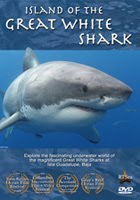
In association with Shark Diver, I will be holding an Underwater Video Boot Camp aboard the MV Horizon as we make our way to Isla Guadalupe, Baja to cage dive with great white sharks. These amazing sharks migrate to Isla Guadalupe during the fall months and we will be there during the height of the season (Oct. 10th thru 14th); so you can expect plenty of frisky male and large female sharks.
The Underwater Video Boot Camp is a comprehensive look at underwater documentary filmmaking, designed to not only help make your videos technically better but to also deliver powerful and dramatic messages to best suit your medium of interest: television, online, and more. In fact, much of what you'll learn is just as applicable above the waterline as below.
In addition, Boot Camp members will be eligible for a "mini-film festival" by submitting a 5-minute video of their trip. The videos will be judged by a panel of independent UW videographers and the winner will receive a FREE trip to Isla Guadalupe in 2011.
Here's a short promotional video:
So, come join the fun. For more details, you can call Shark Diver today at 415-235-9410.
Ever since movie-goers watched Dorothy step out of the farmhouse and into the rainbow-hued Technicolor world of the land of Oz, filmmakers have worked with color film and video but often kept a soft spot in their hearts for black and white imagery. There's a stark beauty in its expression of pure contrast; and yet, it provides a myriad of subtle shadings - something that millions of colors cannot achieve.
From the gritty photos of Matthew Brady and war photographers like Joe Rosenthal and many others, to Ansel Adams' striking images of Yosemite and other U.S. forests and national parks, to the black and whites films of the '30s and '40's; monochromatic images have often been a welcome respite to color pictures and films.
When it came to underwater images, it seemed that color would understandably have a strong foothold. Capturing the explosive vibrant color of coral reefs and exotic fish seemed a natural fit and it has remained the established format to date.
But black and white can be fun and challenging - and sharks can lend themselves as excellent subjects because of their basic gray color and contrasting counter-shading (check out the Oceanic Dreams blog for some wonderful examples of b&w stills of sharks). For video, it usually requires more time spent in post-production, because what might look great in color, may not deliver in black and white without some tweaking of gamma, black, and contrast levels. But the end results can be worth all the effort.
Here's a brief experiment I completed recently using footage shot in the Bahamas of lemon and tiger sharks. Black and white helps bring out some of the wonderful effects of sunlight beaming through the blue water of the Bahamas. And leveling the playing field to just black and white helps focus attention on the graceful movements of the sharks. But it can be tedious work, requiring each and every shot to be adjusted and compared to the rest. Tedious but worth it.
The RTSea Blog was started in 2008 and now includes over 950 entries available for media or academic background research use, including observations on a wide range of topical issues and events involving the oceans, sharks, and nature in general. After a brief break in 2012-13, there will now be more posts forthcoming.
Use keywords in the Search tool below or at the bottom of this web page to locate articles of interest.
Cinematographer/media consultant & producerRichard TheissandRTSea Mediaadministers this blog with the intent that information will be disseminated across the Internet and, in so doing, will illuminate others as to the serious challenges that lay before us in preserving and protecting our natural resources.
Search This Archive
Richard Theiss - DP/Media Consultant & Producer
Available for HD video assignments, media consulting, and speaking engagements. For contact information, click on the image above.