skip to main |
skip to sidebar
 In June of 2006, one of the year's high points in ocean conservation occurred with the designation of the Northwestern Hawaiian Islands as a marine monument, providing well-needed federal protections as a marine sanctuary and no-take zone. A similar effort is being promoted for the Northern Marianas Islands.
 The Northern Marianas Islands, a commonwealth with political ties to the United States (it abides by most federal laws and citizens carry U.S. passports), is part of the Marianas Island chain ranging from Guam in the south to the northern islands that include Saipan, Rota, and Tinian. Geologically linking these islands is the famed Marianas Trench, the lowest point on the Earth's crust.
 The Pew Environment Group is leading the charge, with the support of the Coral Reef Alliance,
 to have the northernmost area of the islands designated as a marine monument, similar to what was done for Hawaii. The area in question is relatively remote with pristine reefs, several species of seabirds and sea turtles and, of particular interest, deep sea vents due to the area's undersea
 geologic/volcanic activity - a terrific potential deep sea laboratory.
At this point, the campaign to have the area designated a marine monument is in the early stages, with public awareness as a key motivating factor. Log on to the Pew Environment Group or Coral Reef Alliance web sites to learn more and add your name to a growing letter campaign to make the designation a reality.
 After having had the opportunity to travel through a portion of the Northwest Passage, above the Arctic Circle, documenting evidence of climate change for the marine research organization InMER,
 I became more interested in what is happening to this region and the implications. There are some serious issues beyond what is most often portrayed in the news: the threatened polar bear.
In the recent issue of SeaWeb's Marine Science Review #290: Climate and Climate Change, several articles and abstracts outline studies made regarding the effects of rising temperatures  on the permafrost that forms the primary ground cover in the region. Permafrost is, in essence, a frozen soil layer. The upper or active portion of the layer supports flora with shallow root structures - different types of moss and lichen abound and bushes or trees do not grow there.
But also trapped in that frozen layer is a considerable amount of organic carbon and methane and as the temperature increases, those potential greenhouse gases can be released. In terms of greenhouse gas emissions, it makes the permafrost a ticking time bomb.
The SeaWeb review sited two articles: "Vulnerability of permafrost carbon to climate change: Implications for the global carbon cycle" (BioScience 58[8], 2008) and "Soil microbial respiration in arctic soil does not acclimate to temperature" (Ecology Letters 11[10], 2008). Really exciting, attention-grabbing titles, I know, and they're very heavy on the academic/scientific gobbledygook but what it boils down to is that with even a slight increase in temperature, the permafrost experiences an increase in soil decomposition that releases the trapped organic carbon and methane. And there is a considerable amount held in that frozen soil.
It's another example of the "cascade effect" where one change - an increase in temperature - causes a myriad of other changes, with some of these changes feeding back into the original issue and exacerbating the problem.
The polar bear can generate well-deserved public sympathy and hopefully provide impetus to address the problem of climate change. But it's a multi-faceted problem with potential land mines right under our feet.
 I had the pleasure of attending a press event for the Undersea Voyager Project that was held at one of my regular stomping grounds, the Aquarium of the Pacific in Long Beach, CA. It's great to attend these events as you get to meet new people with similar interests, concerns, and passions for marine conservation.
The Undersea Voyager Project is headed up by Scott Cassell, who has done considerable  study and research on the Humboldt Squid - a particularly voracious predator typically found in deeper water but makes more local appearances from time to time. The primary thrust of the Project is an ambitious program involving submersibles and a variety of different marine science projects, culminating in the development of a larger submersible that will act as an undersea classroom bringing science to the general public in a very real and as-it-happens way.
I find this very exciting because throughout my involvement in marine conservation as a filmmaker and giving screenings and lectures, I have found that there is a tremendous amount of scientific data that does not get effectively translated into issues, implications and solutions for the general public to understand and appreciate. As an example, we have decades of data documenting climate change - and yet there are still many people who refuse to accept it.
Organizations like the Undersea Voyager Project can be of tremendous benefit in enlightening the public, young and old, to important issues regarding our oceans. Marine conservation must not be obscure or vague; it must be made real and tangible to all people: to the general public, to the decision-makers, and to the future generations of scientists-in-the-making.
Check out the Undersea Voyager Project web site and give it your support.
 In the U.S., outgoing administrations participate in a time-honored tradition of last minute skulduggery that has ranged from taking the White House linen and gluing the computer keys to issuing executive pardons and orders or rulings of dubious merit - Democrats and Republicans alike have been guilty.
Questionable orders can be overturned under the Congressional Review Act. However, the effectiveness of the act is hampered by the requirement that the order or regulation being overturned must be done in its entirety - and many bad rulings are attached to a good one, thereby providing a protective shield.
Whether you are an advocate or critic of the past administration, it can be a fair statement that its record on the environment has not been stellar. A concerted effort was made to avoid recognizing scientific advice and reports as required for determining species status under the Endangered Species Act if doing so would mean recognizing the existence of global warming (I have noted this in previous postings). In its closing days, the current administration has been generating a series of executive orders and/or rulings that roll back many environmental safeguards. Here are a few:
- Federal agencies would no longer be required to have government scientists assess the impact on imperiled species before giving the go-ahead to logging, mining, drilling, or other development.
- The rule would also prohibit federal agencies from taking climate change into account when weighing the impact of projects that increase greenhouse emissions.
- Finalized a rule that allows the coal industry to dump waste from mountaintop mining into neighboring streams and valleys
- A rule relaxes air pollution standards near national parks, allowing coal plants to be built next to many of our most spectacular vistas - a rule established over the objections of 9 out of 10 EPA regional administrators.
- Opening up 2 million acres of mountainous lands in Colorado, Utah, and Wyoming for mining oil shale, even though the technique consumes considerable water resources (and the administration has admitted it doesn't know if the technology is viable).
- A new regulation will allow animal waste from factory farms to seep, unmonitored, into our waterways. The regulation leaves it up to the farms themselves to decide whether their pollution is dangerous enough to require them to apply for a permit.
- A similar rule will exempt factory farms from reporting air pollution from animal waste.
- In the chemical industries, more than 100 major polluters have been exempted from monitoring their lead emissions and a rule is proposed to allow industry to treat 3 billion pounds of hazardous waste as "recycling" each year.
Now it's true that environmental safeguards have always been costly to big business and impose hardships on their established revenue models. But in light of an overwhelming and growing body of evidence, to ignore them or worse, circumvent them, is the epitome of shortsighted thinking, oriented towards only short-term goals - something that we as humans have been notorious at doing.
For the incoming administration, it will be difficult enough dealing with the challenges of climate change/global warming and developing an effective long-term energy policy. But it will also have to deal with the many environmental land mines the current administration has left in its path.
 There has been a lot of media attention in the past few days on a YouTube video showing a great white shark breaching a shark cage at Isla Guadalupe. While this event happened last year, it has suddenly become an item of interest across several online and broadcast news media outlets. As often happens with the media regarding shark-related incidents, the event has for the most part been presented for the benefit of its sensationalistic aspects - with key facts that would place it in its proper context being left out.
The breach occurred as a 15-foot white shark swallowed a fish suspended from a line to the boat (known as "hangbait"). The shark took the bait and continued forward, careening into the cage and once wedged between two bars, proceeded to thrash and severely damage the cage - much to the chagrin of the two divers inside (who escaped unharmed).
What is clear in the video is that the boat crew in charge of handling the hangbait in the water did not adhere to proper and safe baiting techniques - primarily in allowing the hangbait to float in front of the cage, leaving a shark that approaches from directly behind the bait without any room for maneuvering away from the cage. Comments have been made in some reports that the shark rolled its eye back (a protective action often part of the bite reflex) and in so doing, blinded itself to the oncoming cage. That's nonsense to blame the shark. Because of the position of the bait, the 15-foot shark was put on a collision course with the cage. Fortunately, the shark did not appear to be injured and ultimately freed itself.
Eco-tourism of all kinds involves a certain measure of risk, even in the best of circumstances - charging animals on the defensive, harsh locales, etc. But with the many misconceptions that surround sharks, any incident involving these predators becomes a hot item for the media and fuel for the critics of shark diving. With the volume of shark videos across video Internet sites like YouTube, shark eco-tourism operators and concerned shark divers/advocates must be acutely aware as to the public relations implications (FYI: The diver who took the video made a very poor showing on Thursday's TODAY program. So much for his 15 minutes of fame.).
Within the Mexican government, there are forces who would prefer to see Isla Guadalupe closed off entirely to all shark eco-tourism. This would be a potentially tragic step because:
- Shark eco-tourism at Isla Guadalupe, properly run and managed, can educate and enlighten people to the true nature of these important animals while providing a needed revenue stream for supporting the island's "biosphere" status.
- The shark eco-tourism operators have provided an effective platform to support Mexican and international research efforts - both logistically and financially.
- The Mexican government does not have the resources to effectively watch over the population of sharks that migrate to the island in the late fall/early winter months. Shark eco-tourism operators have acted as unofficial watchguards, keeping commercial fishing boats and/or poachers away.
While accidents can and will happen, operators must adhere to dive protocols that promote safety for both divers and sharks if they wish to see their business continue. And when divers and/or eco-tourism operators promote shark diving under the antiquated model of "macho adventure", "staring down the malevolent man-eater", etc., they are sealing the fate of an important avenue for conservation awareness.
 NOAA's Fisheries Service is increasing its protection of threatened elkhorn and staghorn corals in Florida, Puerto Rico, and the U.S. Virgin Islands through a new rule to prohibit activities that result in death or harm to either species. The rule will prohibit the import, export, take, and all commercial activities involving elkhorn and staghorn corals, including collection or any activities that result in the corals' mortality or injury, anchoring, grounding a vessel, or dragging any other gear on these corals; damaging their habitat; or discharging any pollutant or contaminant that harms them.
In a related move, the federal agency has designated almost 3,000 square miles of reef area off the coasts of Florida, Puerto Rico, and the U.S. Virgin Islands as critical habitat for the threatened corals under the Endangered Species Act.
As important reef-builders in the Florida and Caribbean reef ecosystems, this would appear to be good news as these coral species have declined by as much as 90 percent in many areas.  However, the conservation organization responsible for prodding NOAA into taking this action, the Center for Biological Diversity, is threatening to file suit against the government, claiming that the pressing issue of threats from climate change and the acidifcation of the oceans is being ingnored or circumvented - in keeping with the current administration's continuing strategy of denial when it comes to climate changes and the actions needed to be taken to address it. (Read complete press release.)One step forward . . . one step back.
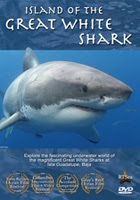
 For those of you in the Southern California area, two terrific aquarium organizations are holding screening/lecture events for Island of the Great White Shark. After the screening of the documentary, I will be on hand to field questions about the film, and discuss the current state of affairs at Isla Guadalupe and shark conservation in general
.
There have been terrific audiences for these events so come show your support or coax a friend along who might not know what all the shark fuss is about or is convinced that all sharks are demons.  Birch Aquarium at Scripps Institute of OceanographyLa Jolla, CA
When: Tues., Jan. 6, 2009, 6:00-8:00pm
For RSVP/tickets, call: 858-534-4109 Heal the Bay (Santa Monica Pier Aquarium) @ Santa Monica Public Library
Santa Monica, CAWhen: Wed., Jan. 21, 2009, 7:00-8:30pmFor information, call: 310-393-6149 Hope to see you there!
And one last shameless plug for those of you shopping for the holidays: the Island of the Great White Shark DVD is available online through Amazon, currently at a reduced price for the holiday season! This award-winning documentary is a great stocking stuffer for shark lovers and those who could benefit from seeing the magnificent great white shark in a different light.
 The continuing efforts to establish marine protected areas (MPA) or reserves worldwide has been an important issue with many conservation and scientific groups for obvious reasons. Activities ranging from overfishing to pollution have needed to be addressed because of the negative impact they have on marine ecosystems and marine life populations. The juggling act has always been in trying to meet the needs or at least compromise with the various stakeholders: commercial fishing, recreational activities, conservationists, scientists, and more.
Challenging as it is, MPAs continue to be established and now a new challenge facing scientists is the careful monitoring of these areas to see what effects - good or bad - the MPA may be having. I was reading interesting information from a SeaWeb.org Marine Science Review (Marine Protected Areas & Reserves #288). Worldwide, there is a considerable amount of research taking place regarding MPAs. Some of the issues they are studying have to do with bio-dispersion - the movement of marine species within a given area. We humans may define an area as "protected" but marine species don't read the fine print and may not stay within safe borders. Depending on the size, sex, and bio-density, a species that moves into harvesting areas, outside an MPA's borders, could be severely impacted. On the other hand, species of less commercial value could profligate within the MPA and perhaps upset the overall ecosystem - one example I read concerned increased populations of parrotfish which consume coral.
 While the overall concept of marine protected areas and reserves seems to make environmental sense, scientists are hard at work developing new methodologies and research methods to be able to properly monitor the long term consequences of our efforts to preserve and protect our oceanic resources.
 The sun is beginning to set on 2008 and, to say the least, it has been an interesting year. The RTSea Blog, in existence for more than a year, has been in its current format for six months now. It has been a very stimulating and motivating experience; I seem to learn as much as I mean to convey to others about some of the important environmental issues we are facing.
But now I would like to hear back from my readers as to any comments, ideas, or suggestions you may have to make it a better blog. I will probably always lean toward marine conservation issues, but if there are topics of interest you would like me to cover or changes in tone - more or less confrontational, more or less political, etc. - please let me know.
All comments come to me as emails for my review before being posted in the blog, so if you would prefer not to have your comment posted, just let me know in your comment.
Hopefully the year will end on a positive note. It would be a great precursor to 2009!

 In June of 2006, one of the year's high points in ocean conservation occurred with the designation of the Northwestern Hawaiian Islands as a marine monument, providing well-needed federal protections as a marine sanctuary and no-take zone. A similar effort is being promoted for the Northern Marianas Islands.
 The Northern Marianas Islands, a commonwealth with political ties to the United States (it abides by most federal laws and citizens carry U.S. passports), is part of the Marianas Island chain ranging from Guam in the south to the northern islands that include Saipan, Rota, and Tinian. Geologically linking these islands is the famed Marianas Trench, the lowest point on the Earth's crust.
 The Pew Environment Group is leading the charge, with the support of the Coral Reef Alliance,
 to have the northernmost area of the islands designated as a marine monument, similar to what was done for Hawaii. The area in question is relatively remote with pristine reefs, several species of seabirds and sea turtles and, of particular interest, deep sea vents due to the area's undersea
 geologic/volcanic activity - a terrific potential deep sea laboratory.