skip to main |
skip to sidebar
In early March, the Aquarium of the Pacific in Long Beach, CA will host a lecture/exhibition, Sharks: the Beauty of the Ocean Predator featuring yours truly and sculptor Victor Douieb.

The event is being described as "Art and science come together like never before to heighten awareness for ocean conservation. Sculptor Victor Douieb and filmmaker Richard Theiss present an exhibition and lecture series combining stunning and impressive bronze pieces of marine animals with insightful and thought-provoking commentary on marine research and the changing landscape of ocean conservation. Douieb's work has been on display nationwide in major galleries and museums and his magnificent shark sculptures are popular favorites. As a filmmaker, Theiss has worked closely with marine scientists and spent many years filming the iconic great white shark. His work has been seen on major networks like Discovery and National Geographic. Many of Douieb's most popular sculptures will be on display and there will be a series of lectures where people can learn more about these two dedicated conservationists, the challenging issues facing many ocean species like sharks, and what we can do to shape the future of the oceans."
The origin of this event came about when I first met Victor at the Santa Monica Pier Aquarium. I had been contemplating a new lecture series, a kind of update from my presentation at the time and Victor was looking for more avenues to present his work. It occurred to me that by combining forces we could offer something special that aquariums and other ocean education institutions might be interested in having. I approached my friend, Dr, Jerry Schubel, CEO of the Aquarium of the Pacific, and he was quite enthusiastic with the concept. And so, the Aquarium will host the inaugural event, putting Victor's work on display for several months and the lectures will take place in early March.

Victor has sculpted some amazing works in bronze and stainless steel of sharks and other sea creatures (his recent work of a lionfish is a favorite of mine). His work is striking in its artistic beauty while also being anatomically accurate, and that allows people to view and appreciate sharks from an entirely different perspective. His website lists sculptures currently available and at the event he will be presenting a new sculpture of one of the Aquarium's sand tiger sharks which Victor studied firsthand in the Aquarium's Shark Lagoon exhibit.
For my part, I will be sharing some of my personal experiences with sharks - in particular the great white shark, given that it's a California audience. Also, I will be touching on what science has found that makes these predators so unique and critically important. Then we will turn to the important issue of shark conservation and how it has evolved from a
grass roots movement to a struggle on the battleground of international
politics. And finally, despite the progress that has been made to date, we'll look at why and how people still need to be concerned and involved. Victor will also be on hand to discuss his journey as a committed conservationist.
The Aquarium of the Pacific will be posting details soon for Sharks: the Beauty of the Ocean Predator on their website. Lectures are tentatively scheduled for the evenings of March 5th (opening night), 7th and 13th. The sculptures will be on display for several months. If you're in the neighborhood, hope to you see there. It will be an
opportunity for Southern Californians to see some awesome sealife
sculptures and learn about the amazing sharks of California and what is
in store for their future.
Source: Aquarium of the Pacific
 While many aquariums across the country have healthy co-working relationships when it comes to animal care, exchanging animals, or simply keeping up with what's new, there is a bit of competitive rivalry that fuels their desire to distinguish one institution from another. The Aquarium of the Pacific in Long Beach, CA, where I had offered my services as a dive team leader for over 8 years, has had several milestones to distinguish itself: first successful breeding of Leafy Seadragons, successful surgery and rehabilitation on a Sawfish's broken saw, a Bull Shark on public display, and many more.
They are adding one more to that list, with one of the few Tiger Sharks to be on display in North America. Now, I had known for a while that the Aquarium had a tiger shark in holding, but was sworn to secrecy by my friend, Steve Blair, assistant curator and featured in my documentary, Island of the Great White Shark. New animals at the Aquarium go through an obligatory quarantine period and a ground-breaking specimen like a tiger shark would get special attention to insure that it is feeding and behaving normally.
 As a recent article in the Los Angeles Times pointed out, getting the animal to that predictable state can be challenging. And then acclimating the animal with the rest of the animals in the exhibit - in this case, the Aquarium's Shark Lagoon exhibit where there are sand tigers, black tip reef, white tip, sand bar, nurse, and zebra sharks, not to mention large rays and a sawfish - can require a careful step by step process.
Even though a tiger shark would represent a major "big cheese" in the exhibit, there is equal if not greater concern regarding the established animals picking on or harassing their new neighbor. Once the pecking order is established then tables might turn and it becomes necessary to watch that larger or more dominant sharks, no matter how new, may begin to assert themselves.
The tiger shark is an absolutely gorgeous animal, particularly with younger specimens where the "tiger stripes" are so prominent. I have had the opportunity to see these animals in the wild and they are indeed a wonderful example of oceanic beauty and grace. Let's wish the Aquarium of the Pacific well and hope that having this particular animal on display - one considered to be a member of the four most dangerous sharks - will provide an opportunity for visitors to see and better appreciate a critically important ocean predator.
Read Los Angeles Times article. Visit Aquarium of the Pacific web site.
 I had the pleasure of attending a press event for the Undersea Voyager Project that was held at one of my regular stomping grounds, the Aquarium of the Pacific in Long Beach, CA. It's great to attend these events as you get to meet new people with similar interests, concerns, and passions for marine conservation.
The Undersea Voyager Project is headed up by Scott Cassell, who has done considerable  study and research on the Humboldt Squid - a particularly voracious predator typically found in deeper water but makes more local appearances from time to time. The primary thrust of the Project is an ambitious program involving submersibles and a variety of different marine science projects, culminating in the development of a larger submersible that will act as an undersea classroom bringing science to the general public in a very real and as-it-happens way.
I find this very exciting because throughout my involvement in marine conservation as a filmmaker and giving screenings and lectures, I have found that there is a tremendous amount of scientific data that does not get effectively translated into issues, implications and solutions for the general public to understand and appreciate. As an example, we have decades of data documenting climate change - and yet there are still many people who refuse to accept it.
Organizations like the Undersea Voyager Project can be of tremendous benefit in enlightening the public, young and old, to important issues regarding our oceans. Marine conservation must not be obscure or vague; it must be made real and tangible to all people: to the general public, to the decision-makers, and to the future generations of scientists-in-the-making.
Check out the Undersea Voyager Project web site and give it your support.
 I am preparing to leave for the Aquarium of the Pacific in Long Beach, CA, as I have done for nearly every Thursday for the past 8 years. As a volunteer Dive Team Leader, I have had the pleasure of helping the Aquarium with exhibit feeding, cleaning and, most importantly, conducting underwater presentations to the kids and adults alike.
If you have an aquarium nearby, check out what opportunities they may have available. As non-profits, they rely heavily on volunteers - so if you have some free time, it can be a very worthwhile and gratifying experience.
People are drawn to aquariums for a variety of reasons. They may be coming to make fish faces at the seals, recoil in fear and fascination at the sharks, or simply looking for a way to let the kids blow off some pent up energy. Whatever their motivation, it's a great opportunity to get across some important marine conservation info in a more relaxed atmosphere. Aquariums can serve as effective liaisons between the scientific community and the general public. So, if you have one nearby, give it your support.
 The week-long International Coral Reef Symposium, being held in Fort Lauderdale, FL, wraps up today having brought together nearly 3,000 scientists to discuss issues and possible solutions to address the ongoing degradation of our coral reef ecosystems. Many of the results and discussions are making their way into scientific journals and newspapers worldwide.
You have all probably heard about how corals reefs have been negatively impacted by pollution, climate change, and the souvenir trade from the Caribbean to the South Pacific. The latest worldwide assessment of over 700 species shows 32.8% threatened with extinction, with a capital E. With the loss of these reefs, the inevitable domino effect follows with the loss of fish and other animal life - which carries an economic impact on tourism and subsistence fisherman in many of these tropical locales.
When I do underwater presentations as a volunteer diver at the Aquarium of the Pacific back home in Southern California, I try to impress upon the audience the importance of these marine ecosystems even though they may be thousands of miles away - they can never be "out of sight, out of mind."
- Non-biodegradable trash (plastic bags, styrofoam, etc.) and chemicals (oil, fertilizers) originating from the California coast, can travel thousands of miles to tropical locales.
- Carbon emissions and its subsequent effect on temperatures impact the coral in a variety of ways, from disrupting the symbiotic relationship of internally-stored zooxanthellae (single-celled algae) to an increase in external algae and bacteria that crowds out or kills coral species.
- Conversely, the loss of faraway coral reefs effects the chemical balance of the seas and the exchange of chemicals between sea and air, which in turn can affect temperature gradients, currents, and winds - all of which can impact us worldwide.
Just another example of all we're all connected - land, sea and air - from coral to humans, we're all part of Nature. Here's some links to learn more about what you can do: NOAA, Nature.org.
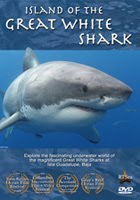
 On 03/09/08, RTSea wrote: "Island of the Great White Shark" - RTSea's recently completed documentary chronicling the great white sharks of Isla Guadalupe, Baja and the ongoing shark research taking place there - can be seen at upcoming screenings/lectures at the following aquariums:
March 30th - Aquarium of the Pacific "Divers Day", Long Beach, CA
May 5th - New England Aquarium, Boston, MA
June 18th - National Aquarium, Baltimore, MD
Stay tuned, more aquarium screenings are being scheduled and the film will be available on DVD shortly.
"A primal scene of unearthly beauty. Excitement and information pepper this film." - David McGuire, Sea Stewards
"Richard Theiss has a unique ability to communicate science, conservation and entertainment." - Ania Budziak, PADI Project Aware Foundation
 On 02/13/08, RTSea wrote: Island of the Great White Shark - the latest documentary from RTSea Productions had a series of exclusive premiere screenings at the Aquarium of the Pacific in Long Beach, CA. The audience response was very enthusiastic and during the Q&A that followed the screening, it was clear that the audience now saw the sharks in a different light and were concerned about conserving and protecting these amazing animals.
A screening is scheduled for May 5th at the New England Aquarium and more screenings at leading aquariums are being arranged. Stay tuned - DVD availability is in the works.
"I think you have created a remarkable film." - Dr. Jerry Schubel, President/CEO, Aquarium of the Pacific
"Beautiful videography, good graphics and information." - Dr. Bob Hueter, Director, Mote Marine Shark Research
"We absolutely loved the film." - Liz and Kevin Sullivan, Pacific Explorers Dive Club