The ocean is being bombarded from several directions and the effects can be not only predicted with computer models but can be seen right now first-hand. Some time ago I ran a post on the impact of domoic acid on wild life (and potentialy humans, too). Domoic acid is a toxin produced by phytoplankton algae and the issue presented in the post was that man's "treated" sewage waste products, pumped far off shore were, in essence, over-fertilizing the algae and thereby increasing the level of algae-based toxins.
We know about avoiding consuming shellfish during certain months due to annual concentrations of these and other shellfish toxins. And we avoid swimming in the ocean during periods of "red tides" when the phytoplankton population explodes. Unfortunately, sealife does not know or cannot avoid exposure and so there has been an increase in poisoned animals, in particular seals and sea lions which are susceptible to domoic acid's neurological effect..
Just this past weekend, a diver friend of mine opted for a hike at Palos Verdes peninsula in Southern California when dive conditions were not good. In just one hike around the point, he came across eight dead mature sea lions. All dead due to shellfish neuro-poisoning? Perhaps. in fact, based on reports from local marine mammal centers, very likely.
But treated sewage is not the only source of the problem. Algae can also be fed by the increasing levels of CO2. On the positive side, there are blueprints for algae-based alternative fuel plants to channel the greenhouse gases they produce during processing back into their algae crop. But outside of those controlled environments, in the open sky and open ocean, CO2 produces ocean acidification, which is gaining a lot of attention lately, and feeds the phytoplankton algae, adding to a vicious cycle.
Another example of the cascade effect of our actions, greenhouse gas emissions not only disrupt global temperatures and raise the ocean's ph level above acceptable limits, but also over-feed phytoplankton which impacts sealife and our commercial use of shellfish.
One more shark story, and this one ties into the Shark-Free Marinas Initiative I wrote about last Thursday. Early this month, Florida sport fisherman Bucky Dennis reeled in a world-record Great Hammerhead. At 1,060 pounds, it far surpassed the previous record of 620 pounds. While Mr. Dennis feels quite proud of his catch (he has been hoping to set a new record for some time), he has been heavily criticized from a variety of sources, including other fishermen (Read St. Petersburg Times article.).
This was a tragedy all around. Due to it's size, Dennis had no way of weighing it unless he brought it back to the marina where it could be hoisted and weighed - and that meant killing it.
Quoting the St. Petersburg Times, "When fishing guide Bucky Dennis reeled in the giant hammerhead on May 7, he knew there was no way to weigh the shark without killing it. 'I just had to do it,' Dennis said of his decision to claim a world record."
So his desire for a world record superceded all other considerations. This time of year, large hammerheads are typically pregnant females but we'll never know whether this one was carrying pups. Dennis offered the shark to the Mote Marine Laboratory, but Dr. Bob Hueter wisely passed so as to avoid setting a precedent that would send more fishermen out to catch large sharks.
In the end, all Dennis had for his conquest was a handful of teeth and some meat he gave away. Then this magnificent animal, once a tribute to enduring survival and longevity, was dumped back into the sea.
Could the Shark-Free Marinas Initiative have acted as a deterent if local marinas were supporters of the initiative? With this fisherman, perhaps and perhaps not, since he was so fixated on gaining a few lines in a sportfishing journal somewhere. But it certainly would not have hurt and perhaps will compel other fishermen to think twice.
For you whale watchers out there, there's good news regarding the right whales that migrate along the U.S. East Coast. It was reported last week by the New England Aquarium that a record number of calves were reported for this spring. At 39 calves, that's considerable improvement from 2000 when only one calf was born.
The right whale - known by that name because whalers considered it the "right" whale to hunt due to its high level of whale oil and fat - travels nearly 1,000 miles down the East Coast to give birth in the warmer waters of Georgia and Florida. This coastal migration made them any easy target for whalers or even accidental encounters/rammings by ships, adding to their diminished numbers which are as a low as a staggering 400 worldwide.
While still heavily protected or regulated for commercial use, whales have fallen off the public radar compared to their heyday in the 70's. This has enabled countries, like Japan and Norway, with long-standing traditions in commercial whaling to chip away at the current regulations and that is posing a threat to populations of whale species that have improved over the years but are still very tenuous at best.
The Shark-Free Marinas Initiative: This was an idea that was hatched some time ago by my colleague, Patric Douglas of SharkDivers, as an incremental approach to dealing with shark mortality in the sportfishing arena. Patric is a never-ending fountain of ideas and this was a particularly good one. But it's also one that requires a lot of attending to, so Patric turned the administrative duties over to marine biologist Luke Tipple.
With the Shark-Free Marinas Initiative, participating marinas would not allow caught sharks to be brought into the marina for photos, weigh-ins, butchering, whatever. Instead, the idea of catch-and-release is promoted, much the same way as it is done in the sport billfish industry.
Check out the web site to get a complete picture as to what the initiative is all about. There's a lot there to peruse. You can learn about the current status on a variety of shark species and see what organizations are lining up to support the concept. Again, it's an incremental approach: get sportfishermen to first switch to catch-and-release, thereby reducing shark mortality, and then move to the next step of reducing the activity as a whole.
Hopefully, someday the shark tournaments that have been responsible for the deaths of thousands of sharks, all for the sake of a trophy prize, will soon fade into history.
Let's face it - shark conservation is a tough sell. They don't have the mammalian intelligence connection like whales and dolphins. They don't have the warm and fuzzy factor that makes us feel for polar bear cubs and penguins. No, unfortunately to most people, sharks are lurking just beneath the waves waiting for us to venture out just far enough . . .
And that's such a shame. Because - despite the critical role these animals play as scavengers and hunters that help to maintain balance in the marine ecosystem - as long as people fear them, they will listen politely to the arguments about the shark's importance, they will be put off by the gruesome images of shark finning, they will rationalize the very remote possibility of shark-human interactions . . . and they will do nothing.
And today there is much going on to reinforce that fear. And some of it is coming from the very people who wish to protect these animals. I have said before, I am a big supporter of safe and responsible shark ecotourism - shark diving, if you will. But my concept of "safe and responsible" that promotes conservation, works with scientific research, and provides a safe environment for both divers and sharks, is not the same concept as some others in the industry. Over the past several months, there have been a series of media publicity and community public relations gaffes the net result of which has been to show shark diving to be a haven for wreckless thrill-seekers and it is fueling government and community forces to clamp down or place an ouright ban on shark ecotourism at some key sites.
No doubt about it, at one time shark diving was a major thrill-seeking adventure sport, something only for the bravest of hearts. But it has evolved as an educational experience in the hands of responsible operators, in tandem with their understanding and concern regarding the future of sharks. Still there are some who cling to the images of the past and that short-sighted approach simply puts the media into its own feeding frenzy.
Now I must admit, as a filmmaker, I can appreciate their dilemma to some extent. Nature filmmakers have to wear three hats: the advocate, the storyteller, and the businessperson. In an ideal world, or an ideal film project, all three of these roles would work in harmony. But often one or two of them are in conflict.
The advocate wants to promote conservation; so the facts are important so that viewers will accurately understand and appreciate the subject animal. The storyteller wants to tell a good yarn; a dash of excitement, a little drama or pathos, and maybe a happy ending. And the businessperson understands the realities of what the broadcasters are buying, what the advertisers or the viewer ratings are demanding in terms of programming. Getting all three of these to work together for the benefit of the shark is a challenge.
Case in point: here's a short clip taken from my YouTube channel, RTSeaTV, that was done as a lark while I was filming a piece on Isla Guadalupe shark diving for a major online magazine. A colleague of mine, marine biologist Luke Tipple, and I were testing a two-man cage and at the last minute thought about making something out of whatever I shot on this one dive. It involved being in open water with great white sharks - something that is a highly calculated and thought-out risk taken only by professionals - and the cage proved to be an excellent platform to work from with plenty of easy exit/entry points (and by the way, totally unsuitable for regular shark diving customers!).
So, a little excitement and awe mixed with some important facts and a call for conservation. But does it help or hurt the cause? In a short clip, one can get a measure of balance; however filmmakers seeking to do long-form projects are always challenged by the pressure to pander to the gentleman in Kansas kicking back with a Bud and ready to change the channel to NASCAR or flip to YouTube if he doesn't see a shark attack in the next five minutes. Sigh . . .
So what does this all say? That we just keep on trying, whether it's sharks, global warming, or whatever your cause du jour. We try to do what's right, we suffer and carry on from the mistakes of others, and we never lose faith that, perhaps little by little, people will see that truth is the best antidote to fear and the key to understanding and respect.
Recently, despite a strong response from supporters and pressure from several leading conservation groups, Secretary of the Interior Ken Salazar chose to let stand the 11th hour ruling handed down during the Bush administration that limited protections for the polar bear under the Endangered Species Act (ESA).
The basic crux of the problem is that by listing the polar bear as endangered (as opposed to threatened), the ESA requires that the circumstances or causes of the endangerment must be corrected. That would mean correcting global warming (previous post).
While the incremental progress of the political process can eventually get things done - as in the case of the recent developments regarding the Canadian seal hunt (previous post), in this case this is where the wheels fall off the bureaucratic wagon. It's one thing to deny a power plant that threatens an isolated butterfly or restructure a dam project because it could wipe out a small minnow - that's treating a specific endangered species with a specific contained solution. But in the case of the polar bear, to address the issues that have put the animal in peril require such a monumental societal and commercial paradigm shift that it's just too big to handle.
It was said that the ESA was not the appropriate vehicle for addressing global warming. Then what is? The Clean Air Act has been used to push forward major commercial and societal change. What legal avenue can put global warming on the front burner? With the best of intentions, we can talk about the moral imperative of climate change, talking ourselves right into extinction, but it will be the rule of law that actually gets the job done - if only we have the courage to use it.
I was reading a collection of abstracts covering scientific articles and studies involving climate and climate change, and it made me reflect on the enormous pressure that our scientific community is under. We, as a global society, are slowly becoming more and more aware of the many environmental challenges we face - from global warming to fossil fuel dependence to, well, you name it - and we are turning to science to provide the answers. But true science is very methodical, cautious, and perhaps even slow by our standards in analyzing, predicting, and developing solutions or alternatives in dealing with the issues we face.
But that desire for the quick fix, the silver bullet, is not the only complication to the scientists' work. They must also contend with the fact that we are in unprecedented times. The various impacts of human activities and the ripple or cascade effects they have on ecological and geological systems continually skew prediction models and analysis in new directions almost daily. Critics question the credibility of the scientific community because of changing models regarding polar ice melts, ocean acidification, or future species populations.
A study, reported in Ecological Complexity, addresses the problem in defining the impact on environmental systems with the conversion to "clean" energy because of the overall growing demand for energy, whether clean or not.
An article on climate modeling in Annual Review of Environment and Resources applauds the ability to predict past, present and future climate patterns. But it also points out the computational limitations as prediction models try to include more and more Earth-system processes.
In Climactic Change, an article discusses the challenge in predicting climate change accurately, despite compiling extensive data over long periods of time (to average out seasonal or spurious fluctuations) because of the increasing demand for energy (specifically coal) which skews the analysis in unforeseen ways.
With our current worldwide economic difficulties, economists and decision-makers are trying solutions that are new and untested to combat problems that are unique in our economic history. This leaves them open to criticism or questions as to the likelihood of success.
Scientists find themselves in the same situation but with the added burden that the issues they are addressing will effect more than just the health of our pocketbooks - they will determine the health and future of this planet.
Let's make sure they have the tools and support to succeed.
The Abyss - no, not the movie; I'm referring to the deepest waters of the ocean in which the abyssal seafloor covers over 50% of the planet. This is an ecosystem that contains great biodiversity (scientists have barely scratched its surface and have come away with new and unusual species) and plays a key role in maintaining the ocean's proper balance of detritus management and nutrient, chemical, and mineral levels.
In the ocean, where do all the dead animals and plants go? Mostly into the abyss to be broken down, processed and, in essence, recycled. But a recent study shows that global warming and human activities are having an impact on this mysterious region. Temperature change and human activities such as ocean fertilization are impacting the level and quality of food or detritus that makes its way to the abyss. With this fundamental link in the chain being disrupted, there are many unforeseen but predicated consequences to the ecological structure and biodiversity of the ocean's deepest regions.
We think of global warming in terms of its impact on the sky, the land, and the ocean as far as the eye can see. But we need to remind ourselves it is a global issue - from the blackest edge of space to the blackest corner of the deep, deep sea.
Back in March, I commented on the efforts of The Humane Society to generate public and political interest to curb Canada's annual harvest of fur seals. The latest word from the Humane Society is an encouraging one. The European Union (EU) has initiated a ban on seal products in specific response to a public outcry regarding the Canadian hunt.
It has been estimated that this ban cuts out as much as $6.6 million CAD of Canada's annual take of $7 million CAD. The ban has also driven down prices for seal products and of the annual quota of 280,000 seals, so far only 60,000 have been taken. However, The Humane Society will continue its efforts as the government-subsidized industry is not yet ready to admit defeat. But the EU ban is certainly a major blow.
One of the things I found interesting in this entire campaign was the strategy taken that has proved the most successful - that of developing a general public interest and consensus and applying political and economic pressure; forces that the seal industry fears the most. Extreme activism did not necessarily move the ball forward; it was the relentless pressure placed upon the traditional decision-making forces: politics and dollars. Currently, 60's-style activism and protests don't seem to be as effective as they once were. Getting endorsements from opinion makers ranging from Paul McCartney to the European Parliament's Swedish member, Carl Schlyter, and bringing their influence to bear behind the scenes with international decision-makers may not be very dramatic or "sexy" . . . but it appears to be working.
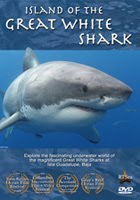
Back online after making a move of the RTSea Productions office (boy, is that ever temporary insanity or what? Boxes, cameras, furniture, computers . . . ugh!). Filming this week and back to shipping Island of the Great White Shark DVDs to Amazon and other distributors. Also, have some interesting projects coming up, but first, back to nature. New posts coming . . .
The RTSea Blog was started in 2008 and now includes over 950 entries available for media or academic background research use, including observations on a wide range of topical issues and events involving the oceans, sharks, and nature in general. After a brief break in 2012-13, there will now be more posts forthcoming.
Use keywords in the Search tool below or at the bottom of this web page to locate articles of interest.
Cinematographer/media consultant & producerRichard TheissandRTSea Mediaadministers this blog with the intent that information will be disseminated across the Internet and, in so doing, will illuminate others as to the serious challenges that lay before us in preserving and protecting our natural resources.
Search This Archive
Richard Theiss - DP/Media Consultant & Producer
Available for HD video assignments, media consulting, and speaking engagements. For contact information, click on the image above.

 The ocean is being bombarded from several directions and the effects can be not only predicted with computer models but can be seen right now first-hand. Some time ago I ran a post on the impact of domoic acid on wild life (and potentialy humans, too). Domoic acid is a toxin produced by phytoplankton algae and the issue presented in the post was that man's "treated" sewage waste products, pumped far off shore were, in essence, over-fertilizing the algae and thereby increasing the level of algae-based toxins.