Geoengineering - this is a concept that we will be hearing more and more about with regards to managing climate change. It doesn't necessarily involve us on a personal level, like buying fluorescent light bulbs or driving more fuel-efficient cars; this is large-scale proactive approaches where science and commerce are utilized to directly counter the effects of climate change and CO2 emissions rather than deal with root causes.
Basically, we are talking about taking the CO2 we have in the atmosphere and finding some other place to park it, often referred to as CO2 sequestration. There have been proposals to store it underground while others have focused on methods of increasing absorption by the oceans where it is stored at deep depths.
I was reading several reports on ocean sequestration and there are many techniques that have been studied and even experimented with on a small scale. The results and/or recommendations have been conflicting - in part due to the fact that none of this has been undertaken on a large, truly global scale so we are walking into unknown territory with only projections and theories to guide us. Here are some of the current concepts regarding ocean CO2 sequestration:
Ocean Fertilization: Using the addition of iron particles to induce greater phytoplankton blooms which will, as part of their normal biological process, consume more CO2 and then sink to the ocean bottom. Some scientists say this is a viable approach, others say that the results are not substantial enough compared to the costs and related effects that would impact the ocean ecosystem.
Ocean Nourishment: A variation on ocean fertilization wherein additional nutrients are added to the process that could enhance the growth of feeder fish populations, thereby providing additional benefits with an increased food source and potential commercial value to developing countries.
Alkalinity Change: A land-based process where a CO2 source is combined with limestone and sea water. Basically the reaction alters the pH level and binds the CO2 to the sea water, which is then discharged back into the ocean. The use of limestone, which introduces calcium carbonate, is expected to neutralize acidification and therefore have minimal impact on the marine ecology.
Direct Injection: When ocean sequestration is discussed, the storage of CO2 is to take place at great depths where CO2 actually forms a liquid more dense than seawater (below 3000 meters). There are proposals for direct injection that involve piping CO2 directly from sources like industrial plants or energy refineries into the ocean depths where it is trapped at depth, forming a kind of deep sea lake of near-solid CO2.
These are techniques that are currently being experimented with, but whether they ultimately prove to be physically or financially practical on a large scale remains to be seen. And what of the unforeseen ecological implications? Attitudes range and proposals are hotly debated within the scientific community. There are those that say that geoengineering represents "doing something rather than nothing" with the current and future volume of CO2 in the atmosphere, regardless of what preventive steps are taken. (Remember the Carbon Bathtub analogy I cited earlier this week? Even if we radically cut back on CO2 emissions, we will have excess amounts in the atmosphere to deal with for centuries.)
Geoengineering is not a silver bullet solution nor does it free us from addressing the ongoing sources of CO2 emissions. At best it could work in concert with CO2 reduction strategies, but it is technology that is new with unforeseen consequences and perhaps must operate on unimaginable scales worldwide. However, it may find its place because we don't have a choice.
Several times I have posted updates on the fate of the Bluefin Tuna, particularly those populations that have been heavily fished in the Atlantic and Mediterranean seas. The two organizations that could have an impact internationally on how bluefin tuna fisheries are managed are CITES and ICCAT.
In early October, I reported that scientific groups, including ICCAT's own advisers had recommended a severe cutback in the catch quota as the population was on the brink of collapse, having shrunk by more than 85%. "Many countries turn to the International Commission for the Conservation of Atlantic Tuna (ICCAT) for guidance regarding commercial limits but their quotas have often fallen short of levels recommended by many research groups, showing a bias towards the commercial tuna fishing industry. But that may be changing."
I was wrong.
According to a press release from Oceana, the ICCAT has just approved a catch limit of 13,500 tons for next year:
"'The risk of collapse has already been addressed in previous assessments, and there is scientific consensus about what's happening right now. [The proposed quota] is not sufficient to recover the stocks and it will lead to individual vessel quotas that are too low to economically sustain fishing activities. This will definitely encourage underreporting of catches and illegal fishing, said Xavier Pastor. He added: 'ICCAT has now definitely lost its credibility and its CITES' turn to avoid the collapse of this species.'"
This means we must turn our attention to the next major CITES meeting in March to see if it will list Bluefin Tuna as an Appendix I endangered species, as has already been proposed by at least one CITES member nation. This listing would mandate a complete cessation of commercial bluefin tuna fishing.
Also mentioned in the Oceana press release, ICCAT apparently took little if any action regarding limiting the take of certain shark species:
"'Sharks are being caught without any limit at all in the Atlantic, and there is little hope now for getting these fisheries regulated in the near future,' said Rebecca Greenberg, shark campaigner with Oceana. 'ICCAT scientists recommended that mortality for shortfin mako be reduced years ago, and the Commission still has not done anything to implement this. ICCAT is ignoring the advice of its own scientists, and dooming species to overfishing and imminent stock collapse.'"
Despite the scientific data, ICCAT appears to be an organization dedicated to preserving a floundering industry rather than a floundering marine species. It's sad that they can't seem to live up to their own namesake. Read the Oceana press release.
Mexico, like many Latin American countries, is a land with a rich history but facing many challenges in today's world. There are Mexican-based conservation organizations and government agencies in charge of overseeing the country's natural resources but on some issues the general populace is either in the dark or at least has not yet been propelled to care. Other priorities considered more fundamental seem to take precedence.
This past fall, I was approached by WildCoast/CoastaSalvaje to film the great white sharks at Isla Guadalupe for Televisa SA - one of the major Latin American networks. Televisa was planning a multi-part news piece on the island, providing Mexican viewers with an inside look at this marvelous place, shielded by the Mexican government as a protected biosphere. The end result was an interesting series that placed considerable focus on the white sharks that migrate to the island and the eco-tourism and research that takes place there.
The Mexican people need to appreciate the importance of white sharks as a key component in a healthy marine ecosystem and to know that Isla Guadalupe serves as a crucial migratory hub for a sizable portion of the eastern Pacific population of white sharks. Unfortunately, you can find caught juvenile white shark for sale in Ensenada fish markets (sometimes "mislabeled" as marlin or swordfish) and the loss of these juveniles along the Baja coast serves to only further impact the decline of this important ocean predator.
I came across the program on YouTube and so here are the show segments - albeit in Spanish. If you don't speak the language, you can get the gist from the images. I was assigned to provide the underwater footage and it was a bit challenging because on this trip my proximity was confined to the cages and the sharks, while plentiful, were being a bit coy.
Back in March of this year, I reported on efforts being undertaken to protect a dwindling population of Beluga Whales in Alaska's Cook Inlet - a slender offshoot in the Gulf of Alaska that leads to north to Anchorage. Impacted by pollution and development, partly related to oil drilling activities, the number of whales have declined from over 1000 in the 1980's to a little over 300 today.
On Tuesday, NOAA (National Oceanic and Atmospheric Administration) proposed a 3,000 square mile area as critical habitat for these whales. This is a positive first step, in response to legal action from the Center for Biological Diversity (CBD), and repudiates the position taken at the time by now former Alaska governor, Sarah Palin.
Next will be the required public comment period. You can expect that there will be rebuttals from the oil industry and other less conservation-minded groups. Pro-whale advocates and groups will need to make their voices heard during this crucial next step.
Check in with CBD or stay tuned to this blog to hear about what you can do to contribute.
Shirahama is located on the western Kii Peninsula just below the middle of Japan. Normally, the crown-of-thorns' range would be held in check by its preference for warmer tropical temperatures where, within a healthy reef ecosystem, it is held in balance as a predator by virtue of the dominance of coral. But the temperatures have been increasing and, along with human development (eutrophication) that has increased certain nutrient levels which weaken the coral, this has allowed the crown-of-thorns to expand its range and explode in numbers.
Unfortunately, the only immediate solution to the problem is a controlled eradication of the seastar. A small group of local divers have been enlisted in this effort which could carry on for several years. Care must be taken as the crown-of-thorns is covered on the outside with many spines (hence its name) that are actually sheaths for sharp poisonous needles.
"'If we keep removing (the starfish) in limited areas on a regular basis, there should be some effect,' said Katsuyuki Nakaya, 53, who runs a shop catering to divers and chairs an environmentalist group based in the city of Wakayama."
I have experienced the effect of the seastar's defensive weapons firsthand. When I was a novice diver, a came across my first crown-of-thorns in Hawaii. Fascinated with this ornate creature, I carefully turned it over to examine its underside and when I placed it back on the reef, I noticed a countless number of green threads streaming from the palm of my hand. Odd, I thought, until I realized the green color was blood having lost its red hue in the ocean depths. For the rest of the day my hand tingled as a subtle reminder: look but don't touch.
There's a brief but interesting article in the December issue of National Geographic that describes a simple analogy for looking at CO2 emissions. In The Carbon Bathtub, writer Robert Kunzig reports on a concept that John Sherman uses with his grad students at MIT: a bathtub filling up with CO2.
Imagine the faucet represents the CO2 emissions we are putting into the atmosphere - currently, around 9.1 billion (that's with a "b") metric tons per year, most of that coming from fossil fuels. The drain represents the approximate 5 billion metric tons of CO2 being absorbed - 30% absorbed by plants and soils, 25% by oceans, 1% by sediments and rocks, and the rest remains in the atmosphere adding to the rise in temperature.
Because we have been putting more into the tub than it can drain out, the tub has been steadily filling up. Currently, the tub is at the 385 ppm level, heading towards the 450ppm level by mid-century. The 350 ppm that has been recommended by some scientific groups still represents 745 billion metric tons of carbon! So, how do we drain the tub and how long will it take?
Unfortunately, with the bathtub analogy, it will take a long time. Even if we were to stop all CO2 emissions tomorrow, the drain works slowly - plant and soil absorption can get maxed out, ocean absorption is slow and rocks and sediments are even slower. It's been estimated that to go from 450 ppm to 350ppm could take centuries.
Discouraging? Well, perhaps, but it can also be viewed as a reason for saying "no time like the present" for making some significant changes. The CO2 emissions issue is not a light switch - flip it and it all goes away. It is our responsibility to future generations to act now and act decisively.
MIT's John Sherman will be at the international Copenhagen Climate Conference in December to help diplomats better understand the problem by illustrating the bathtub analogy (in much greater detail than I have done here). Hopefully, he will have an impact least a potential sensible climate treaty goes down the drain.
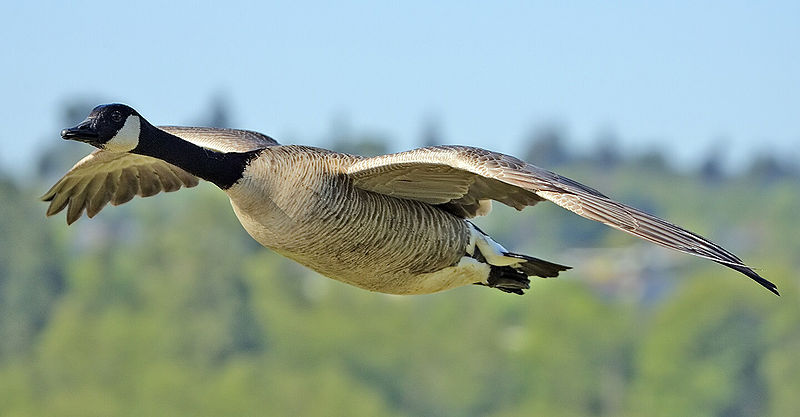
I was watching a charming movie on cable today, one I had seen when it first came out in the theaters some years back: Fly Away Home. It's a father-daughter drama that incorporates some of the interesting studies that have been done in training orphaned Canadian Geese to learn their migratory routes. Ultralight airplanes have been used to teach the geese to follow the plane and memorize the long route from Canada to the Carolina wetlands in the U.S.
What's particularly interesting is the intelligence these birds are able to display, actually learning the visual landmarks over a 2000 mile route so that they can return again and again. Do you think you could memorize aerial landmarks in one pass over a 2000 mile stretch? And yet this is a bird with a brain the size of a small grape! (See movie trailer.)
Just another example of amazing animal intelligence and the importance for man to understand animal smarts on its own terms - not to judge or compare it to human intelligence. Animals have evolved intelligence supported by senses that relate to feeding, breeding, and basic survival. From that some social interactions and relationships develop but, again, we must be careful not to ascribe human characteristics to it. It's a different animal, literally.
I have seen this misplaced humanizing with other "wild animals." Take sharks, for instance. These are animals with a wide aware of astounding sensory capabilities but with a relatively small brain (a rather fragmented or un-centralized brain actually, when compared to other land animals). In the presence of humans (ie: divers), sharks can demonstrate behaviors that we might regard as human-like interactions or relationships. That can be a mistake.
It is important that we appreciate animals for what they are and how they evolved; different from us, the end result of their successful evolution within their environment, and often superior to us in many ways within that environment.
Coral reefs are one of the ocean's most colorful and complex creations. I'm sure you have read about how they are in peril. Climate change, acidification, human development - all are having an impact, most often represented by coral bleaching which is the result of the loss of the symbiotic algae that lives within the coral.
I was reviewing several scientific papers and found that there are many studies going on to determine more specifically what is happening to the reefs. As it turns out, the external factors of temperature, pollutants, and others can trigger a variety of eco-systemic or internal components that adversely affect the coral. Oh, if it were only simple, then the solutions might be simpler too.
One study examined the impact on several species of reef fish and their aerobic scope, or ability to breath, in elevated temperatures. Ever felt your breathing was a bit more labored on a really hot day? Well, according to this study, reef fish can have a similar reaction when water temperatures rise. This causes a reduced capacity to absorb oxygen which weakens the health of the fish, its level of immunity, and overall lifespan.
Water quality was found, in another study, to impact the sensitivity of corals to coral bleaching. "Terrestrially-sourced dissolved inorganic nitrogen" or DIN was found to make coral more sensitive to the temperature threshold that triggers coral bleaching. Higher levels of DIN are often found in areas of human development in the form of runoff from urban development or construction.
The levels of nutrients within a coral reef system can also effect the balance between hard corals, anemones, and algae. All three live in relative harmony, with hard corals as the dominant species. But in the typically low-nutrient world of a healthy coral ecosystem, warmer temperatures can increase nutrient levels and, at various levels, the anemones become more aggressive towards the coral and at the highest levels, the algae becomes dominant.
Coral reef ecosystems are tremendously complicated and we are continually learning more about the inter-relationships of species and the environment. And not everything falls into perfect agreement. One study that reviewed the relationship between temperature and salinity at a mass bleaching in Thailand, found that salinity did not seem to play a critical role in triggering the event. Whereas, another study concluded that higher salinity levels can impact both the coral host and its symbiotic algae, effecting its long-term health.
We still have much to learn but the research must continue so that we have a clear understanding as to what is happening to the earth's coral reefs so that we can both potentially treat and prevent the abuses that are impacting these critical marine ecosystems.
What motivates someone to care about the environment and conservation? Is it political ideology or commercial interests, something personal or a broader altruistic concern? Obviously, there can be as many reasons as the number of micro-organisms in a seasonal plankton bloom, but one motivator was recently brought to my attention that, frankly, I have not given much thought about: religion.
I received a copy of Beauty of the Lord, part of a four-volume paperback set of books on environmental theology, written by Richard Austin, a Presbyterian minister. This book - and indeed the entire series - tries to establish a Christian perspective on why we should appreciate and protect the environment. Through detailed biblical references, the author establishes a religious foundation for accepting our need and moral responsibility to be active conservationists.
Now, in the interest of full disclosure, I should say that I do not adhere to any form of organized religion. In fact, I believe that some of the tenants of Judeo-Christian dogma have contributed, perhaps subtly, to our current ecological crisis. For man to have dominion over the earth, I feel, has been subverted over centuries to mean to dominate, taking only for our personal gain - and we are now realizing the price to be paid.
Austin recognizes this viewpoint: "In Western culture Christianity has been a major interpreter of life's meaning and purpose. Like other social institutions, though, our churches were not prepared for the change in perception of the earth. This lack of foresight has generated resentment among some who are frustrated by our society's sluggish response to this new reality and look for a scapegoat. In his famous essay, 'The Historical Roots of Our Ecologic Crisis,' Lynn White, Jr. claimed that the primary culprit of the contemporary crisis was the traditional Christian affirmation of the right of humanity to dominate nature. White's view is accepted widely, often uncritically, in the environment movement."
Rather than debate this issue, Austin lays out a path for re-orienting religious thinking, citing biblical passages that support the need for man to actively participate in preserving our natural resources. He makes the argument that man is not truly whole in a religious sense without an appreciation for nature.
"The Christian event of 'awakening' or 'conversion,' characteristic in the American religious tradition, may lead to a more creative personal identity; yet human identity is not complete without an affectionate relationship with nature and a sense of moral purpose that reaches beyond human culture to other life. Regard for nature may contribute to the moral beauty of our faith."
This volume from the four-volume set makes many references to Jonathan Edwards, an 18th century theologian, and in other volumes Austin turns to John Muir and others for support. For myself, in reviewing the book as an agnostic - or to be contemporary and hip, as an adherent to a "personal spiritualism" - I found the book to be impressive (almost overwhelmingly detailed) in its position that a religious foundation exists for conservation.
And Austin brings a positive spin to a situation that often seems mired in doom and gloom: "Campaigns for environmental protection are often built on fear - fear of the disaster which will ensue if we do not, for example, control pollutants or protect genetic diversity. However, I believe that love for the earth is a stronger motive than fear. It is more likely to generate creative action, and it is more likely to persist through the long effort required for change."
I am not too particular as to what motivates a person to embrace conservation - the why is less important to me than the what, what is accomplished. I have said that industry will probably be pulled kicking and screaming until they realize a commercial incentive. And politicians may act for fear of retribution at the voting booth. So, if you are a person of religious faith and you are struggling with, or even just mildly curious, as to where your beliefs and nature intersect, I would suggest you take a look at this environmental theology series of books by Richard Austin.
"We have built our nest in the tree of life; now we must save the tree."
The books are available online individually or as a set at Creekside Press.
Getting caught up on my backlog of environmental and conservation email, I ran across some interesting and disturbing items from the Center of Biological Diversity, one of the most proactive organizations in wielding the power of the law to effect change. According to CBD:
Senate Climate Bill Spells Disaster
The Senate took a disastrous step backward on climate legislation last week, passing a loophole-ridden global warming bill with unacceptably low pollution-reduction goals that would also work against our most effective existing law to fight global warming. First, the bill has no target for atmospheric CO2 levels; in fact, it would let CO2 increase to about 600 parts per million -- while science shows we must reduce levels to 350 ppm to avoid climate catastrophe. Second, the bill eliminates the Clean Air Act's requirement for federal scientists to determine the safe level of greenhouse gas concentrations. Third, the bill's carbon-offset provisions are so many and poor that they undermine its own pathetic emissions-reduction goals.
The second point CBD lists is one that concerns me because it is the scientists - not the political or commercial interests - who should be the objective source for determining greenhouse gas limits. Industry may not like what they have to say and it may involve considerable financial cost - but nature is not interested in what is financially expedient and further delay will only guarantee greater financial and human costs later.
Late last week, the Obama administration released its first review of animals and plants deemed deserving of federal protection that are still languishing without it -- and there are a whopping 249. On average, these candidates for Endangered Species Act protection have been waiting for safeguards for 20 years; at least 24 candidate species have gone extinct due to delays in protection. The Center for Biological Diversity and allies have a lawsuit pending in D.C. to stop the illegal and fatal stall in protecting all 249 candidate species, from the Oregon spotted frog to the Florida semaphore cactus.
After 10 months in office, the Obama administration has granted federal protection to only two species, including the Hawaiian plant Phyllostegia hispida, which had been on the candidate list for more than a decade. The Bush administration -- with the worst species-protection record in history -- put an average of about eight species per year on the endangered list. Obama administration, you'd better get cracking.
Many of us welcomed this new administration with hopeful expectations but were fully aware of the enormity of the problems it faced. Expectations were high and maybe, to an extant, unreasonable. But with such a backlog of candidate species and only two granted protection so far, CBD is right on target. Even with health care and foreign policy issues capturing so much attention, those within the administration in charge of federal protection of species to need to get cracking.
The RTSea Blog was started in 2008 and now includes over 950 entries available for media or academic background research use, including observations on a wide range of topical issues and events involving the oceans, sharks, and nature in general. After a brief break in 2012-13, there will now be more posts forthcoming.
Use keywords in the Search tool below or at the bottom of this web page to locate articles of interest.
Cinematographer/media consultant & producerRichard TheissandRTSea Mediaadministers this blog with the intent that information will be disseminated across the Internet and, in so doing, will illuminate others as to the serious challenges that lay before us in preserving and protecting our natural resources.
Search This Archive
Richard Theiss - DP/Media Consultant & Producer
Available for HD video assignments, media consulting, and speaking engagements. For contact information, click on the image above.

 Geoengineering - this is a concept that we will be hearing more and more about with regards to managing climate change. It doesn't necessarily involve us on a personal level, like buying fluorescent light bulbs or driving more fuel-efficient cars; this is large-scale proactive approaches where science and commerce are utilized to directly counter the effects of climate change and CO2 emissions rather than deal with root causes.
 There are those that say that geoengineering represents "doing something rather than nothing" with the current and future volume of CO2 in the atmosphere, regardless of what preventive steps are taken. (Remember the Carbon Bathtub analogy I cited earlier this week? Even if we radically cut back on CO2 emissions, we will have excess amounts in the atmosphere to deal with for centuries.)