Wednesday, July 15, 2009

Great White Sharks in Tennessee: aquarium to hold screenings of white shark documentary

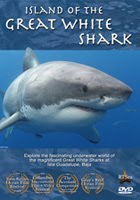
From time to time, I have the pleasure of speaking about shark and ocean conservation issues at various venues, particularly aquariums. Sometimes it is a formal affair - a screening of my white shark documentary, Island of the Great White Shark - and sometimes it is a more casual event, often including groups of younger children - the all-important next generation of ocean conservationists.

At the end of the month I will get to do both at the Tennessee Aquarium in Chattanooga, TN. I will arrive at the end of the month to do local media interviews and then on Friday, July 31st, I will be speaking with a group of Aquarium "day-campers" ages 7-10 and will conduct a private screening/Q&A with staff, volunteers, and patrons that evening.

On Saturday, August 1st, I will be conducting two public screenings and Q&A's with the
Aquarium's visitors as part of their regular admission.

The Tennessee Aquarium is a marvelous venue in that it is essentially two separate aquariums - one building devoted to a worldwide examination of freshwater (and not just guppies and trout; how about 10-foot long beluga sturgeons!) and another for saltwater. I visited the Aquarium for the first time in June and was very impressed with its scope and the dedication of its staff in getting people to appreciate aquatic life not only in their backyard but globally.

So, if you are in the area, come visit the Tennessee Aquarium on Saturday, August 1st. As many aquariums do this time of year, the Tennessee Aquarium piggybacks on the popularity of Discovery Channel's Shark Week and I am happy to be part of their campaign to educate the public to the reality of sharks, their importance, and the threats and challenges they face.

Maybe I'll see you there!

To learn more about the Tennessee Aquarium, visit their web site. Click here.

Monday, July 13, 2009

Right Whales and Lobsters: lobstermen working to protect endangered whale

In addition to the Shark-Free Marina Initiative gaining a foothold in the northeast, the Ocean Conservancy is reporting progress with lobster fisherman in developing techniques to better protect whales, particularly the highly endangered Right Whale, from entanglement in their fishing lines.

Fisherman from Maine to Massachusetts are finding it benefits them in terms of overall cost efficiency to use fewer traps (greater yield vs. the cost to service/maintain). They are also switching to sinking rope that connect the traps, rather than the floating rope which was used in the past and posed a hazard to the whales. And there are more steps being considered.

The right whale population, hunted extensively off the New England coast until about 65 years ago, now numbers only about 400 individuals. They are one of the most endangered marine mammals on the planet. Yet, while no longer a target of harpoons, two human activities continue to pose major risks. The first is ship strikes. The second risk is entanglement in fishing gear, especially the heavy lines of lobster gear.

"The steps that Massachusetts lobstermen have taken are an important start to getting endangered whale populations on the road to recovery," said Vicki Cornish, vice president of marine wildlife conservation at Ocean Conservancy.

"The Massachusetts lobstermen have stepped up to the plate and been proactive in their participation," says lobsterman Mark Ring. 'We didn’t always all agree, but we are doing as much as we can do to protect these whales."

Bill Adler, executive director of the Massachusetts Lobstermen's Association, echoed the sentiment, saying, "We are the first in the nation to take important steps to protect whales with our fishing gear. We hope to set an example for other fisheries along the East Coast."

Read entire Ocean Conservancy article.

Shark-Free Marina Initiative: making inroads in the northeast

The Shark-Free Marina Initiative announced an important new shark-free marina member in the Cape Cod area of northeastern U.S. This is an important step for the Initiative as the northeast is home to several major shark tournaments. Making inroads in this region of the country can have a positive impact on changing the shark trophy mindset that has contributed to the loss of hundreds of valuable open water sharks such as makos, blues, and others. Here's SFMI's announcement:

Shark-Free Marina Initiative Launches in Cape Cod

We are very excited to announce that our first Marina in Cape Cod has been registered! The Harwich Port Boat Yard has a rich maritime history and SFMI is glad to have their support.

A special thanks must go to Kate Metzler who took it upon herself to speak on behalf of SFMI, encouraging the marina to register, she even donated the signs that are now being sent to Cape Cod!

Thanks a lot Kate
- Luke Tipple, Director of SFMI

A little about the Marina:
Harwich Port Boat Yard is at beautiful Wychmere Harbor on Cape Cod, Massachusetts. This man-made harbor was once a horse race track, then cars were raced around once the advent of automobiles came about. Now, dredged (by hand in 1887) and channeled to accommodate boats to 65 feet, it provides access to Nantucket Sound and the islands of Nantucket, Martha’s Vineyard and Monomoy. Harwich Port Boat Yard began in 1932 as the Lee Ship building Company and then sold to Watt Small who began Harwich Port Boat Works. In 1977, Arthur Cote purchased the property and ran it until November of 2004, when John Our bought the business, changed the name, and has since worked hard to place his mark in Harwich maritime history. Our facilities improvements include a new bulkhead, a new boat ramp that can accommodate boats up to 45 ft., a new fuel system with capacities of 8,000 gallons of diesel and 4,000 gallons of gas. We have purchased a newer fork lift with negative lift capacity for smaller haul outs and some drysailing. We have 19 slips and seasonal moorings as well as transient slips and moorings when available. In the early spring of 2007 we installed a security camera system so our customers know their investment is being protected.

Please take the time to visit their site and drop in if you’re in the area
www.harwichportboatyard.com

Sunday, July 12, 2009

Sharks On The Agenda: international RFMO consider better management

A recent meeting held in San Sebastian, Spain by the Regional Fisheries Management Organizations (RFMO) produced some consensus on the need to control and better manage shark fisheries. The RFMOs are an international matrix of regional territories, each territory including certain key countries, with the responsibility of managing fisheries to not only insure their commercial future but the conservation of the species involved ranging from tuna to sharks to turtles to sea birds.

Concern over major fish stocks like tuna had preoccupied the RFMOs for some time but now concern has been raised regarding shark populations and the taking of sharks either deliberately or as accidental bycatch.

In a recent press release from Oceana:

Fishing Nations Seek Cooperative Action to Manage Shark Fisheries Worldwide

Washington -- Oceana issued the following statement from senior vice president for North America and chief scientist Dr. Michael F. Hirshfield in response to decisions made today in San Sebastian to manage shark fisheries worldwide.

"Oceana is encouraged by the language adopted today in San Sebastian concerning sharks and is pleased that fishing nations have included commitments for cooperative actions and concrete measures to regulate shark fisheries. These vulnerable species have suffered a lack of attention for far too long, and we now hope to see precautionary and ecosystem-based management implemented for sharks worldwide.

The United Nations Convention on the Law of the Seas seeks the cooperative management for 72 shark species, but today scientific advice only exists for two of them. Oceana shows that there is need to establish precautionary fishing limits for shark species caught in international waters.

Oceana would like to commend the United States delegation, with additional efforts by the European Union, for their persistence and commitment to ensuring that action-forcing language was adopted at the meeting,

Sharks are no longer ‘off the books' for the world's RFMOs. The world's regional tuna fishery management organizations are now on notice that they need to take specific, concrete steps to conserve sharks as soon as possible. We look forward to working with fishery managers to ensure that commitments made today result in true, in-the-water protections for sharks."

Good news but it will take continued vigilance to insure that their actions are sufficient and that there is the proper observance and enforcement to make it stick.

Friday, July 10, 2009

Filmmaker's Journal: why I do what I do

Being involved in nature documentary filmmaking seems to catch people's attention, so I often get asked the how's and why's of what I do. Well, regarding the "how," I suppose it's part deliberate strategy and part serendipity.

For the "why", after years in the television commercial and motion picture field, with a little detour into corporate media communications (yes, I even wore a tie), I decided that I wanted to do something with my skills that was more socially relevant and would better speak to my personal
passions. So here I am.

I recently was interviewed by a local public radio station on a show that focused on life after your college degree. Here's an excerpt where I talk about the importance of nature documentaries:


And to be honest, it can be a lot of work but a lot of fun. Life is great but when I'm not shooting, life is just a little less great than I'd like it to be.

Find your passion. And hopefully, in some way big or small, it will benefit us all.

Thursday, July 9, 2009

Ocean Contaminants, Pollution & Trash: the water's murky but the issue is clear

I was reviewing the latest Marine Science Review from Seaweb on Contaminants and Pollution #318. It listed over 20 articles covering research studies on the impact of pollutants on marine ecosystems. From everything including pharmaceuticals to pesticides to manufacturing process ingredients, a chemical witches' brew is able to find its way into the seas through direct discharge into waterways, seepage through soil and groundwater, and from the sky.

The impact is felt worldwide, from deformed sturgeon in China due to triphenyltin, an agricultural fungicide; to contaminants found in seagull eggs as far north as Alaska; to the effect of pharmaceuticals and other pollutants on parasites and other single-celled organisms that form the foundation of a marine ecosystem.

Laying blame or divining efficient solutions is not so easy. Though banned for many years, there are still significant traces of the pesticide DDT being found in the egg shells of Arctic seabirds. There is plenty of research going on that is producing alarming, definitive data. The question is: What is being done to stop it?

In San Francisco, California, one positive move has occurred: under a settlement with the Center for Biological Diversity, last week the Environmental Protection Agency proposed to formally size up the harmful effects of 74 poisonous pesticides on nearly a dozen imperiled species in the San Francisco Bay Area. The settlement concludes a 2007 Center suit over the EPA's violation of the Endangered Species Act in registering the pesticides and allowing their use without considering the detrimental effects they may have on federally protected species -- decidedly not pests. The settlement could be a habitat-saving grace for 11 Bay Area animals, from the delta smelt to the San Joaquin kit fox. And until EPA's analysis of the pesticides' effects is completed, the agency promised, it will restrict the use of all 74 pesticides in and abutting endangered species habitat.

"The toxic stew of pesticides in the Bay-Delta has played a major role in the collapse of native fish populations, and pesticides are a leading cause of the loss of native amphibians," said Center Conservation Advocate Jeff Miller. "This agreement is a positive step for protection of some of the Bay Area's most endangered wildlife from pesticides."

Also, check out this very thorough report from the United Nations Environmental Programme, Marine Litter: A Global Challenge. Not only does it provide a detailed examination of marine litter in all of the major oceans, from plastic to, well, you name it, but it also provides strategies and solutions for each region. It's a great reference tool, not just a quick skim read. Check it out; it's a free PDF download.

Wednesday, July 8, 2009

Bycatch, Arctic Ice, Methlymercury: still issues to keep an eye on

Seaweb.org recently released some interesting ocean conservation news - a bit of a mixed bag really.

The U.S. has been making some marked improvement in regulating the level of bycatch by commercial fishing operations. Bycatch is a critical issue in ocean conservation as it represents
millions of tons of wasted sealife, from the loss of marine mammals, sharks, and turtles in longline nets to the "scorched earth" effect exhibited in shrimp harvesting techniques. Through the application of four different regulatory laws or agencies (the Migratory Bird Treaty Act, the Marine Mammal Protection Act, the Magnuson-Stevens Fishery Conservation and Management Act, and the Endangered Species Act), the level of bycatch is being federally monitored and managed through the use of government observers.

One major issue though is the problem of having four different pieces of regulatory legislation, each with its own focus or emphasis on a particular situation or species. Involving this many cooks makes it difficult to get a more unifying and holistic approach to the entire issue. A recent report issued by Duke University's Marine Laboratory cited an approach by NOAA to establish a single set of regulations in 2006 for the Mid-Atlantic gillnet fisheries that proved to be a promising model and suggests that a review of existing regulations to develop a more cohesive strategy should be undertaken.

I had the opportunity to fly over the Northwest Passage in 2007 and see for myself the shrinking summer sea ice that had reached its lowest level in recorded history that year. As one could expect, there was a lot of alarming news coverage predicting an ice-free Northwest Passage within a few decades. Many computer models predicted the Arctic would lose its summer sea ice by 2080. But according to research by UCLA's Atmospheric and Oceanic Sciences Department, many of those models relied on ice data that reflected a gradual decline, but did not include the data from recent ice levels.

With the growing awareness of the feedback effect of melting ice (exposing more heat-absorbing ocean to sunlight, thereby accelerating the melting process), the department's revised computer models move the clock forward by almost 20 years wherein we will be faced with an Arctic region devoid of most, if not all of its, summer sea ice - a monumental ringing of the alarm bell that global warming is now upon us.

Methylmercury - that dangerous party favor that lies within much of the seafood we consume - must share its host fish with the more beneficial omega-3 fatty acids. Can a risk/benefit analysis determine which seafood would be more or less safe depending on species and frequency of consumption? This was the question that was studied recently and reported in Environmental Health Perspectives. The results of the study were not definitive but suggested that such a matrix could be developed. The report noted that farmed salmon, herring, and trout had a significant higher benefit vs. risk based on levels of methylmercury and omega-3 fatty acids. The opposite was true for swordfish and shark. Flounder and canned light tuna had a small benefit, while canned white tuna and halibut had a small risk.

While the elimination of all methylmercury should be our ongoing focus, such a risk/benefit analysis matrix would be helpful in dealing with current seafood stocks, since methylymercury is retained in the tissues and would be present in many species for some time in the future.

Tuesday, July 7, 2009

Oahu Shark Diving Debate Continues: with far-reaching implications

A few months ago I posted my views on a growing controversy over shark ecotourism operations at the Hawaiian Island of Oahu. Due to a poorly planned roll-out of a new shark diving operation, there has developed a considerable backlash that has not abated and has generated calls from Hawaiian legislators to completely outlaw the practice.

There have been many news articles, and responses from pro-shark groups. Here are a few:
In building a case against shark ecotourism, the opponents have waged a campaign worthy of the most sly and ruthless political strategist. Appealing to fear (sharks will put people on their menu), conservation (shark diving will disrupt marine ecosystems), and cultural heritage (Hawaiian folklore regards sharks as gods), the anti-shark diving faction has fired one salvo after another, even though each argument can be analyzed, argued, and in many cases, rebutted with hard research data.

This is a classic case of the need for crisis management communications, but unfortunately it appears that the Oahu shark diving operators have taken a low-key, let's-wait-for-things-to-cool-down approach that is not working in their favor. But these are small business operations and the level of sophistication required to address their opponents effectively apparently is just not there.

The ramifications of what could ultimately transpire in Hawaii - a shark diving ban - could ripple throughout the shark ecotourism industry, impacting other sites that benefit from tourism dollars, growing conservation awareness regarding sharks, and even shark protection from poaching through volunteer vigilance by the shark ecotourism boats.

While shark diving in many areas of the world is experiencing a transformation from a thrill-seeking activity to a more conservation and research-oriented ecotourism experience, the industry is still paying the price in public perception for its early years as an adrenaline rush experience only for the brave or fool-hardy adventurer.

I still believe responsible shark ecotourism has its place right alongside other ecotourism
activities. Each site, worldwide, must be carefully examined as to its impact on the community (tourism dollars, risk to non-participants); its effect on the ecosystem (working with sharks that are already established in the area, as opposed to altering any existing biodispersion pattern); its safety protocols (for sharks and divers alike); and its relationship with research, conservation, and educational organizations that can benefit and support the effort.


And there must be an aggressive effort to combat the misconceptions and fallacious arguments often used by the opponents. This is where the shark ecotourism industry shows a glaring
weakness. I once suggested the need for an international organization for shark ecotourism operators, as I saw a parallel situation in the 1950s with the birth and rise of the NHRA in the U.S. to control hot rodders and turn a perceived reckless activity into a responsible and safe one. Responsible, forward-thinking auto enthusiasts embraced the organization and those who chose not to participate became outsiders who faced extinction, ostracized by the community.

An organized shark ecotourism association that could aggressively position itself with the facts, show responsible leadership, and address opposition groups with a unified voice - that could very well be what's needed at this point. But, alas, I was told by some in the know, that the "industry" is made up of small businessmen and women who, perhaps understandably, are more focused on self-interests and would not be interested in dealing with the big picture.

And so, like anchovies surrounded by hungry blue sharks, they are being picked off one by one. And an opportunity for responsible enlightenment regarding shark conservation is being lost.

Sunday, July 5, 2009

Nature: the ultimate oppressed group

Well, here in the U.S., the Independence Day holiday weekend is coming to a close. Canada had their Canada Day on the first of this month and many nations around the world celebrate important moments in their history wherein oppression was shed in favor of social or political harmony. Unfortunately, across the globe, there are still people living without the freedoms they deserve and hopefully they will someday reap those benefits.

But there is one group that is still oppressed on a daily basis, the results of which can and are having an impact on the entire planet, and that is the oppression of nature.

Mankind has yet to fully embrace the notion that we are a part of nature, not separate from it. Whether it's our own hubris in being the most "advanced" species on the planet (a debatable notion, for sure) or whether it's the result of religious dogma, man still persists in seeing things as "us and them," or shall I say "us and it." We have perverted the concept of dominion - meaning to protect - to become the worst form of domination, to control and take for our own self-interests. In doing so, we fail to appreciate the impact we have on nature and how nature can impact upon us.

Now this did not happen overnight. Man has taken this approach in the past for centuries but it is in the relatively recent present that we are now understanding the consequences by either actually seeing the drastic results or at least having a better knowledge of the intricacies of nature's web. We are now able to scientifically forecast a dire future if we do not take a different strategy sooner rather than later.

We are part of the little picture, the microcosms that might include the loss of a single plant or animal species, all the way up to the big picture, macrocosms that support our climate, the air we breathe, and the water we drink. We stand perhaps on the cusp of a global realization, that by denying our place within nature, we will certainly face issues that will dwarf all of our own self-interests - political, social, economic, or otherwise.

Nature evolves; it does so to perpetuate itself, to survive. Nature will make adjustments to the climate, the land and seas, the flora and fauna, in response to internal or external factors. And it does so very objectively; there are no favorites. So when we put nature in peril, we are actually putting ourselves in peril.

Now a fatalist might say, "Well, there's nothing we can do. If nature wants to take us out, it will. So you might as well enjoy the ride while you can." But perhaps it's my own human arrogance that says, "No, our fate is what we make." Mankind is the oppressor but it can be the steward, helping itself by helping nature; being a part of nature rather than against it.

Or for you sports fans, here's a metaphor: like it or not, we are part of the ultimate team . . . and the coach is watching. I'd like to survive the next round of cuts. How about you?

Friday, July 3, 2009

From Forests to Sharks to CO2: good news and bad

Here's a mixed bag of news items - some good, some bad; some new, some nagging old issues that haven't been resolved.

An effort by the prior U.S. administration to remove the U.S. Forest Service's requirement to consider wildlife habitat when planning clear-cutting, mining, or road building proposals in addition to the banning of environmental impact reports when planning long-term development - all was struck down by a federal judge. This judgment will help protect up to 193-million acres of national forestland from Alaska to Florida.

Australia and New Zealand have announced a joint Antarctic whale research expedition that will gather data in a non-lethal manner. The significance of this announcement, just prior to the upcoming meeting of the International Whaling Commission, is that it challenges Japan's loophole whereby they having been taking whales "for scientific research." Although Japan has stated that the killed whales are not used for commercial purposes, many organizations have purported that is not the case.

Papua New Guinea (PNG) is one of the South Pacific's gems in terms of both its vibrant coral reefs and its lush tropical forests. Those forests have been used so far as an economic boon to the island in the newly hatched world or carbon trading. Though not yet recognized by the UN, the Reduction of Deforestation and Degradation (REDD) has been working with some industrialized nations in speculating on REDD credits. However, there are some legal issues over the ownership of large tracts of rain forest that threaten the program, with the potential for clear cut logging looming.

Shark fishing and finning on a large industrial scale has been the concern of many pro-shark organizations. But we must be mindful of even the small operations - island villagers that are tempted by the high price for shark fins - as these can also have a devastating impact on shark populations since the reproductive rates of these animals is typically very low. On the island of Darien, Panama, a group of tourists came upon a beach strewn with the rotting carcasses of hundreds, perhaps thousands, of juvenile sharks, stripped of their fins. No one could specifically lay blame to any one group of fisherman or village at this point, but it was clear it was not the typical approach used by a large commercial operation. What was doubly disturbing was the fact that, as juveniles, these sharks undoubtedly had not had a chance to breed and at least add to their population, no matter how slightly. Panama has several laws prohibiting or regulating shark fishing, but enforcement in remote fishing villages is another matter.

I reside in California, so I was pleased to hear that the Environmental Protection Agency (EPA) has cleared the way for California to enforce automobile emission standards that are stricter than the national standards. California has been a leader, pushing for this waiver for some time and there are several other states, as many as 15 potentially, that could follow suit. Automobile manufacturers are under tremendous pressure to respond to both the current economic conditions and the demands of a growing environmental consensus - they can either willingly adjust to a new reality or be pulled kicking and screaming.