Showing posts with label Shark Diver. Show all posts

Sunday, October 16, 2011

Filmmaker's Journal: a personal sweetheart (aka: shark) at Isla Guadalupe

From September through November, a young - geologically speaking - and rocky island off the Pacific coast of Baja, Mexico, turns into the world's premiere site for viewing great white sharks. Isla Guadalupe, a government-protected biosphere, becomes home to a migratory group of 70 to 100 white sharks, ranging from 12-foot hyperactive males to enormous 18-foot females. During this time, a cadre of international shark ecotourism operators play host to divers, photographers, and the curious thrill-seekers by providing cage diving experiences, enabling people to view these impressive predators in their natural environment.

It is often a game-changing experience for those who consider these sharks as the ultimate, malevolent denizen of the deep. Instead they typically come away with a new-found respect for these magnificent animals, both impressive and endangered, and hopefully they will return home with an appreciation and concern for the threats these sharks face in today's world.

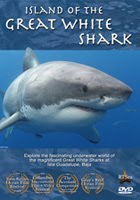
I have just returned from my 17th trip to Isla Guadalupe, spanning 7 years of filming these sharks either for my documentary, Island of the Great White Shark, or on a film assignment, or for stock footage. At the end of each season, I always find myself thinking, "Well maybe that's enough," and yet each fall I am drawn back to this remote spot once more. Such is the allure of the great white shark; there are other sharks that are more beautiful, more exotic, or even more endangered, yet there is something about this particular animal that has found a place in my subconscious.

On this particular trip, I was accompanying my good friend and photo-journalist, Budd Riker, who was there to do a magazine article. This was Budd's first trip to Isla Guadalupe and his first chance to see white sharks in the wild. The trip was arranged by Shark Diver and we were aboard the MV Horizon along with 14 other paying passengers. This would be a somewhat low-key trip for me; whenever I am aboard with paying passengers then my filming techniques become more conservative, confining myself to the cage, as I do not want anyone to assume that they can take the same risks that I do as a paid professional.

This afforded me more time to relax and view these animals without worrying about lighting, exposure, focus, and all the other things that fill your mind when you are hoping to turn a brief encounter into a long-lasting film or video image. This more leisurely pace also allowed me to think back on other memorable trips and memorable sharks - most of these sharks migrate back to Isla Guadalupe year after year and they are easily recognizable, so it's a bit like a reunion and seeing old friends once again.

In particular, I have a sweetheart at Isla Guadalupe: "Mystery," an 18-foot, beautifully proportioned female, stunning in her size and grace in the water. In 2006, while at Isla Guadalupe to get a few remaining shots for Island of the Great White Shark, Mystery appeared to me for the first time and spent two full hours being curious as to the bait offered by the boat and equally curious as to the diver in the water with the large camera. Time and time again she would cruise directly towards me and turn at the last moment, right in front of my lens, providing me with wonderful close-ups. Upon my return home, I re-cut several scenes in my film to take advantage of the magical moments this one particular shark had provided me.

So impressed was I with Mystery that, on a future trip in the Bahamas, I met sculptor Bill Wieger and commissioned him to do an accurate, museum-quality rendering of my favorite white shark based on my video footage. The end result has become a regular feature of Bill's line of animal sculptures but Mystery #1 hangs on my living room wall - a reminder of a special moment in time when nature was most accommodating.

However, for the next two years Mystery was not seen at Isla Guadalupe. Sometimes the white sharks, particularly females, will skip a year. Researchers are not exactly sure why: Does it have to do with reproduction or gestation? Do they simply just stay in one place or travel to a different location? There's no definitive answer yet - one of the many unsolved mysteries regarding these animals - but an absence of 2 years or more is always a reason for concern as the shark may have run afoul of commercial shark fishermen or perhaps was fatally injured in an altercation with another shark.

Or it could have succumbed to natural causes. The life span of a great white shark is estimated to be around 30 to 35 years, but that is an estimate based on the ages of other species and the age of mature white sharks caught by fishermen. No one has found a white shark dead of old age.

I was beginning to worry about the fate of Mystery when, near the end of the 2009 season, she had been spotted at Isla Guadalupe. But she was not seen the following year and had not been spotted this season so far. So once again, I began to wonder if my favorite shark model had met a sad end. Long-standing regulars like "Shredder," a large male who has visited the island every year for the past 10 years, had made appearances - but no Mystery.

During our stay at Isla Guadalupe, we were visited by Dr. Mauricio Hoyos, a prominent researcher of the island's white sharks. I first met Mauricio when he was just a grad student studying under Dr. Felipe Galvan of Mexico's marine institute, CICIMAR, and Dr. Pete Klimley of UC Davis. I featured Mauricio in my documentary and we have remained friends ever since. Mauricio has been coming to Isla Guadalupe each year to tag the sharks with transmitters and track their movements and other vital information so as to gauge the health of the population - he is undoubtedly "Dr. White Shark" of Isla Guadalupe.

As he approached the Horizon in the small boat he uses for tagging, Mauricio announced that there were several new sharks spotted so far this season: several new males and a couple of large females. In fact, over the course of our stay, we saw two new males and one female that were new to the island. Individual great white sharks have unique markings, much like fingerprints, and all the sharks that are seen at Isla Guadalupe are numbered and cataloged for future identification.

And then Mauricio added one more shark that had been identified recently that made me throw my hands up in a combination of joy and relief: Mystery had been spotted. It was getting a bit late in the season but the ol' girl that had graced me with such marvelous images years before finally made an appearance. Later that day, we were visited by a very large female and many thought it might be Mystery but I saw that it lacked her distinctive dark mark, like a birthmark, on the fourth gill slit on the left side. It turned out to be female #109, a very impressive animal and the largest shark seen during the trip.

But even though Mystery and I did not get a chance to meet and say hello after all these years, I was content knowing that she had been spotted. I suppose it's all a bit silly. And, given their estimated life span and the threats that they face year in and year out, it is inevitable that sharks like Mystery and Shredder will disappear from Isla Guadalupe forever - that's nature's cycle of life. However, that is the power of having the opportunity to see these sharks - and many other animals - in the wild. If done responsibly, ecotourism can impress upon the participants both the beauty and fragility of our ecosystems and the importance of protecting them for their own sake and ours.


Click here to see Mystery and learn about Island of the Great White Shark.
Visit Budd Riker Photography.
See Bill Wieger's animal sculptures.
Visit Shark Diver to learn more about shark ecotourism trips.

Saturday, October 8, 2011

A Week for Sharks: CA shark fin ban is now law, Australia concerned over shark diving

It's been a week for sharks, particularly in California. Governor Jerry Brown signed AB 376 into law which bans the trade and possession of shark fins in California. This was a critical piece in a mosaic of shark fin distribution in the northern Pacific ocean.

As reported by COARE (Center for Oceanic Awareness Research and Education), "California's ban complements bans in place in Hawaii, Washington, and Oregon, effectively shutting the west coast of the United States to fin traders. It is estimated that the United States is responsible for 70% of the world's fin imports outside of Asia. With a staggering 85% of those U.S.-bound fins passing through California, AB 376 will have a tremendous impact on shark conservation."

Now we must watch for where the next distribution hubs will appear - there's too much at stake financially for some of these shark fin distributors to simply throw in the towel. And there is also the concern over illegal activities.

But the tide does seem to be turning and other nations are considering tighter regulations or out right bans on shark products. My personal concern is that, for some of the general public, sharks have become the cause d'jour and while there are some hard working advocates who, I am sure, will keep the fires burning for more conservation and regulation, I worry that the general public might tire of the cause - in today's Information Age, attention spans can dry up in the blink of an eye - and without public support, commercial shark fishing lobbyists and business representatives will jump on the opportunity to sway politicians in their favor. Only time will tell.

"The world has been watching and waiting. With similar efforts underway in parts of Canada, and with a ban proposed in China, California's efforts hopefully will ripple into many other places," said COARE.

However, one avenue whereby people can appreciate sharks up close in the wild may soon be curtailed or at least limited. Australia is one of three or four primary locations in the world where people can cage dive to view great white sharks. But Australia's ABC News reports that there
are new findings that white sharks are staying in close to coastal areas, where they are often baited for the shark diving operators, and anecdotal reports of an increased number of shark/surfer encounters has some saying that the number of operators should be halved from four to two and that the number of days in which they can chum for sharks should also be reduced. (Click image to view video.)

There have been studies, both in Australia and Hawaii, that show that the sharks' response to chumming over a given period is a transitory behavior and does not equate into 1.) a significant change in the shark's normal feeding behavior and 2.) that the sharks do not equate the boat-supplied food with humans. However, some thought should be given to the fact that in Australia, they are currently chumming for white sharks as much as 270 days a year - double that of just a few years ago.

On a personal note, today I am leaving for San Diego, California to embark on my seventeenth trip to Isla Guadalupe off the coast of Baja, Mexico, compliments of Shark Diver. Isla Guadalupe is one of the world's premier sites for viewing great white sharks. A population migrates to the
island in the fall months and though Mexican government regulations have greatly scaled back any baiting of the sharks, there are still plenty of encounters to keep the cage-bound divers thrilled and satisfied. I will be accompanying my friend and photojournalist, Budd Riker on his inaugural trip as he takes notes and pictures for a future photo magazine article.

While some zealous Mexican conservation groups have expressed concern that the shark diving operators at Isla Guadalupe have, over the years, disrupted the normal behavior of these sharks; in the seven years that I have been coming to the island I have yet to see any evidence or reason for concern. When the sharks were more vigorously chummed and baited in the past, the sum total of what they consumed was a mere drop in the bucket compared to the normal requirements for their diet which, for adults, consists of primarily seals and sea lions. And as the sharks would inhabit the waters around Isla Guadalupe for just three to four months, it is reasonable to assume that they didn't spend the next eight months wasting away, waiting for when they would return to Mexican waters for some leftover fish parts.

So, I will be heading out in just a few minutes and will post a follow up when I get back in a few days. In the meantime, shark advocates, no time to rest on our California legislation laurels. There's still more work to be done.

Thursday, March 10, 2011

China and Shark Fins: chipping away at the wall

As a follow up to my recent post on shark conservation advocate Stefanie Brendl, here's something from my friends at SharkDiver, running an interesting post today about recent developments in China. SharkDiver seems to always be on top of the latest news regarding sharks and shark conservation and here is news about a Chinese lawmaker taking a position against shark fins. One can only hope that this gentleman and his supporting colleagues will be able to affect real change.

Change in China? Lawmaker Urges Shark Fin Ban

A Chinese lawmaker has proposed that the country's top legislature ban the trade of shark fin, a high-end delicacy consumed by wealthy people in China and East Asia.

Shark-fin trading generates enormous profits, but encourages overfishing and the brutal slaughter of sharks, of which some 30 species are near extinction, said Ding Liguo, deputy to the National People's Congress, the top legislature.

He has filed a formal written proposal to the legislature, together with a dozen of other lawmakers.

China is now the biggest market of shark fin, consuming 95 percent of the world's total with Taiwan, Hong Kong counted, said Ding Wednesday, a billionaire and executive chairman of Delong Holdings Limited, at a panel discussion of the ongoing parliament session.

Shark fin soup has become an essential part of any respectable banquet in China over the years. And there are no laws in China banning shark fin trading, he said, adding a publicity campaign against shark fin consumption has had limited impact.

"Only legislation can stop shark fin trading and reduce the killings of sharks," Ding said, adding China should take the lead in banning the trade.

Fin trade encourages shark-finning, a practice in which the fins are typically cut off while the shark is still alive. The shark then dies a slow death.

Shark fins are used to make a soup that is a high-end staple on the menu of most upscale restaurants. Many of them make the delicacy a signature dish to lure customers, as Chinese culture has lauded shark fins to boost virility and enhance skin quality.

Further, shark fin soup represents wealth, prestige and honor as the gourmet food was coveted by emperors in China's Ming Dynasty because it was rare, delicious and required elaborate preparation.

With both culinary and symbolic significance, the dish is popular at important occasions such as weddings, banquets and important business deals.

Treated with this Chinese cuisine is a show of respect, honor and appreciation to the guests. Ordinary people normally can't afford to have the dish.

Price of shark fins is up to 4,000 yuan (about 600 U.S. dollars) per kilogram, said Huang Liming, duty manager at the medium-level Hongxing Seafood Restaurant in southern Guangzhou city. Shark fins could be sold up to 10,000 yuan per kilogram in upscale restaurants, Huang said.

But sales of shark fins have declined 30 percent recently from a year earlier to at most 0.5 kilogram each day as people prefer healthier and environmental-friendly food, Huang said, adding most of the delicacy is consumed by businessmen.

"People are mistaken by the supposed nutritional value of shark fin," Ding said.

"Research shows the nutritional value of shark fin is similar to that of poultry, fish skin, meat and eggs. It is tasteless and its low level nutritional value is hard to absorb by the body." He said.

Further, it contains high levels of lead and mercury, which most people know little about, he said, adding he neither eats shark fins nor treats guests with the dish.

Ding proposed that governmental officials take the lead in stopping the consumption of shark fin, and that state-owned hotels and restaurants stop serving shark fin.

Zhang Xingsheng, managing director of North Asia Region of The Nature Conservancy (TNC), started an online poll on microblog website of Sina.com since Jan. 8, calling on the country's legislature to ban overall shark fin trading.

As of Wednesday, 27,370 people have voted for the ban, and 440 voted against the ban.

Wednesday, May 12, 2010

Underwater Video Boot Camp: better videos and beautiful sharks

If you or any of your friends have been tinkering with underwater video - either as a hobby or with hopes of becoming a serious filmmaker, here's an opportunity to learn some skills while at the same time getting a chance to behold one of the most magnificent of ocean predators.

In association with Shark Diver, I will be holding an Underwater Video Boot Camp aboard the MV Horizon as we make our way to Isla Guadalupe, Baja to cage dive with great white sharks. These amazing sharks migrate to Isla Guadalupe during the fall months and we will be there during the height of the season (Oct. 10th thru 14th); so you can expect plenty of frisky male and large female sharks.

The Underwater Video Boot Camp is a comprehensive look at underwater documentary filmmaking, designed to not only help make your videos technically better but to also deliver powerful and dramatic messages to best suit your medium of interest: television, online, and more. In fact, much of what you'll learn is just as applicable above the waterline as below.

In addition, Boot Camp members will be eligible for a "mini-film festival" by submitting a 5-minute video of their trip. The videos will be judged by a panel of independent UW videographers and the winner will receive a FREE trip to Isla Guadalupe in 2011.

Here's a short promotional video:


So, come join the fun. For more details, you can call Shark Diver today at 415-235-9410.

Tuesday, September 15, 2009

Oahu Shark Diving: Honolulu county council proposes ban

For several months there has been quite a controversy brewing about shark diving operations on the north shore of Oahu, Hawaii. (See prior post.) Because of a badly bungled attempt by a neophyte to launch a new operation in the southern shore, a grass roots movement grew to have all shark diving outlawed at the island. The two existing operations have been there for many years and have provided safe, responsible shark diving activities several miles offshore for thousands of diving tourists each year.

Patric Douglas of Shark Diver, has blogged extensively on this subject and even traveled to Oahu to meet with Rep. Gene Ward who was, for a time, on the anti-shark diving bandwagon, preparing statewide legislation to ban the activity. But it looks like the Honolulu county council is stepping in to authorize a ban of its own. (See Patric's latest blog.) Maui recently authorized a ban although it was a moot gesture as there are no active shark diving operations on that island. But it did set a precedent and foundation for Honolulu's current action.

Unfortunately, the arguments being used by the Honolulu county council in opposition to shark diving are the same tired - and scientifically disputed - arguments that are often bandied about: the activity threatens others in the water; it is disrupting the sharks normal behavior. On top of that, the ban references Hawaii's cultural history and respect for sharks (there are those who cite Hawaii's cultural history of revering sharks as ocean gods and that feeding them is disrespectful).

But here are the facts:
  • The sharks at the north shore congregate several miles out in an area where crab fishermen dump their bait. The sharks were there before the shark diving operators came and the sharks will be there after they're gone.
  • According to a detailed study from the University of Hawaii, the shark diving activities in the north shore do not pose a threat to swimmers, surfers, or any other coastal water users. They are not attracting the sharks closer to shore.
  • The ordinance ban refers to Hawaii's cultural history regarding sharks (ie: ancient gods, do not feed) and yet no one is taking the crab fishermen to task for their bait dumping which certainly feeds the sharks.
  • The ordinance's "reverence" for sharks is in conflict with Hawaii's known reputation as a processing and commerce center for shark fins. (Ex: I have one can of shark fin soup that I use as a prop in my speaking engagements; it's a product of Thailand, wholesaled in San Francisco, and purchased from a supplier in Hawaii. So, when we complain about the Asian demand, the U.S's hands are not exactly clean.)
Sadly, the proposed ordinance is one based on fear, misinformation or a lack of understanding or accepting the facts, and a manipulation of Hawaii's culture regarding sharks. With a ban in place, will the sharks at the north shore be threatened in any way? Perhaps not, although foreign commercial shark boats operate close by. But definitely thousands of divers will be deprived of seeing and appreciating these animals first hand, becoming ambassadors to the cause of conservation; and Oahu stands to lose important tourist dollars.

If you would like to express your opinions to local Honolulu council officials, Patric has posted their names and contact info.

Monday, June 22, 2009

Shark Divers: announces new great white shark location for film and television

============================================
SharkDivers.com -- Press Release Distribution 6/24/2009 ============================================

--- [ FOR IMMEDIATE RELEASE ] ---


CONTACT:
Patric Douglas, Shark Divers
1-888-328-7449

staff@sharkdivers.com
www.sharkdivers.com

*
Shark Divers Announces New Great White Shark Location for Film and Television*

San Diego, Calif. -- Shark Divers CEO Patric Douglas will unveil the
world’s newest white shark aggregation site exclusively for film and television productions on July 4th , 2009. “This new white shark site is a game changer,” says Douglas. “I have not seen anything as pristine, accessible, and ready made for television productions since the discovery of Mexico’s Isla Guadalupe in 2001”

A limited number of production companies will be introduced to the site in 2010 (January through April), in order to maintain the location's pristine, untamed nature, as well as for the benefit of the white sharks. Typically, divers are encountering up to 10 animals a day in 100 foot visibility. The site enjoys deep conservation and research storylines."You only discover new sites like this once every 10 years," says Douglas. "Expect to be blown away.”

“As a production company looking for the next great shark show concept, you need a professional, shark-centric company to assist with the development of your ideas," says Douglas. “This is what we do: pro-shark productions with an emphasis on shark research." For the past 8 years Shark Divers' parent company, Shark Diver, has been innovating and supporting Mexican lead shark research at Isla Guadalupe, Mexico with U.C Davis and CICIMAR.

About Shark Divers


As a film, television and tourism spin-off of the commercial shark
diving company, Shark Diver, Shark Divers provides access to unique shark sites worldwide in a cost-effective environment with an eye towards shark production values that go light years beyond "the man on the sand with the bait crate." Shark Divers' experienced crews not only know sharks, but also have extensive experience in film, television, current research and current trends in shark productions. Shark Divers' crews are a unique group of shark researchers and underwater-film experts who can show your production company shark sites and storylines that capture the public’s imagination. For more information, visit the Shark Divers website at www.sharkdivers.com or contact Patric Douglas at staff@sharkdivers.com .

Shark Divers | “Changing the way the public sees white sharks…forever”

Sunday, March 1, 2009

Sharks Myths and Misconceptions: the hits just keep on coming

While NGOs are working to improve government and public opinion regarding the need for shark conservation and protection, we are still getting items popping up that either fuel the myths and fear that people have about sharks, perpetuate bad ecology, or are just plain dumb.
  • A shark of, as yet, undetermined species bit a surfer at North Avalon beach in Sydney, Australia yesterday. This has been the third such incident in 18 days - the other two attributed to a bull and white shark. While the beach has been temporarily closed, the Australian press has done a pretty fair job of keeping a lid on the potential for shark hysteria. What has been interesting is to watch the news as it travels across the worldwide media: what becomes less newsworthy is the pronouncements for calm as the focus leans towards the recent frequency, subtly (or not so subtly) introducing the fear element. (Article.)
  • Again using the element of fear: faced with a government mandated 40% reduction in their catch limits of sharks, Australia's Queensland Seafood Industry Association is claiming such a reduction will generate more shark attacks. But scientists, like Dr. Colin Simfendorfer, argue that the commercial catch primarily consists of smaller, harmless species, "Most of the commercial catch is things like milk sharks, black tips, spot tail sharks and scalloped hammer head, which are relatively small and really don't hassle the people." In opposition, fisherman are using inflammatory language. "The ramification from this decision is you are putting human life at risk," said fisherman Greg Radley. "People that allow their children to swim in the ocean deserve to know these things so they can make up their own minds about the dangers." Again, it would seem that, to some, when humans enter a foreign ecosystem, they trump all other considerations. (Article.)
  • With the passing of Frank Mundus, famous (or infamous) shark fisherman, the fate of his vessel, the Cricket II, was determined through auction and the new owner plans to continue to use it for shark fishing (there are still shark fishing tournaments taking place in the New England area, taking sharks for no other reason other than trophies and prize money). My colleague at Shark Diver, Patric Douglas, had made a generous pre-auction bid to the Mundus estate which was refused; the auction ultimately brought in a figure much lower than Patric's. His intent was to use the vessel for shark ecotourism but it would appear that, for the moment, an infamous lineage will continue. (SharkDiver posting.)
Grumble, grumble, grumble. . .

Friday, January 30, 2009

Shark Sightings: a humorous perspective from New Zealand

Here is an amusing article from Stuff, a new Zealand web paper, first brought to my attention by my friends at the SharkDiver blog. The writer is having fun with all the news media hysteria that seems to always erupt with every shark sighting.

With every discussion or screening/lecture I conduct, at some point I have to respond to an audience member's question about whether the oceans are safe. Out comes all the statistics to try to put it in perspective. It still seems to be a "built-in" nervous response with the general public caused by, on average, a half dozen shark-related fatalities worldwide each year. Then they all drive home on the freeways where 50,000 people are killed annually in the U.S. alone.

Here's a part of Linley Boniface's take on it:

Shark yarns make me yawn
Linley Boniface
The Dominion Post | Monday, 26 January 2009

I never thought I'd say this, but I am bored with sharks. This summer, it has been impossible to open a newspaper or turn on the TV without being subjected to yet another daring shark escape story.

On closer inspection, these yarns have invariably turned out to involve nothing more thrilling than an exceptionally timorous surfer paddling for safety after spotting a fishy shadow pottering quietly along the shoreline, minding its own business.

While sharks in Australia do, as the Australians rather wonderfully say, "take" the occasional swimmer, Kiwi sharks are about as predatory as a newborn ladybug.
Occasionally, a shark will accidentally graze a surfer's calf with a tooth, while yawning: cue national panic and the mass closure of beaches.

Silliest of the many absurd shark reports the media has pestered us with this summer was one from Radio New Zealand. The national broadcaster quoted Constable John Paul Tremain as urging people to stay away from beaches near Dunedin because a large shark had allegedly chased a couple of surfers from the water.

RNZ said Constable Tremain did not know the "exact size or breed of shark" - terrifying news in itself; someone is breeding the things! - but was convinced it was "lurking with intent". Lurking with intent? Intent to do what? The sea is where sharks live: sharks no more lurk in the sea than I lurk in my house.

I would have thought the fact that the shark didn't bother eating the two surfers was sufficient proof of its benevolent intentions, but it would have had to have been waving a white flag and making a peace sign with its dorsal fin to alleviate Constable Tremain's suspicions.

(Read complete article.)

Monday, December 29, 2008

Better Year for Sharks 2008: a look back by SharkDiver.com

There are a lot of year-end assessments being made by many leading conservation groups and I'll be highlighting some in the coming days. From my friends at SharkDiver.com, here's a look back - or maybe I should say a look forward . . .

"As we get close to a wrap for 2008 there's a chance to look back at a remarkable year for the shark diving industry and for shark conservation.

To say that things have solidified on the conservation front is an understatement...what we have now is a full fledged, organic, top to bottom shark conservation movement, and it's paying dividends.


Last week
Yahoo's Alibaba and Taobao web portals announced they are apparently discontinuing all advertising and trade of shark products as of January 1st, 2009. This stunning announcement lays two more giant cornerstones into the shark conservation movement.

On the commercial shark diving front a growing awareness of "being a global 200 million dollar industry" and the absolute need now for local site conservation efforts. The old paradigm of just maintaining commercial operations is being replaced by site activism, awareness, site stewardship and shark conservation measures. It has taken a series of horrific local site kills from South Africa to the Bahamas to bring this issue to the front burner-but it's here and operations are slowly pushing back. It is also good to mention the several forward thinking operations from Fiji to South Africa who have been leading this charge for years now. It starts with "One".

Has this been a
good year for sharks? No, the slaughter continues unabated, but that slaughter is no longer being conducted in a total vacuum. NGO's, websites, blogs, major news outlets, literally thousands of people are, getting involved, raising banners and spreading awareness like wildfire.

It's
remarkable really when you consider all of this has been for sharks. Not Panda's (sorry Panda People) but sharks. There's still a lot of work to do, the announcement by Alibaba and Taobao comes with a caveat yet to be announced. Our hunch is this valuable division within the company has been transferred to another site perhaps as a stand alone "take the heat and answer to no one", time will tell.

For now we can all enjoy the fact the shark conservation round table has no empty seats...let the fist pounding begin!"

Tuesday, September 30, 2008

Shark-Free Marinas Initiative, Bahamas

I'm pleased and honored to assist SharkDivers.com with this new program they just recently devised to help promote the conservation of sharks. It's one way to encourage commerce to get on board and make a difference, realizing the long-term benefits for Bahamian tourism.

Shark-Free Marinas Initiative

In the spring of 2008,
Shark Diver was alerted to a female Tiger shark that was taken off Freeport, Bahamas. The animal was caught by a sport fisherman and displayed at a local marina where it was cut open to reveal several half-dead pups inside, some of which were dropped into the marina and struggled to survive for a few days.

We have decided to act. The Government of the Bahamas allows sport fishing for sharks and we fully support sustainable catch-and-release fisheries. However, the taking of gravid female sharks for a one-time photo op and a set of jaws is a senseless waste of a valuable resource.

The Shark-Free Marinas Initiative is a way to work with existing resort marinas in the Bahamas that cater to sport fishing vessels, seeking their cooperation in asking them not to allow sharks to be taken and displayed at their marinas. This initiative, in turn, encourages the use of catch-and-release programs and promotes sustainable fisheries.

Each marina and resort that supports this initiative will receive both, a metal sign and logo we have created to post in their marina office and the following information for posting on their marina websites:

(Name of resort and marina) supports the Shark-Free Marinas Initiative in the Bahamas region. The Bahamas is home to many shark species and the healthy reef systems that support these sharks. We feel the one-time harvesting of sharks for photo images or souvenir jaws is not in the best interests of the Bahamian people or Bahamian tourism.

Worldwide, sharks are being decimated for fins and jaws at a completely unsustainable rate. An estimated 60 million sharks per year are taken in this manner. By asking vessels not to arrive at our facilities with sharks, we hope to encourage responsible sport fishing, thereby ensuring a lasting and healthy population of sharks in Bahamian waters for future generations and contributing to the overall health of the Caribbean.

Please practice catch-and-release with all sharks and enjoy our facilities.

Welcome to the Bahamas.

SharkDivers' Note: This initiative is not only limited to the Bahamas and the several marinas who have expressed an interest in joining it (press release to follow). As a concept we will allow and help promote any organization or group to use this logo to enact their own regional Shark-Free Marinas. In places like Florida and the East coast this could conceivably help redirect shark kills and weigh ins. It offers the opportunity for marinas to claim the "Green Card" while at the same time redirecting fishermen into sustainable fisheries. Special thanks to Richard Theiss RTSea Productions.

One blog, one website, one person at a time.