Tuesday, December 7, 2010

Egypt's Shark Frenzy: incidents bring scientists in search of answers

Having taken a few days away from the RTSea Blog while on a film assignment, I return to find the public relations wheels in full spin at Sharm el-Sheikh, Egypt, with sharks being on the losing end once again.

Over the past few weeks, there have been five shark incidents in the waters off this popular Egyptian tourist resort, reaching a fevered pitch with the death of a 70-year old German woman who was snorkeling close to shore. There's no doubt that the frequency of these encounters is unusual and the pursuit of a cause-and-effect would be a sensible step. However, first the media and the knee-jerk reactionaries step in, ala Jaws, with beach and dive site closings, hunts for "killer sharks" and government officials concerned with the loss of substantial revenue for the Sinai tourist business. News coverage is laced with a multitude of theories put forth by a cavalcade of experts (as of this writing, there are 11 articles listed in UnderwaterTimes.com alone).

While the Egyptian government has enlisted the services of several shark experts and shark conservationists, including Dr. George Burgess of Florida's International Shark Attack File and Marie Levine of the Shark Research Institute, to investigate these attacks, hopefully, at some point, responsible parties will all collectively take a breath and step back to investigate the situation calmly and dispassionately.

Step One: Understanding the basics
With all the frenzied media proclamations of a shark attack binge taking place, some fundamental facts get sidelined. And while they have been mentioned many times before, it is worthwhile to touch on them one more time.
  • Of the 380+ species of shark, there are only a handful that, given the right circumstances, pose any threat to humans.
  • Large sharks are apex predators, top-of-the-pyramid hunters, just like "lions, and tigers, and bears, Oh my." And as such, we should not be surprised by their ability to inflict serious or fatal wounds.
  • But unlike those land-based predators, sharks do not ever place humans on their menu. The overwhelming majority of shark attacks are the result of mistaken identity.
  • Sharks play an absolutely critical role within the marine ecosystem as predators and scavengers. To eliminate sharks either regionally or globally simply for our own sense of personal safety would be total folly and absolutely disastrous for maintaining a healthy ocean environment.
  • That the "killer" shark or sharks could be located and caught is utterly ridiculous. It is a totally random exercise, like finding a needle in a haystack, and typically results in innocent sharks getting killed (not that any sharks were guilty in the first place). Realistically, its purpose is to assure the public that steps are being taken to protect their safety - pacification through public relations without any real understanding.
According to the Hurghada Environmental Protection and Conservation Association, "Two individual sharks were caught on 2 December, one Mako shark and one Oceanic White Tip shark. Comparing the photographs of the Oceanic White Tip shark responsible for the second attack with the images of the captured Oceanic White Tip shark, it is clear that they don't show the same [shark].”

Step Two: Taking reasonable measures
Initially, Egyptian officials closed the beaches at Sharm el-Sheikh and many of the local dive sites, but by the weekend, all were re-opened. If one considers the topography of the Red Sea and how it impacts shark movements, it becomes apparent that such beach closures would seem perhaps reasonable but ultimately unnecessary.

"The Red Sea is one of a kind. It is narrow and deep and that means that whereas in the Mediterranean, sharks are found only in the middle of the sea, in the Red Sea they can arrive close to the shore. If you go out 50 meters in Eilat [Israel], you are already at a depth of 100 meters, so big sharks can get pretty close to the shore," said Dr. Avi Baranes of Israel's Interuniversity of Institute for Marine Sciences. I can personally attest to the underwater landscape of the Red Sea. It is one of my all-time favorite dive locations and I found that, at many sites, I could reach considerable depth while still quite close to shore.

But if you are a pelagic or open water shark, like the suspected oceanic whitetip shark, then it is unlikely that you will stay long in any one area. Said Dr. Mahmoud Hanafy, a biologist at the Suez Canal University, "[The government]
adopted the wrong approach by shutting down the diving sites. It’s nonsense that they shut down a diving site like Ras Nosrani, and allow it in Ras Muhammad. A shark swims hundreds of kilometres a day. Today it can be in Ras Nosrani, tomorrow in Tiran, and after somewhere else. What’s the point of shutting down a site then?”

While calm is slowly being restored by those in charge, they are now beginning to turn to the experts for possible explanations as to the specific causes for the recent attacks and whether there is an overriding reason or issue at work here. There are very well respected shark experts in the region who have been studying the sharks of the Red Sea, Mediterranean, and Arabian Seas for many years. And assistance can be provided by major shark conservation organizations and other researchers globally.

But regardless of the group, it will take some time to ascertain the root causes. As reported in the U.K. Telegraph, "
Elke Bojanowksi, a leading researcher on Red Sea sharks, admitted that the international team hastily put together to track the predators down was in possession of very few details. 'No one can honestly say whether it was one shark or more,' she said. 'We are trying to get more information on what happened and why it happened.'"

Step Three: Theories that must be investigated, not sensationalized It seems a reasonable assumption that something has served to increase the number of sharks closer to shore, thereby increasing the odds for shark-human interaction. But to make that determination, the researchers will need to calmly and methodically investigate a wide range of possibilities. In the end, it might be just one or a combination of factors. There are already many opinions and accusations swirling about, being picked up and sensationalized by the media. They range from the results of overfishing, to illegal shark feeding, to the dumping of livestock at sea.

As in many other areas of the world, the Red Sea has felt the impact of overfishing. This can mean a loss of potential prey for many sharks and could alter their behavior, with the sharks coming in closer to shore in search of food. Doing so would increase the likelihood of a shark coming in contact with a snorkeler or swimmer away from the beach. Then the odds of mistaken identity while seeking food begin to soar. However, it doesn't necessarily explain this recent rash of attacks that all took place within a fairly small area - just a three-mile stretch of shoreline.

Illegal shark feeding or chumming could be involved in attracting more sharks, thereby increasing the odds for an encounter. Now first, I need to say that based on my personal and professional experience, I do not subscribe to the notion that feeding sharks makes them associate man with food (as in becoming potential prey) - a theory often used as a rallying cry by shark diving opponents. It hasn't been scientifically proven and, in fact, there is documented research to the contrary.

However, repeated feedings can attract sharks to an area (conversely, when the repetitive feeding stops, the sharks dissipate), and if that area is in close proximity to bathers . . . well, there go those odds again. This is why responsible shark diving operations are always conscious of where their activities take place. They consider location, topography, the species in the area that might be attracted, the intensity or longevity of the feedings, the type of food or bait used, and the proximity of swimmers or bathers.

Researchers and government officials will need to investigate not the activities of legitimate dive operations but some of the local operators or other tourist operators who may not be so conscientious. Quoting an anonymous dive instructor, the U.K. Telegraph reported,
“'It is more likely to be the glass-bottomed boats that take tourists out fish spotting for the day. Sharks are easily attracted by being fed.' An instructor working for Ocean College dive centre in Sharm el-Sheikh warned that the less reputable diving schools were using bait to entice oceanic whitetip sharks and impress their clients in a bid to compete with the more established companies."

The last of the current theories involves the dumping of dead livestock in the nearby waters by ships arriving from Australia with sheep and cattle bound for use in November's Muslim festival of Eid al-Adha. This would certainly attract sharks and increase the possibility of shark-human interactions, with sharks mistaking a swimmer of snorkeler for a floating carcass.

The Shark Diver blog immediately started investigating when the latest attack was reported and interviewed Jochen Van Lysebettens, manager of the Red Sea Diving College at Sharm el-Sheikh:
SD: So what is happening in Sharm el-Sheikh, what's the word on the street, what are the local dive shops talking about?
JVL: There are rumors, Chinese whispers, of sheep floating in the water.
SD:
Sheep in the water? How does a sheep get in the water?
JVL:
One instructor from another dive shop says he saw a dead sheep floating in the water a few days before the first attack, could have been transported and fallen into the water. Is it chumming or not, I do not know. But, as I said these are rumors only.

# # #

Once the proverbial shark mania has quieted down, perhaps the researchers will be able to determine a root cause to these recent events and the Egyptian government will take reasonable, measured steps that will address the issues. The one thing that has been clearly proven time and time again throughout the world: the sharks are not at fault. One way or another, mankind has encroached upon their domain, and nature has a way of telling us when we have gone too far.

Wednesday, December 1, 2010

Endangered Sea Turtles: bringing awareness through celebrity involvement

Having celebrities involved with conservation awareness campaigns or other related promotions has been around for some time. As with other important causes, celebrity endorsements can attract both attention and needed dollars for ecological issues and the organizations that address them. The challenge is in finding the right person to reach a particular audience and deliver a message that resonates.

At one end of the spectrum are the serious and dedicated celebrities who genuinely give considerable time and effort; people like Ted Danson or Leonard DiCaprio. From there it travels down a sliding scale of both gravitas and extended involvement. But not to be cynical of their participation; it's not necessarily a self-serving exercise on their part. There hasn't been shown a strong correlation between a celebrity's attachment to a cause and a marked increase in their box office draw or CD sales or television ratings. So, credit where credit is due for their commitment.

Oceana has been waging an ad campaign for sea turtle protection using some of today's celebrities that can connect with a younger audience. Not younger as in children, but more targeted to the "Post-Boomers" and "Gen X" crowd, the next generation in line to inherit the burden of addressing ecological issues. Here are two PSA (public service announcements) Oceana produced, one with actress Kate Walsh and one with comediennes Rachael Harris and Angela Kinsey. Each PSA has a different flavor or tone; each has a different level of information presented both in words and in images. Each is trying to connect with different audiences.

Kate Walsh Wants to Save Sea Turtles from Oceana on Vimeo.


Rachael Harris and Angela Kinsey want to 'Get Turtles Off the Hook' from Oceana on Vimeo.


Of course, the nagging question with all celebrity endorsements is whether they generate any real results on behalf of the cause or issue at hand. Do they simply generate additional funding for an organization? Does that equate into real action and quantifiable results? Having been involved in media communications for many years, I know that it is often difficult to establish a "cause and effect" with public awareness promotions. It's part calculated science and part art form.

There's no doubt that sea turtles - all species of which are threatened with extinction - need protection. But you must first start with broad public awareness which, in turn, can support organizations who, in turn, work with governments and businesses to initiate protective measures. To do that means connecting with the people - the young and the old, the silly and the serious, the knowledgeable and the ignorant - anyway you can.

See more of Oceana's sea turtle campaign at their website.

Tuesday, November 30, 2010

ICCAT & Tuna: "extraordinary" meeting - depends on who you ask

One final report on ICCAT (International Convention for Conservation of Atlantic Tuna) and the conclusions from its recent annual meeting: the future of bluefin tuna in 2011. As reported earlier, bluefin tuna - particularly Atlantic and Mediterranean tuna - are on perilously shaky ground. ICCAT currently limits its members to a catch quota of 13,500 tons of tuna. This past weekend in Paris, ICCAT set a new level for next year: 12,900 tons - a reduction of only 600 tons or 4 percent.

In ICCAT's press release, the meeting was described as "extraordinary."


Here is how the AAAS (American Association for the Advancement of Science) summed it up:

"At its annual meeting last year, ICCAT decided to set catch levels so that bluefin tuna would have at least a 60% chance of recovering by 2022. In October, ICCAT's scientific advisory committee reported that this goal could be met by keeping annual catch limits at the current level of 13,500 tons. Improving the chances of recovery, they added, would require cutting catch levels to below 6000 tons. On Saturday, ICCAT member countries agreed (pdf) to a 12,900-ton ceiling for eastern Atlantic and Mediterranean bluefin tuna."

Here is how Oceana, who was in attendance to promote a range of tuna, billfish, turtle, and shark conservation measures, described the meeting's conclusions:

"While ICCAT reduced the allowed catch for eastern Atlantic bluefin tuna to 12,900 tonnes, this four percent reduction is almost laughable. Furthermore, ICCAT failed completely to take action to establish spawning ground sanctuaries, a basic and much-needed management measure. Oceana supports a closure of the bluefin tuna fishery until a system is in place that follows scientific advice on catch levels, ensures stock recovery, stops illegal fishing, and protects spawning areas in the Gulf of Mexico and Mediterranean Sea.

'This trivial quota reduction for the eastern bluefin tuna stock is a political decision, not a science-based one,' said Maria Jose Cornax, fisheries campaigns manager for Oceana. 'Without an industrial fishing closure, it actually encourages illegal fishing and fails to ensure stock recovery. This political outcome is not good for the fish or the fisherman, and will certainly result in further stock depletion.'”

Analogous to ICCAT and the economic interests it protects, is the energy/fossil fuel industry. Oil companies could break the back of our fossil fuel addiction in relatively short order with a major commitment and shift to alternative energy sources. They could dominate that new market as surely as they dominate oil and the environment would probably be the better for it in the end. But their focus is primarily on sustaining current business models with just enough token support in alternative energy so as to appear as if they are forward-thinking. They know what the future holds in store but choose not to fully address it.

ICCAT is following the same path, sustaining a dying fishing industry at the expense of dwindling marine species. Conservation groups, to their credit, will continue to pressure ICCAT to reconsider its fundamental strategy of minimal change for the sake of short-term financial goals. But what will it take? An empty sea?

Read the ICCAT press release.
Read the AAAS Science
article on the ICCAT meeting.
Read Oceana's
article on the ICCAT meeting.

Sunday, November 28, 2010

ICCAT & Sharks: a mixed bag of results from meeting

International organizations that actually have the power to regulate commercial activities for the benefit of ecological or conservation interests generally do so in incremental steps. The political and economic implications of their actions on behalf of the environment or endangered species can often dull the force of progressive policy proposals, and this can be a source of great frustrations to many conservationists. It's a tough and often frustrating arena to work in and if you don't have the stomach or the patience for it, it's best to steer clear and focus on regional or national initiatives - you'll probably lead a more stress-free life.

The International Commission on Conservation of Atlantic Tuna (ICCAT) is a worldwide group of some 48 parties (including the European Union) which meets annually to consider commercial quotas and conservation regulations for tuna, billfish, and sharks. This year, ICCAT entertained six different proposals regarding the taking of several species of shark. The end result was a mixed bag of significant progress, a few exemptions or loopholes retained, and some proposals going nowhere. Many of the proposals revolved around oceanic whitetip, porpeagle, hammerhead, mako, and thresher sharks - all listed as either globally endangered or vulnerable to extinction by the IUCN (International Unions for Conservation of Nature).

The Good News:
  • The ICCAT agreed to prohibit retention of oceanic whitetip sharks (a fancy way of saying catching oceanic whitetips is no longer allowed by ICCAT-participating countries).
  • The exploitation (taking of) hammerhead sharks was restricted. There is an exemption though, which is listed in The Bad News below.
  • ICCAT agreed to establish a process for penalizing countries who do not accurately report shark catches. Unreported shark catches is considered a major international problem by many conservation groups.
  • A reduction of fishing pressure on shortfin makos, with prohibition penalties for parties that do not accurately report catches, was agreed to. But there's a caveat (see below).
The Bad News:
  • A proposal to prohibit retention of porbeagle sharks failed because of a lack of consensus from the EU, primarily due to resistance from Canada.
  • Exemption to the hammerhead shark restriction: developing coastal states can catch hammerheads for food but must ensure that they do not enter the international trade.
  • Due to objections from Japan, Korea, and China, the restrictions on shortfin mako sharks will not begin until 2013.
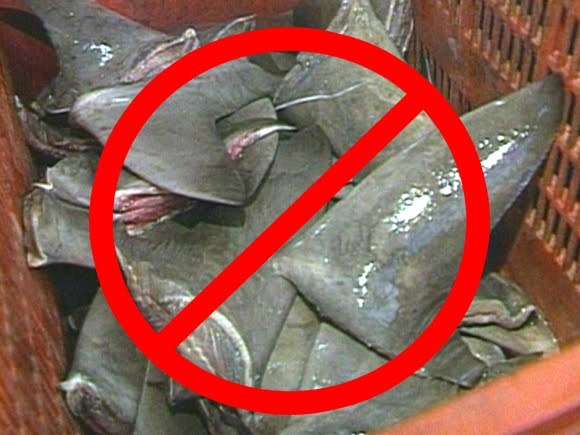
  • For the second year in a row, a proposal to ban removal of shark fins at sea was tabled, with Japan opposing the ban. Many countries have or are in the process of initiating this ban within their territorial waters. But in international waters, it's shark finning as usual.
Pro-shark organizations, like Shark Advocates International (SAI), that patiently work with the ICCAT, are pleased with the good news but stand firm that more needs to be done. According to Sonja Fordham, president of SAI, "ICCAT has taken significant steps toward safeguarding sharks this week, but much more must be done to effectively conserve this highly vulnerable species. We urge ICCAT Parties to promptly implement the shark measures agreed this week and to build upon this progress by proposing complementary international safeguards for other oceans and additional shark protections at next year's ICCAT meeting."

ICCAT is one of a few worldwide bodies where international conservation policies and regulations can get hammered out. But in the world of international diplomacy, it can get ugly, with economic, political, and ecological interest groups maneuvering to exert influence. Think of it as diplomatic kickboxing - but it's the sharks that are taking all the blows.

Read PR Newswire press release.

Saturday, November 27, 2010

Aquafarming: salmon and shrimp highlight risks and potential

Aquafarming, also known as aquaculture. To some it holds the key to truly sustainable seafood; to others it represents an ecological threat. On the one hand, aquafarming shifts the burden off wild fish populations but it also introduces potential ecological imbalances with excess antibiotic use, concentrated fish waste, and an unattractive ratio of the amount of feed required for a pound of fish.

Long time readers of this blog know what my position is. I favor aquafarming as I believe it holds the best potential, the best alternative to today's industrial fishing. As I see it, the concept of sustainable seafood indeed does relieve some of the pressure off declining fish populations, but it is only postponing the inevitable. So long as mankind interjects itself as a predator in a naturally balanced marine ecosystem, that system will ultimately suffer. Any seafood taken from the wild is "bushmeat" as Dr. Sylvia Earle describes it and, on land, we stopped taking bushmeat to feed the bulk of the population centuries ago.

While I am a supporter, I will also be the first to say that current aquafarming is beset with major problems that need to be addressed to protect surrounding waters and/or improve the quality of the end product. Take, for example, farmed salmon.

Genetically-Altered Salmon
While most of the salmon that is sold in markets is farmed, it is not done in the most efficient manner. It takes approximately 3 pounds of feed (usually fish meal products, which cuts into the populations of those fish used as feed) to produce 1 pound of salmon. Being sensitive to these types of imbalances (like the large amounts of CO2 produced to generate a gallon of CO2-reducing ethanol), researchers have been using gene-splicing to produce variants that grow faster - as much as twice as fast - thereby requiring less feed to reach a commercially marketable size. TIME magazine listed the new salmon as one of the top 50 best inventions of the year.

But would you consume genetically-altered salmon (or "Frankenfish" as its critics have dubbed it)? Well, we have been consuming genetically altered plants, like rice and corn for some time. And it would appear that the fast-growing salmon will likely gain approval for sale from the U.S. Food and Drug Administration (FDA); open hearings have now concluded but there are still some FDA committees that are looking into health issues such as allergies to the new salmon.

Some environmentalists opposed to genetically-engineered seafood are focusing arguments on the impact to wild populations if the new salmon were to be accidentally introduced into open water. Farmed salmon is usually raised on land but the potential is there for it to be inadvertantly introduced and the fear is that the new salmon would quickly come to dominate and eradicate the wild species. There has been talk of a "Trojan Gene" effect, used to describe the genetic advantage of the new salmon to take over.

This is being hotly contested, coming from an unusual source: the scientist first responsible for proposing the Trojan Gene hypothesis. The Los Angeles Times reported that Professor William Muir of Purdue claims his work on the Trojan Gene is being misrepresented. His original hypothesis was based on a genetically-altered salmon that grew faster and bigger, with size giving it a potentially distinct advantage. But the salmon that has been developed does not grower larger, simply faster.

According to the Times,
"Muir told the FDA Veterinary Medicine Advisory Committee evaluating the GE salmon that 'the data conclusively shows that there is no Trojan Gene effect as expected. The data in fact suggest that the transgene will be purged by natural selection. In other words the risk of harm here is low.'”

Exaggeration or misrepresentation, like negative politics, always succeeds in clouding the issue, so I suspect it will take some time before it is sorted out by the FDA and a decision is rendered as to whether genetically-altered fish will be available to the consumer. And then it will need to prove itself in the open marketplace.

Shrimp: Wild Caught or Farmed
The market demand for shrimp is another example of how aquafarming holds great potential but must address some serious issues. Shrimp is some of the most popular and affordable seafood in the world; but the two primary methods for harvesting shrimp leave much to be desired. For one, shrimp is caught in the wild using bottom trawling nets which rake across the ocean floor catching the bottom-dwelling shrimp but also a wide range of bycatch - from fish to sharks and rays to sea turtles. In the process, this fishing technique leaves behind a shattered and leveled seafloor, making it one of the must destructive fishing techniques currently used.

The other technique, typically found in Asian countries, is aquafarming shrimp in large but densely packed ponds. The possibility of disease in this situation is extremely high and so a variety of antibiotics get introduced - many of which can pose a threat to humans. The use of antibiotics has been a major issue throughout all of aquafarming because of the potential for diseases to develop drug-resistant strains.

The website ShrimpSuck.org takes the position that consumers should choose not to purchase or consume shrimp at all because of the dangerous or destructive outcomes of either shrimp fishing with bottom trawling nets or aquafarming. That would seem to be a logical position at first blush. However, with demand high and cost cheap, it is likely that the market for shrimp will remain for some time. Therefore, I would propose that efforts be concentrated on improving shrimp aquafarming as there does not seem to be another viable and effective method for catching wild shrimp that excludes bycatch or damage to the seafloor. Larger ponds, better water filtration, different or lower dosage antibiotics - there are many steps that could be researched.

Aquafarming: fraught with serious issues that need to be addressed if it is to be a viable alternative to destructive commercial over-fishing or to seafood bans, whether voluntary or imposed by species extinction. Economics and the need to feed a growing populace compels us to get aquafarming on a productive and environmentally-safe track.

Read about inventions in TIME.
Read about genetically-altered salmon in the
Los Angeles Times.
Read about shrimp at ShrimpSuck.org.

Bahamas' Oceanic Whitetip Sharks: can divers and researchers work together?

The Oceanic Whitetip shark: a fascinating and elegant shark and, as a pelagic or open water shark, one that does not encounter people often. It has a bad reputation in some corners as it has been implicated in human fatalities following wartime shipwrecks. But, like other species of shark, the oceanic whitetip has paid dearly in the commercial shark fishing trade and it has become one of the rarer of all shark species. By example, its numbers in the Gulf of Mexico have been reported to have declined by as much as 99.3 percent.

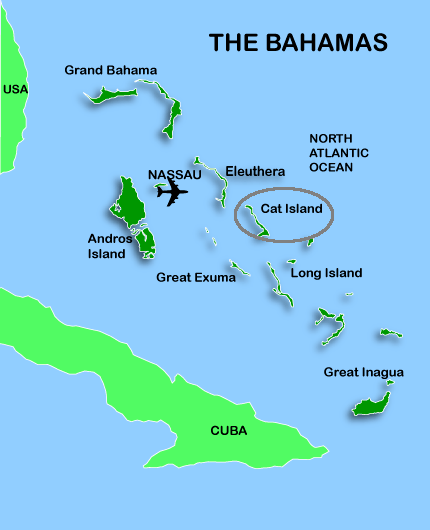
In the Bahamas, the remote Cat Island is reporting a respectable number of oceanic whitetips - given the current population numbers - and this has attracted the attention of several shark diving operators. Patric Douglas of Shark Divers has some interesting suggestions as to how these sharks could be made both a source of tourism and conservation research efforts. Patric is known for calling it as he sees it and, while not currently planning shark diving operations there, he is concerned that the oceanic whitetip site at Cat Island needs to be properly managed to insure it is not carelessly exploited by dive operators or sport fisherman.

Here are his recently posted suggestions:
1. A Bahamas Carcharhinus longimanus [oceanic whitetip] educational website. This site will feature the animals, the site, the conservation status of these animals, and tie in directly to ongoing efforts of PEW and the BNT [Bahamas National Trust]. The site would also feature several pro-shark conservation PSAs; just the sharks, not the divers and the sharks. We're not looking to redefine these animals, or even make a simple point about how safe they may or may not be with divers, that conservation/industry message can be left for another time and place. Under conservation also add research and a non-profit donations page.

Additionally this should tie into PEW Trusts, and here's why. Conservation efforts need to be funded; real shark conservation sometimes requires a "step back moment" where you have to realize who has the conservation horsepower to get something done or not. After all we're in this for the sharks. If someone can run the ball into the end zone let's get it done. Hanging any conservation effort on the mantle of friends and industry buddies who lack the horsepower does nothing for sharks...but that's another post for another time.

2. A Bahamas Carcharhinus longimanus research effort with immediate tagging and tracking of these animals. This effort should be a "Bahamas thing" and there's plenty of folks who can get the job done, they just need funding. In addition operators could charge an extra $100 per diver for the project. Divers will pay for this, gladly, if they believe this benefits the sharks, and it will.

Some of you will start screaming right about now as you wipe off your
Epoque D170 Dome Ports, tags on Carcharhinus longimanus? Yes, tags, and here's why. If you want to hedge against sport fishing interests, declaring this site an active shark research site will get the job done. It lends instant credibility to the counter charge that shark divers are just making money from these sharks, and with real data, Bahamian conservation laws put on the books have teeth.

3. Cross-operator/conservation promotion. Every operator servicing divers and
Carcharhinus longimanus at Cat Island should have the new conservation website and research efforts on their own sites home pages with a set industry dive protocol agreement. Again a tall order, but we're talking about a brand new shark site with just two or three guys [shark diving operators]. This is not Isla Guadalupe, or even South Africa. As industry members we can look back and see with 100% clarity where non-action will lead us at Cat Island. Is it too much to ask for a round of phone calls, two websites and a conservation tagging program?

I think not, and done right this could be the shining beacon on the hill for future sites worldwide.

Read the entire post on the Shark Divers blog.

Friday, November 26, 2010

Save the Tiger: good news from international summit in Russia

When reporting on conservation issues, it's easy to become overwhelmed with all of the challenges and problems threatening so many species across the planet. So, when there is good news - particularly coming from an international consortium when so many of these groups have failed, wallowing in backroom politics - it can be quite an uplift for the soul.

In October, I reported on a meeting to be held this month on behalf of the tiger. Thirteen countries, within whose borders the dwindling number of tigers can be found, came together in St. Petersburg, Russia to discuss the fate of the tiger and what can be done. The end result was a declaration to double the number of tigers in the wild (currently at a shocking 3,200) by 2022, the next Year of the Tiger on the Chinese calendar.

The participating countries have agreed to lay out a strategy and set up the infrastructure necessary to address reduced habitat, protect migration routes, and eliminate poaching through enforcement and incentives to provide potential poachers with economic alternatives. All of this can amount to empty promises if the funding is not there to support it. And that proved to be another bit of good news.

The Wildlife Conservation Society, along with several other groups, have collectively pledged $50 million over 10 years, and the World Bank has pledged a similar amount in addition to promising to procure additional funding from other governments and corporations. And for those of you who cynically question the pro-conservation efforts of celebrities as nothing more than riding a trend for some extra attention, take note of the level of commitment from Leonardo DiCaprio. The popular actor, who has been involved in a variety of conservation and environmental causes, arrived in St. Petersburg to put his money where his mouth is, donating $1 million to this new effort to save the tiger.


As reported in the BBC News,
"'There was clearly a loud roar from St Petersburg this week on behalf of the last remaining tigers on our planet,' commented John Robinson, chief conservation officer with the Wildlife Conservation Society (WCS). 'World leaders rarely find agreements at conferences and summits but the beloved tiger has proven to be a uniting force. And as we save the tiger, we have new hopes to save the world's biodiversity.'"

Learn more at the Wildlife Conservation Society website.

Thursday, November 25, 2010

Thanksgiving 2010: a few thoughts from RTSea

In the United States, today is our traditional Thanksgiving Day. So, I will be brief as the turkey with cranberry-walnut dressing awaits as does the fourth quarter of rousing college football. But I would be remiss if I did not say thank you for things that, unfortunately, many of us - including myself - take for granted.

To my friends - for your encouragement and support of my filmwork, media communications, and conservation efforts.

To my children - for reminding me again and again what it's like to be a proud parent.

To the oceans - for giving us all beauty and, quite literally, our lives, despite what we have done to you.

To Mother Earth - for being the unique crown jewel of life in our solar system and such a magnificent source of exploration and surprise. I know we try your patience.

Whether you follow a dogmatic religion or choose to follow your own path, whether you are surrounded by others or are all alone, one thing is for sure - we must give thanks to this watery orb, mixed with a heartfelt apology and a pledge to do better. To spend our lives on this planet is a cosmic gift. To abuse that gift we are most decidedly abusing the future of countless generations.

Tuesday, November 23, 2010

Atlantic Shark Conservation: Oceana appeals to ICCAT for leadership

As reported earlier today, the ICCAT (International Convention for Conservation of Atlantic Tuna) is meeting this week in Paris as a part of the organization's annual review of bluefin tuna catch limits. But ICCAT's charter is not limited to the management of only tuna fisheries. It also considers the management of "tuna-like" fisheries, which is a catch-all phrase that can include other pelagic migratory predators including swordfish, sailfish, and sharks.

While outcomes from past ICCAT meetings have served more to support the commercial fishing industry than the support of ocean species conservation, recognized conservation groups, like Oceana, continue to bring information to the attention of the ICCAT regarding the rapidly declining numbers of apex ocean predators. This year, Oceana is focusing on sharks and the need for the ICCAT to seriously consider addressing the number of sharks being taken - whether legally or otherwise - and the potential for further abuse through under-reporting.

Oceana has released a new report that estimates that as many as 1.3 million sharks were taken in the Atlantic in 2008. Averaging the weight of the various 21 species listed in the report as being caught within ICCAT-monitored waters, that number equates to 65,000 tons of shark. To put that into perspective, the ICCAT currently limits tuna harvests to under 14,000 tons of tuna - and that is a figure that many scientists believe will doom the Atlantic bluefin tuna to extinction. Just what can we expect with 65,000 tons of shark disappearing each year?

On top of that, Oceana believes 1.3 million sharks could be a gross underestimation due to under-reporting. According to Oceana, based on scientific estimates from Hong Kong shark fin trade data, the true number could be three times higher - although, you can expect that figure to be dismissed by fishing industry advocates as speculative and unreliable.

“Sharks are virtually unmanaged at the international level,” said Oceana's Elizabeth Griffin. "ICCAT has a responsibility to protect sharks. It is time to protect our ocean's top predators."

While ICCAT does have in place minor shark fin restrictions and a prohibition on bigeye thresher sharks, there are other crucial Atlantic shark species that are afforded no fishery management or protection at all. This includes several species that are currently listed on the International Union for Conservation of Nature (IUCN) Red List. Of particular concern are porbeagle, oceanic whitetip, scalloped hammerhead, and shortfin mako sharks.

According to an Oceana press release, the group's representatives will be calling on the ICCAT to implement the following initiatives:
  • Prohibit the capture of endangered and vulnerable species, including hammerhead, oceanic whitetip, common thresher and porbeagle sharks;
  • Establish science-based, precautionary catch limits for other commonly caught species in ICCAT fisheries, especially for at-risk shortfin mako sharks; and
  • Improve the ICCAT shark finning ban by requiring sharks to be landed whole, with their fins still naturally attached
Considering the ICCAT's dismal track record, Oceana has its work cut out for itself. But they continue to go up against the pro-shark fishing interest groups in these international arenas, hoping that at some point forward-thinking policy makers will take decisive action in favor of sharks before it is too late.

As they push the agenda forward, we, as individuals, can support them and make responsible pro-conservation choices regarding shark, tuna, and billfish products. After all, the fishing industry is, in large part, simply responding to market demand.

Read the Oceana press release.

Atlantic Bluefin Tuna: species' future once again debated by controversial ICCAT

Starting this Wednesday in Paris, the International Commission for the Conservation of Atlantic Tuna (ICCAT) will hold its annual meeting to review catch quotas for the coming year. The 48 member governments of ICCAT constitute one of the few international fishery management organizations that can address the issue of rapidly declining stocks of bluefin tuna, billfish, and even sharks. But to date it has a dismal track record in the eyes of many scientific and conservation organizations.

At last year's meeting, the ICCAT ignored the recommendations of even their own scientific advisers and set catch levels at 13,5000 tons - well above the recommendations ranging from
6,000 tons to an all out ban. It became clear that ICCAT's mission was not the conservation of an aquatic species but that of propping up a dwindling industry in the short term.

So, once again, they meet to discuss the future of Atlantic commercial fishing in a time of worldwide economic pressures, a huge demand for bluefin tuna in Japan with astronomical prices to match, and political pressures to keep supporting a commercial fishing industry with the status quo - rather than transition it to a more sustainable future.

Gloomy outlook, but there is some interesting political jockeying going on.

According to the New York Times,
"The European Union’s fisheries commissioner, Maria Damanaki, with backing from Sweden, Germany and Britain, has called for an Eastern Atlantic and Mediterranean quota of 'less than 6,000 tons.' The union’s 27 members are supposed to reach a consensus and vote as a bloc."

Ready to challenge that proposal may be France, Italy, and Spain. France has come under fire, in particular, for an apparent reversal in their support of an outright ban proposed just 3 months ago at a UN meeting on endangered species. "In addition to the apparent about-face by President Nicolas Sarkozy’s government, the hosts may find the situation delicate for another reason: the French Agriculture Ministry was singled out in the [International Consortium of Investigative Journalists] report as having allegedly connived for many years to help French fishermen understate their catch," reported the New York Times. ‘‘'France is becoming the Darth Vader of the bluefin fishery,' RĂ©mi Parmentier, an adviser to the Pew Environment Group, said in a recent interview. 'France appears to be doing its best to sink proposals to reduce the catch.'"

Following the Gulf oil spill and concerns of potential impacts on Gulf of Mexico bluefin tuna breeding grounds, the position of the United States is a mixed bag. Jane Lubchenco, head of NOAA, said that Washington would support the scientific recommendations - which lean towards radically reduced catch levels. But northeast politicians, who represent major industrial Atlantic fishing fleets, are riding the wave of unemployment concerns and resisting efforts to have the bluefin tuna listed as an endangered species under U.S. law. Again, short-term gain that serves only as a precursor to a total industry collapse.

The interesting wild card in all of this has been indications from Japan that they might consider stricter fishery management. At the recent Convention on International Trade of Endangered Species (CITES) meeting, Japan stymied all efforts to protect tuna under CITES rules, declaring ICCAT to be the more appropriate forum. Now the pressure is on Japan to put their money where their mouth is. Being consumers of more than three quarters of the catch of Atlantic bluefin tuna, Japan could endorse significantly lower catch levels - or even a moratorium, as some Japanese officials have said they would be willing to support.

Or they can watch their market demand vaporize before their eyes in just a few short years with the loss of one of the ocean's great predator species. The battle of short-term versus long-term goals continues.

Read article in New York Times.