Tuesday, July 28, 2009

Florida's Ocean Energy Potential: electricity compliments of the Gulf Stream

When it comes to sources of alternative energy, there are many different technologies being studied by big and small companies alike. Personally, I believe the big energy corporations have yet to fully embrace the concept that the traditional business models (oil and coal) need to be put to rest before there is a major shortage, but I'm afraid that corporate bureaucratic lethargy combined with potential profits from dwindling resources may prove to be the case.

I have been fascinated with algae biofuels as one such alternative because of both its capacity to produce biofuel without impacting food resources, like corn ethanol, and its potential for becoming nearly self-sustaining as the C02 produced in the energy process can be recycled to support algae growth.

But CNN ran an interesting story on Monday regarding a high-tech means of generating electricity for Florida - the fourth most populous state in the U.S. and one that is "at the cusp of an energy crisis," according to Frederick Driscoll, director of the Florida Atlantic University's Center of Excellence in Ocean Energy Technology. And there's the tip-off: Ocean Energy.

The Center is looking into the potential for harnessing the power of the Gulf Stream to operate undersea turbines. It's a formidable project as there needs to be a complete assessment, which has already begun, to map out the Gulf Stream's energy potential 24/7 and a study of all potential environmental impacts - not to mention developing the required technology on a large scale.

But apparently the energy potential is hard to ignore. "The predictions at this point estimate that the strength of the Gulf Stream could generate anywhere between four to 10 gigawatts of power, the equivalent of four to 10 nuclear power plants," says Sue Skemp, executive director of the Center.

Read the complete CNN news report.

Monday, July 27, 2009

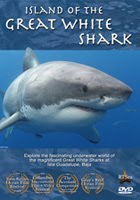
Island of the Great White Shark: an alternative to this week's shark hype

This week there will be a lot of attention in the television media placed on Discovery Channel's Shark Week - an annual event that brings in some 30 million viewers. A lot of attention is placed on shark-human interactions (aka: shark attacks) which, for good or for bad, has a lot of audience appeal.

So, let me throw out a piece of "alternative programming" in the form of a shameless plug: Island of the Great White Shark. This documentary, which RTSea filmed and produced and was released at the end of 2007, is the first comprehensive look at the great white sharks of Isla Guadalupe, Baja. It delivers an accurate portrayal of these powerful but cautious predators and also details the working relationship between shark eco-tourism operators and dedicated shark researchers.

The film also presents the important issues of conservation - not only at Isla Guadalupe where the shark diving boats act as watchguards over the white sharks that migrate there in the fall months, but the need for conservation of all sharks worldwide.


I find myself coming back to Isla Guadalupe on assignment year after year and I am honored to have additional white shark footage on Google Earth (zoom in on the northeast side of the island). Although sharks are not the only film subject I have worked with, they do seem to hold a special interest with viewers and conservationists as well.

So, for those who would like some facts mixed in with their sensational shark coffee this week, check out Island of the Great White Shark.

See more at RTSea's YouTube channel: RTSeaTV.

Saturday, July 25, 2009

Polar Bears: PSA's bring message to over 90 million

I'm sure that all of the readers of this blog are aware of the threats polar bears are facing with the decline of arctic sea ice. The Center for Biological Diversity (CBD) has pressed the issue not only through legal and decision-making channels but also through the media.

Much attention is being placed nowadays on "new media" which includes avenues like blogs and other social media and online sites. They are certainly coming into their own, but good public relations strategy incorporates all media channels - and that includes "traditional media" (believe or not, but not all people get their news and information from the Internet; I know, shocking but true).

The Center for Biological Diversity, with the help of media supporters, produced two public service announcements about polar bears for television that have, to date, reached over 90 million viewers. Here's CBD's commentary, followed by one of the two ads:

Save the polar bear? We’re doing it. Not just in court and in the papers — also in the homes of millions of people across the country. Our polar bear TV ads, showing the stark reality of warming’s effects on the bear and its habitat, have educated 90.7 million and counting, in both English and Spanish, from Alaska to New York to Arizona. Since launching, the ads have ranked 13th most popular of all public service announcements nationwide, creating the groundswell of public fervor that helped us deliver 94,000 petitions telling the Obama administration we won’t let climate change doom our polar bears, planet, and selves.


You can check out both ads and learn more about what you can do by clicking here.

Thursday, July 23, 2009

Hawaii's Longlines: new regulations stir up controversy

I recently posted some information about improvements in the U.S. regarding marine by-catch. While there may be some overall improvements, specific issues come up from time to time that require consideration and action.

One such issue is taking place regarding the Hawaiian swordfish longline fisheries and new proposed regulations that would allow an increase in the number of sets (fishing gear deployments) in addition to an increase in the number of legally-allowed sea turtle entanglements.

To meet the industrial-strength demands for seafood, longline fishing has grown over the years, but it is a very indiscriminate method of fishing, generating tremendous levels of by-catch ranging from sharks to whales and dolphins to sea turtles and even sea birds. The vast majority of the by-catch is wasted as it does not have sufficient economic value to the boats. While some improvements in methods and hooks have been made, many conservation groups look to the statistics as to their ultimate effectiveness: the continued drop in overall populations of many of these accidentally-caught species and the growing numbers seen caught, entangled, and/or killed in longlines as recorded by federally-mandated observers.

The proposed new regulations has been making the rounds of the local Hawaiian press and several NGOs, including Oceana and the Sea Turtle Restoration Project have been pushing hard with campaigns to make the National Marine Fisheries Service reconsider the proposed new regulations, which came about as a recommendation from the commercial fishery group, Western Pacific Fisheries Management Council.

Look into it and let your voice be heard.

Wednesday, July 22, 2009

Fiji Going "Shark-Free": shark-free marina initiative catches on

The Shark-Free Marina Initiative is expanding its international reach with the islands of Fiji embracing the concept of "no caught sharks allowed" at Fijian marinas.

According to a press release from Stuart Gow, director of Matava, a leading eco-resort on the Fijian island of Kadavu:

KADAVU, FIJI ISLANDS - 14 July 2009 - Matava - Fiji's Premier Eco-Adventure Resort and Bite Me Gamefishing Charters are proud to take a world wide leading role in the the international Shark-Free Marina Initiative. The international Shark-Free Marina Initiative works with marinas, boaters and fishermen to develop policy designed to protect a vital component of the oceans health, our sharks.

Matava Director Stuart Gow said "We have worked hard over the past few months in Fiji at certifying many marinas and charter fishing boats as 'Shark-Free Marinas' and so far have more than any other country worldwide.
Matava and Bite Me Gamefishing Charters was the first in Fiji to sign up and is actively promoting, coordinating and distributing information about the Initiative. We are working towards when Fiji can be the first country to be proud to announce itself as a 'Shark-Free Marinas' Country!"

In not allowing caught sharks at marinas, the Shark-Free Marina Initiative promotes "catch and release" techniques for sport fishermen. It's an incremental step that has proven effective with other over-fished species. Over 500,00 sharks are lost each year to sportfishing. It's a big number, although not as big as the 40 to 100 million sharks taken commercially. But it's a good start in changing the mindset of people directly connected to the ocean. Their attitudes can be leveraged in the future for other important long-term strategies.

Lenticular Clouds: Mt. Rainier's extra-terrestrial weather forecaster

Ever seen a UFO hovering over the mountain tops? I mean, ever seen lenticular clouds floating over the mountain tops? Not to diss those who believe we have been visited by extra-terrestrial travelers, but these unique cloud formations (sometimes mistaken for UFOs) are worthy of note as one of nature's phenomenons and often an indicator of a change in the weather.

Lenticular clouds are formed when stable moist air moves over mountains forming what is called a standing or "lee" wave. If the top of the wave gets below the dew point, then the moisture can form into these unusual cloud formations.

In Washington, the locals at Mt. Rainier look to these cloud formations as an indicator of coming rain, as the moisture and wind patterns required to produce lenticular clouds over Mt. Rainier often precede a storm by 24-hours. The clouds pictured above occurred last Friday, but the weekend turned out to be sunny at the mountain.

Well, looks like the folklore weather forecasting is about as reliable as the UFO reports. But the clouds look great, anyway.

Monday, July 20, 2009

The Next Frontier: from the moon to saving planet earth

For me, it's hard to imagine it was 40 years ago today that man first set foot on the moon - one of mankind's greatest technological achievements. Anyone under 40 years of age wasn't even born yet when astronaut Neil Armstrong set foot on the lunar surface, and what have we done since? What has been the next great milestone?

There are many who say that it was a big waste of time and money; a common complaint among terrestrial- and ocean-based scientists who feel they got shortchanged with so many resources being diverted into the heavens. And in many ways they would be right, no argument here.

But going to the moon had the advantage of being a singular goal or achievement that could capture the attention of the general public. As a kid I watched Sea Hunt and the Aquanauts and I also had just about every space model kit ever made. All these avenues of exploration fired our sense of wonder and imagination, but going to the moon had the advantage of a greater sense of focus.

Of course, what propelled it was a political issue - beating the Russians, proving democracy's superiority over communism, and establishing the United States' preeminence in space as a political and military warning to all others. That's what brought in the bucks for Buck Rogers. And there were spin-offs to justify the cost with tremendous advances in aerospace and technology industries that produced everything from better cookware to velcro to freeze-dried ice cream (okay, so they weren't all successes).

But there once was an explorer's ultimate dream, and politics moved it forward, and science expanded its knowledge because of it, and business and the public benefited in many obvious and subtle ways. And then it was over.

So, today commemorates both, one of man's greatest achievements and the start of a downward slide, lost in the wilderness. What can get us back on a new track? What can wrench us away from our self-absorbed, self-centered interests - some of which have been aided by the very technology that the space race generated - and get us on a path towards the next technological milestone? What one thing could test the boundaries of science and technology, motivates us all to move forward as every great culture in the past has, and provide worldwide benefits for generations to come?

Simple: no more fossil fuels.

In essence, we reached the moon on the shoulders of an industrialized society based on a centuries-long dependence on fossil fuels. And the planet and every living thing on it is now paying a very dear price for it. So, what could be a better goal for all of us to set our sights on? Not a "someday" or a "we hope to" but a "let's get it done!" Who will show the leadership to make the declaration and pick a date? Who will have the courage to recognize the cost but be able to show the short-term and long-term benefits? Benefits to industrialized nations, third world nations, the rich and the poor. Alternative energy, cleaner air, less CO2, reduced ocean acidification, less greenhouse effect. Why not?

When President Kennedy made his declaration that we would reach the moon within one decade, there were plenty who grumbled as to why not. They were wrong. Mankind can save its pioneering spirit from extinction and in the process do the same for the planet.

At least on this 40th commemoration, that's what occurred to me.

Saturday, July 18, 2009

Walter Cronkite: what his integrity means to conservation

This may be a bit off topic, but I believe it's worthy to note the passing of Walter Cronkite yesterday. The sum total of his career as a journalist and news anchorman is a reflection of what good journalism is all about - something that at times is sorely lacking in today's world of social media, blogs, and the floundering state of many news organizations.

There's a whole generation now that has missed out. Edward R. Murrow, Walter Cronkite, Chet Huntley and David Brinkley - these are legendary newsmen who took their responsibility in getting the news right very seriously. They were not infallible but they brought a consistent level of integrity to their work. And because of that, we felt better informed as a nation to the issues that were of lasting importance.

With today's information outlets tempting many passionate conservationists to vent personal opinions (and sometimes offensive language) that alienate parties or distort the facts, it's important to look back on people like Walter Cronkite for inspiration in making factual, accurate arguments and presenting reasoned positions that can persuade decision-makers and the public at large to consider the future of the planet and what needs to be done to protect it.

"And that's the way it is . . ." Thank you, Mr. Cronkite, for continuing a tradition of journalistic integrity. We'll try to keep it that way.

Friday, July 17, 2009

Humboldt Squid: the "red demon" moves into Southern California

Like something from Disney's Twenty Thousand Leagues Under the Sea, the humboldt squid is a formidable predator typically found in deep Pacific waters off of Mexico and Central America. Reaching up to five feet in length and as much as 100 pounds, it is fast and aggressive with a voracious appetite.

And it is beginning to appear in shallower water off of Southern California. In San Diego, during night dives, scuba divers are encountering groups of humboldt squid, and several have moved too close into the shallows and been washed up on the beach.

According to a recent AP news report,

"Research suggests the squid may have established a year-round population off California at depths of 300 to 650 feet, said Nigella Hillgarth, executive director of the Birch Aquarium at Scripps Institution of Oceanography. Divers this summer have been encountering them at about 60 to 80 feet down, they said. No one knows how many squid are in the shallow waters, but one biologist estimated they could number in the hundreds, or possibly thousands.

'Usually where there's one squid, there's a lot of squid, so I would assume that there's a good number,' said John Hyde, a biologist with the National Marine Fisheries Service in San Diego."

Scientists are not sure why the squid have moved further north or are entering shallower waters. Explanations range from global warming to loss of prey to a reduction of natural predators. On this last point, I have read studies that have explained the bio-dispersion of various species based on the predators that feed upon them. When the predators are gone, then the species in question is no longer "corralled" as it normally would and changes in bio-dispersion or migrations can occur. In the case of humboldt squid, sharks are one of its key predators.

Whatever the explanation for the squid's movement north, there is reason for some concern. They can pose a serious risk to unsuspecting divers and their voracious appetites can severely impact local fisheries. Scott Cassell, CEO of the Undersea Voyager Project, who has spent many years studying and filming humboldt squid, recently told me that in his studies he had predicted the potential for this danger as much as ten years ago.

Another possible example of the ramifications either climate change, overfishing, or loss of apex predators - or all of the above.

Care for a calamari ring the size of your dinner plate?

Thursday, July 16, 2009

Galapagos Islands: hi-tech GPS comes to the aid of marine park management

The Galapagos Islands - an oceanic oasis that was one of Darwin's key research sites for his seminal work on evolution - is feeling the pressure of its unique status. With increased tourism and island population, combined with international demands for seafood, the Galapagos has been showing signs of this negative impact on its natural resources.

The Galapagos Marine Reserve (GMR) was created in 1998 to provide protection to the islands' surrounding waters. And in the next few months, through the support of Conservation International and WildAid, the GMR will be taking a hi-tech step forward in managing major ship traffic in the area.

Utilizing GPS satellite tracking equipment, the activities of ships greater than 20 metric tons will be monitored by the Galapagos National Park Service (GNPS). This will provide the GNPS with greater ability to manage and regulate ships in no-take zones, tourism itineraries, and commercial shipping. Besides "tagging" ships, the computer-based system will enable the GNPS to tag and track migratory species and monitor environmental/climate changes.

Hats off to Conservation International and WildAid for supporting this important example of cost-effective marine research and management.