Sunday, January 4, 2009

Chicken Soup: a quick read in support of the oceans

I just finished a delightful book I received over the holidays from my daughter: Chicken Soup for the Ocean Lover's Soul. Part of the famous series of "Chicken Soup" books with motivational stories and essays assembled by Jack Canfield and Mark Hansen, this volume was published in 2003 and includes ocean artist Wyland as a contributing editor, with pictures of many of his works included.

Using a wide range of contributors - from Dr. Bob Ballard and Dr. Sylvia Earle to the late Warren Iliff of the Aquarium of the Pacific and Wyland himself - the book covers topics including "Living in Harmony", "Courage and Adventure" and "Saving the Sea." While these books might be a bit syrupy for some, this volume does serve to remind us all of one very positive and uplifting thought: we are all connected to the sea; it is the ultimate mother of all life on this planet.

One quote by Jacques Cousteau used in the book, struck me as being very timely though it was probably said some years ago:
"For most of history, man has had to fight nature to survive; in this century he is beginning to realize that, in order to survive, he must protect it."


Chicken Soup for the Ocean Lover's Soul
- a quick read and time well spent.

Florida's Softshell Turtle: a target for Asian market demand

Along with shark fins for soup and bluefin tuna for sashimi, another aquatic animal that has been impacted by Asian consumer demand is the freshwater softshell turtle. With the boom in Asian economics, the demand for this oriental delicacy (and it's use as a homeopathic medicine) has skyrocketed to the point where populations of softshell turtles in Asian countries including China, Laos, Vietnam and Cambodia have all been wiped out.

So, who is meeting this escalating demand? Sunny, fun-filled Miami. That's right, Florida is one of the leading exporters of softshell turtles, shipping them to Los Angeles or San Francisco for export overseas. One Florida seafood dealer alone processes up to 20,000 pounds a week - approximately several thousand turtles.

Federal laws that protect endangered turtle species do not extend to Florida's softshell species and while states like Texas, Oklahoma, Alabama, and Mississippi have prohibited or severely limited harvesting of these turtles, the only regulation in effect in Florida is a temporary 20-turtle-a-day limit. With the number of licensed commercial fisherman in the state that still equals an annual harvest of more than a million turtles.

The battle wages between those who seek to prohibit or limit the commercial catch and the those who support the commercial industry and their need to catch a sufficient number so as to be profitable. Once again, it's the conflict of short term economic goals vs. sensible long term environmental policy. Remember, it's only man that considers the economic impact of limiting the harvesting of a limited natural resource; Nature does not care to hear the economic arguments. It only reacts to what is being imposed upon it.

"They've been around for hundreds of millions of years and have survived climate change and lots of other things," says Jeff Miller, Center for Biological Diversity. "And now we're about to eat them out of existence - in the blink of an eye, biologically speaking."

Friday, January 2, 2009

Nature and the Seas: steps forward and challenges in 2009

Covering a range of conservation and environmental issues, here are a few success from 2008, compliments of the World Wildlife Fund:
  • Sumatran elephant and tiger habitat protected in Indonesia, doubling the size of Sumatra's Tesso Nilo National Park.
  • U.S. Congress extended tax incentives for individuals and businesses to install renewable energy systems and build energy-efficient buildings.
  • United States became first country to prohibit import and sale of illegally-sourced woods - the loss of which has impacted forest animal habitats.
  • U.S. House of Representatives passed the Great Cats and Rare Canids Act, to protect lions, leopards, cheetahs and other imperiled species.
  • The House also passed important legislation to protect tropical forests and coral reefs. Similar legislation passed a key senate committee.
Now, turning to our oceans, here are some challenges we face in 2009:
  • Overfishing - We are still faced with losing most commercial fish species within 40 years (swordfish and tuna populations have already been reduced by a whopping 90%). The Magnuson-Stevens Act must be implemented. (Info on the M-S Act.)
  • Bycatch - Commercial fishing still discards up to one million tons of fish each year, not to mention the countless numbers of marine mammals, turtles, and more. (Previous post on subject.)
  • Sea Turtles - Even though listed as endangered or threatened in U.S. waters, sea turtles are still exposed to harm from fisheries and loss of nesting and foraging habitat. (More info on sea turtles.)
  • Sharks - The slaughter continues, up to 100 million sharks per year. While governments need to exercise greater effort in management and/or prohibition of species, continued efforts must be made to enhance public awareness and reduce demand for shark products. (Previous post on subject.)
  • Seafood Contamination - Mercury levels in many types of seafood is increasing. Government efforts must be increased to curb industry's use or disposal of this dangerous neurotoxin. (Mercury calculator for seafood.)
  • Climate Change - We are continually learning more about the man-made effects of global warming, not only in terms of increased temperatures, but in its many byproducts like ocean acidification. And we are finding that the effects, like changes in Arctic, are accelerating faster than previous models predicted. (Previous post on subject.)
  • Offshore Drilling - Many moratoriums on offshore drilling are set to expire soon. Before billions of dollars are spent to extract a diminishing resource, governments need to pressure the energy industries in refocusing their efforts. The U.S. needs a coherent energy policy based on long-term, not short-term, goals. (Previous post on subject.)
Time to roll up our sleeves, everyone.

Tuesday, December 30, 2008

Moose in Peril: a vanishing victim of climate change

With large antlers, long legs, and a notoriously grumpy disposition, the moose has been to some a symbol of the cold rugged regions of North America, and a classic cartoon figure to others. In either case, it is an icon of the wilderness. And it is vanishing.

According to scientists, the culprit behind this loss is climate change. In areas like upper Minnesota and Michigan, over the last 40 years temperatures have risen 12 degrees in the winter and 4 degrees in the summer. This has been sufficient enough to reduce the populations of moose by 50% or more. Says John Vucetich, a population biologist at Michigan Technological University, "The trends for the past 20 years are pretty clear, and if they keep up there won't be any moose in 50 years."

Whereas deer, bears, and wolves have better adapted to changing temperature by moving northward, the moose is more sedentary. They require shade, water, and cool weather. Climate change impacts these requirements and the moose is unable to obtain enough food to generate fat in the summer that carries it through the winter. All this stress affects the immune system, leaving the animal more susceptible to parasites. In short, they stay put and die.

The moose is not currently on the U.S. endangered species list and with the Bush administration proposing last minute regulations that will prohibit federal agencies from evaluating the effects of global warming in regards to animal species, it will be up to the incoming administration to clear that political stumbling block so that environmental decisions and policies can be fashioned based on scientific truth.

"I don't see the temperature change we're seeing as cyclical," says Rolf Peterson, a research professor at Michigan Tech. "The trend is definitely in one direction." But unfortunately, it may be too late for the moose in the lower 48 states. "There's not a lot of opportunity to turn this around," said Mark Lenarz, a wildlife specialist at the Minnesota Department of Natural Resources.

Remember Bullwinkle once said to his cartoon pal, "Hey Rocky, watch me pull a rabbit out of my hat." Oh, if only he could.

Monday, December 29, 2008

Better Year for Sharks 2008: a look back by SharkDiver.com

There are a lot of year-end assessments being made by many leading conservation groups and I'll be highlighting some in the coming days. From my friends at SharkDiver.com, here's a look back - or maybe I should say a look forward . . .

"As we get close to a wrap for 2008 there's a chance to look back at a remarkable year for the shark diving industry and for shark conservation.

To say that things have solidified on the conservation front is an understatement...what we have now is a full fledged, organic, top to bottom shark conservation movement, and it's paying dividends.


Last week
Yahoo's Alibaba and Taobao web portals announced they are apparently discontinuing all advertising and trade of shark products as of January 1st, 2009. This stunning announcement lays two more giant cornerstones into the shark conservation movement.

On the commercial shark diving front a growing awareness of "being a global 200 million dollar industry" and the absolute need now for local site conservation efforts. The old paradigm of just maintaining commercial operations is being replaced by site activism, awareness, site stewardship and shark conservation measures. It has taken a series of horrific local site kills from South Africa to the Bahamas to bring this issue to the front burner-but it's here and operations are slowly pushing back. It is also good to mention the several forward thinking operations from Fiji to South Africa who have been leading this charge for years now. It starts with "One".

Has this been a
good year for sharks? No, the slaughter continues unabated, but that slaughter is no longer being conducted in a total vacuum. NGO's, websites, blogs, major news outlets, literally thousands of people are, getting involved, raising banners and spreading awareness like wildfire.

It's
remarkable really when you consider all of this has been for sharks. Not Panda's (sorry Panda People) but sharks. There's still a lot of work to do, the announcement by Alibaba and Taobao comes with a caveat yet to be announced. Our hunch is this valuable division within the company has been transferred to another site perhaps as a stand alone "take the heat and answer to no one", time will tell.

For now we can all enjoy the fact the shark conservation round table has no empty seats...let the fist pounding begin!"

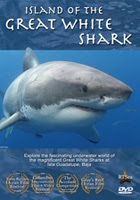
Birch Aquarium to screen "Island of the Great White Shark"

For those of you in the San Diego/Southern California area, here's some information on an upcoming screening/lecture of Island of the Great White Shark at the Birch Aquarium on Tuesday, January 6th.

Following the screening, I'll be there to take questions and prattle on about filming sharks, shark conservation and the latest news regarding Isla Guadalupe's white sharks.
If you have the time before the event, take a stroll around the aquarium. It's a wonderful showcase of not only the oceans but oceanography as the aquarium is affiliated with the Scripps Institution of Oceanography, one of the nation's leading educational and research organizations devoted to marine science.

Sunday, December 28, 2008

Future Head of NOAA: Dr. Jane Lubchenco - a great choice

With President-Elect Obama's selection of Dr. Jane Lubchenco as chief administrator of the National Oceanic and Atmospheric Administration (NOAA), a very positive step has been taken in putting in place the type of qualified scientific leadership that an organization like NOAA requires. Her appointment has been met with cheers from major conservation and environmental organizations nationwide.

Dr. Lubchenco's credentials are most impressive: A professor of marine biology and zoology at Oregon State University who received her Ph.D. at Harvard, she is a member of the U.S. National Academy of Sciences and former president of the American Association for the Advancement of Science. She is also a MacArthur "genius" fellow and Pew fellow in Marine Conservation. Lubchenco was a presidential appointee for two terms on the National Science Board and has been a member of the Communication Partnership for Science and the Sea, the Millennium Ecosystem Assessment and the Pew Oceans Council.

While NOAA is indeed a government agency and its leaders must be well-versed in the art of politics and diplomacy to accomplish their mission, it must be said that to have a scientist at the helm who happens to be a qualified administrator - rather than the other way around - is what is most needed at NOAA. This is critical so that NOAA can stay focused as a science-based source of environmental policy, rather than becoming a political mouthpiece for pro-industry (ie: anti-environment) constituencies. If President-Elect Obama is to make good on some of his campaign rhetoric regarding the environment, he will need the support of scientists like Dr. Lubchenco to provide the hard facts, opinions, and solutions.

President-Elect Obama has said, "All of us know the problems rooted in our addiction to foreign oil it constrains our economy, shifts wealth to hostile regimes, and leaves us dependent on unstable regions. These urgent dangers are eclipsed only by the long-term threat of climate change, which unless we act will lead to drought and famine abroad, devastating weather patterns and terrible storms on our shores, and the disappearance of our coastline at home."

As part of his scientific "A-Team", the PETT (President-Elect's Transition Team) will need to engage people of Dr. Lubchenco's caliber. And they will need many more of them. Let's wish her well.

Monday, December 22, 2008

Best Wishes from the RTSea Blog

Whatever your personal beliefs, may you all have a joyous holiday season spent with family and friends. Let's hope that in 2009 and for many years to come, mankind focuses its attention on the importance of the planet's natural resources.

Richard Theiss/RTSea Productions

Sunday, December 21, 2008

Refinery Pollution: U.S. Court closes loophole

In another piece of encouraging news, the U.S. Court of Appeals decided on Friday to close a gaping loophole in the Environmental Protection Agency (EPA) regulations on refinery pollution by striking down a provision that allowed refineries to exceed pollution limits during start-ups, shut-downs, and equipment outages.

According to a suit filed by Earthjustice, a nonprofit environmental defense firm, on behalf of the Sierra Club and other environmental groups, refineries have overused and/or abused this regulation, enabling them to spew tens of millions of pounds of excess toxic pollutants annually.

"We are elated," said Jesse Marquez, head of the Wilmington, CA-based Coalition for a Safe Environment, a plaintiff in the suit.

The court had ruled that the EPA's regulation exceeded its authority under the Clean Air Act. This ruling will impact facilities nationwide, particularly in Southern California, Texas, and Louisiana where there are concentrations of refinery facilities.

Saturday, December 20, 2008

China's Largest Shopping Site Bans Sale of Shark Fin Products

Here's some good news that was posted today on the SharkDivers blog:

BEIJING, Dec. 19 -- The International Fund for Animal Welfare (IFAW-www.ifaw.org.cn) congratulates Taobao (www.taobao.com.cn), China's largest shopping website for its ban on the sale of shark fin products on the site. Taobao.com announced to its 400 million online members that all shark fin products will be banned from trade on Taobao.com starting 1, January 2009.

The announcement was made as part of a campaign IFAW and Taobao collaboratively initiated to combat online wildlife crime. In the unprecedented collaboration, IFAW and Taobao.com share information about online illegal wildlife trade and jointly raise consumer awareness about the detrimental impact wildlife trade has on species in the wild.

Asia is the main market for shark fin products. In major cities in China, shark fin soup is readily available on the menu in restaurants. With the coming of Chinese New Year Festivals, shark fin soup consumption will significantly increase.

However, fueled by big profit margins and the increase in shark fin consumption, overfishing of sharks is threatening more than 50 percent of the shark species with extinction. As top predators in the ocean, sharks play an important role in keeping ecosystem balance. However, an estimated 100 million sharks are killed globally each year.

"Consuming shark fin is not only harmful to the marine biodiversity, but promotes the cruel practice of shark finning, where sharks had their fins cut off then thrown back into the ocean, still alive, die a horribly painful death." said Grace Gabriel, IFAW's Asia Regional Director. "It is our choice as consumers to say No to shark fin products. Consuming wildlife equals killing."

Taobao's decision to ban shark fin was also applauded by its users. In an online message, a Hangzhou netizen condemns the shark fin trade by posting shocking pictures of shark finning. According to this posting, 5000 Kilos of shark fin are consumed daily in Beijing alone. Active Taobao users also call on others to report online shark fin sales to site management when the notice takes effect in January.

Peter Pueschel, IFAW's Program Manager hailed the move. "This is really amazing and wonderful that the leading cyber market provider in the biggest shark fin consumer nation bans shark fins. What a strong signal to other auction sites and governments in other parts of the world!"