skip to main |
skip to sidebar
 There are many issues that need to be addressed when it comes to conservation. Not sure where to start? Well, try starting with the basics: trash. As a diver, I've had the opportunity to dive in some marvelous locales, but even in the most remote of them, I can come across man's needless neglect of trash. Ocean currents can carry trash thousands of miles away - and even so-called biodegradable trash can leave its imprint over vast distances.
Here are some lifespan figures for several biodegradable items, according to the Bureau of Land Management:
- Paper: 2-4 Weeks
- Banana Peel: 3-5 Weeks
- Wool Cap: 1 Year
- Cigarette Butt: 2-5 Years
- Disposable Diaper: 10-20 Years
- Hard Plastic Container: 20-30 Years
- Rubber Boot Sole: 50-80 Years
- Tin Can: 80-100 Years
- Aluminum Can: 200-400 Years
- Plastic 6-pack Holder: 450 Years
- Glass Bottles: Lots and Lots of Years.
But there's a catch to this: biodegradability depends on how the item is stored. In a compost heap, the trash is exposed to microorganisms, bacteria and heat which aid in the process of breaking the material down. But in many landfills, the trash is not exposed to these elements (read Slate article) and can last much, much longer.
It gets even worse at sea, whether floating on the surface or submerged. It has been estimated that there are as much as 45,000 pieces of plastic for every square mile of ocean. There are places at sea where ocean currents cause floating trash to condense into huge, floating mats.
So, step one: put trash where it belongs, in the trash can or proper recycling bin. Don't throw it into the streets (where it ends up in the storm drains which lead straight to the sea) or leave it on the beach.
Already knew this? Good. Now tell your friends. That trash is coming from somewhere.
 Several species of fish, like pelagic sharks and swordfish, have unsafe levels of mercury and are no longer considered good choices by the FDA for human consumptions (Read FDA advisory). Man-made contaminants can work their way up through the marine food chain until they deposit themselves in animals of commercial value.
Many organizations, like Oceana.org, have lobbied grocers and major supermarket chains for years to post the FDA advisory for its customers. A recent participant has been the major food wholesaler, Costco. The advisory provides important information as to which fish are safe or unsafe - not just a blanket warning against all seafood, which would probably not gain much credibility with the general public.
Ironic that the potential for limiting the commercial demand for sharks and swordfish - which could help in their conservation - comes about due to our poisoning of these animals beyond safe limits. Maybe we should irradiate the Amazon rain forest so that the wood could no longer commercially be safely used for paper or building materials. Crazy logic . . .
 There was a time when the term "domino effect" was used to describe everything from conservation issues to world domination. When talking about adverse effects on the ecology, scientists today prefer the term "cascade effect" as it more accurately reflects what is happening. Rather than one change affecting something else which affects something else, and so on (like dominoes), the cascade effect reflects how one change affects several others, which affects several more, broadening its overall impact over an entire eco-system.
The once precipitous decline of timberwolves in the U.S. and Canada is a typical example. Heavily hunted because of concerns over cattle losses, the decline in the wolf population caused an increase in the deer population which, in turn, encroached on the cattlemen's grazing land. But also, there was an explosion in the rodent population (also part of the wolves' diet) which impacted insect populations and birds (through loss of bird eggs and chicks) and so on and on . . .
Mankind has a tendency to look for simple cause and effects and simple solutions. Nature is much more complex than that and so we must be constantly aware of the wide-ranging impact of our actions.
 So here is a follow up posting regarding Discovery's Shark Week and attitudes towards sharks in general. In today's Los Angeles Times there is an editorial from write Joe Queenan titled "I Hate Sharks" - can't get more direct than that.
Joe's position is that, even though he realizes the political correctness in recognizing the endangered status of sharks, he still can't get over the impact they have on him as the voracious man-eaters portrayed for centuries. In all fairness, much of his position is satirical. He humorously goes through a laundry list of potential substitutes to dread - from vultures to hyenas to anacondas, and more.
"I only hope that if a shark ever does eat me, he does so because he detects that I am a shark-loathing reactionary and deserve to die. I'd hate to get eaten just because some shark mistook me for a seal."
It's a humorous read but it does touch on some real points: for many there is a deep-seated, almost primal fear of ocean predators (undersea and therefore unseen). And it is those fundamental feelings that much of today's shark programming taps into, despite whatever mantle of pseudo-science it might wrap itself in. Are you there to see the car races - or the car crashes? You decide.
 Being nice to a tiger shark...(Photo: Felix Leander / 2008)
Reactions to this year's Shark Week on Discovery Channel cover the spectrum - from love it to hate it. Here is a posting written by Felix Leander of OceanicDreams who is a dedicated free-diver with sharks. It is representative of the position that many conservationists take regarding Shark Week."I recorded all the Discovery Shark week episodes this week, and unfortunately I found myself fast forwarding through most of them. How absurd was Myth Busters and Surviving Sharks. It is really unfortunate - watching the show almost had a reverse effect on me; I began to doubt if I should dive with Tigers again...that is just crazy talk! Of course I will, actually this coming November.
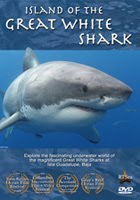
On the flip side, a friend of mine also watched the show and has become very interested in sharks; he actually came diving with me in the hopes of seeing one - each to their own I guess.Around the same time that Shark Week aired, Richard Theiss sent me a copy of his film Island of the Great White Shark - and how refreshing it was to watch. It reminded me of what Shark Week used to be - informative, scientific, and not in the least bit sensational. While Richard directed, wrote, produced, and edited the film - he did not narrate it or appear in front of the camera...unlike a recent docuMEntary... :-)
So Discovery Channel - go back to the roots, take a look at Richard's film and some of your old tapes, and make a comeback in 2009."
As I said in an earlier 7/25 posting, I always have high hopes for this annual homage to shark programming. But as long as Discovery's advertisers are content with the record number of viewers (29+ million this year), the formula will most likely remain the same.
And thank you, Felix, for your kind comments regarding my film!
 I am preparing to leave for the Aquarium of the Pacific in Long Beach, CA, as I have done for nearly every Thursday for the past 8 years. As a volunteer Dive Team Leader, I have had the pleasure of helping the Aquarium with exhibit feeding, cleaning and, most importantly, conducting underwater presentations to the kids and adults alike.
If you have an aquarium nearby, check out what opportunities they may have available. As non-profits, they rely heavily on volunteers - so if you have some free time, it can be a very worthwhile and gratifying experience.
People are drawn to aquariums for a variety of reasons. They may be coming to make fish faces at the seals, recoil in fear and fascination at the sharks, or simply looking for a way to let the kids blow off some pent up energy. Whatever their motivation, it's a great opportunity to get across some important marine conservation info in a more relaxed atmosphere. Aquariums can serve as effective liaisons between the scientific community and the general public. So, if you have one nearby, give it your support.
 When it comes to marine conservation, we have many challenges facing us on a worldwide level. And I would wholeheartedly recommend you support those organizations that are taking the "big picture" approach - groups like Oceana, Seaweb, WildAid, and many, many others.
But , just like the oceans are made up of countless micro-systems - all interacting to produce small and large consequences, there are many organizations that focus on regional issues, perhaps more close to home. The Monterey Bay Aquarium's Center for the Future of the Oceans is one example, focusing on issues that impact the California coastline from Marine Protected Areas to Sustainable Seafood initiatives.
Sometimes, when you wade into all of the issues facing our seas today, it can seem a bit intimidating. But by all means, wade in! Start small, start with what you can do - from cutting back on the air conditioning one day a week, using a car wash that recycles water rather than pouring soapy water into the storm drains (which go right out to the sea), or giving some extra thought when you are at the seafood market counter or restaurant. Every little bit helps.
Remember, move a grain of sand and you have changed the entire beach.
 It was almost a year ago when I had the opportunity to be part of InMER's reconnaissance expedition of the Northwest Passage above the Arctic Circle. As we were completing our route, word came from the National Snow and Ice Data Center that the summer ice was at its lowest level ever recorded. The possibility that - sooner than predicted - the Northwest Passage would be completely open during the summer months, became an important issue because of what that meant for global warming and, conversely, what it meant for potential global shipping by providing a much shorter transoceanic route (See InMER/National Geographic video).
This year, it is anticipated that the summer ice melt won't exceed last year's record due to cooler temperatures in July. But overall, Arctic ice has continued to recede and is much thinner, making it more sensitive to fluctuations in temperature. Commercial interests, due to rising fuel prices and food demands, will put considerable pressure on the region. On the upside, some action is being taken to regulate the potential for expanded industrial fishing in the Arctic regions (Oceana.org press release).
The Arctic is the 800-pound canary in the room. Not only is its condition simply a warning as to what can happen in greater force in the lower latitudes, but the effect of climate change on the tundra - the scrappy landscape that covers the permafrost or frozen ground underneath - in the form of increased bacteria, encroachment by invasive flora, and the release of CO2 and methane, can have additional impact globally.
The Arctic region make look rugged and impenetrable but, in reality, it is extremely fragile. Learn more at InMER.org and Oceana.org.
 If you have been trying to convince your friends and relatives about the importance of shark conservation but are being dismissed as "that crazy shark lover" - Oceana.org has issued a great report that puts the issue in perspective with easy-to-read terminology and documented examples.
Predators as Prey: Why Healthy Oceans Need Sharks makes a strong case for the need for shark conservation by explaining the impact on marine ecosystems when shark populations decline.  It covers the cascade or domino effects and the impact on shark intimidation (detailed in my July 15th posting). A quick read and visually attractive, it's available in .pdf format for easy emailing to any skeptics or Doubting Thomases you may know.
Oceana press release.
 One step at a time . . . HR 5741 - the amendment to close an important loophole in the Shark Conservation Act of 2008 - has passed the House of Representatives and has moved on to the Senate for a vote. This is important legislation that will help put a dent in the taking and processing of shark fins.
The Humane Society is running an online support drive whereby you can email your state senator requesting support and passage of this important piece of shark conservation legislation. To send your senator an email, click here.
Give HR 5741 your support so that we can see it pass through Congress as quickly as possible. One step at a time, but every vote . . . and every fin . . . counts!
HR 5471 (background info)

 There are many issues that need to be addressed when it comes to conservation. Not sure where to start? Well, try starting with the basics: trash. As a diver, I've had the opportunity to dive in some marvelous locales, but even in the most remote of them, I can come across man's needless neglect of trash. Ocean currents can carry trash thousands of miles away - and even so-called biodegradable trash can leave its imprint over vast distances.