skip to main |
skip to sidebar
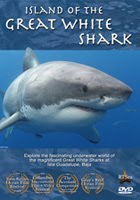
It hasn't been a particularly good couple of weeks for sharks.
First there was the large 20-foot, 4000-pound female white shark that was caught in the Sea of Cortez. Reportedly caught accidentally in the fishing nets of some local fishermen, it garnered media attention because of its massive size. As it turns out, it apparently had a research tag showing it had traveled from the coast of central California. Conjecture is that it traveled to the Sea of Cortez to give birth as this is a popular theory being proposed and studied by researchers.
The Sea of Cortez is an area that is being heavily fished by local fishermen and several species are being hard hit by the overall level of the catch. If juvenile white sharks are being taken - evidence of which has been seen in local fish markets - and females are being caught, either accidentally or deliberately, for a slow-reproducing animal like the great white shark, this is not good news.
Next up was the unfortunate fatal attack on a bodysurfer in South Africa. There have been fatal attacks throughout the years, but what raised the hackles of locals and caught the attention of the media was the fact that a film production company/research group was in the area apparently chumming to attract sharks for tagging purposes. South African government officials, who had issued the permits to allow the research, pulled those permits and from there it's been a media communications nightmare of accusations and a lot of CYA.
The production company had been filming in the past for National Geographic Channel's Shark Men series, but Nat Geo issued a response saying that they had not been working with this particular company for some time. South African government officials are being accused of faulty vetting of the operation in issuing the permits, but it's been said that there were scientists on board to ensure that no reckless behavior for the sake of dramatic film footage was taking place. And the production company claims that their actions were well within acceptable practices.
Then along comes a preliminary research study from Australia that says there may be a causal link between chumming used by shark diving operators and behavioral changes in white sharks. The report itself says it's not conclusive and does not imply that, because of chumming, white sharks are purposely seeking out humans, but it certainly added fuel to the fire of the anti-shark locals. It's quite a media mess and at this point it's hard to tell what the final results might be as to whether we'll see some knee-jerk reactions against the sharks by officials trying to placate those who believe they have greater rights to the seas than do the sharks. At the very least, it's bad P.R. for the sharks; the spectre of shark nets or a crack down on all shark diving operators always looms in the background.
Finally, the media outlets have been jumping all over a new study from the University of Hawaii and British Columbia's University of Victoria which says that Pacific reef shark populations have declined by as much as 90 percent or more in the past few decades. This decline has been noted in other studies, but this particular study had an interesting twist to it, as reported by The Washington Post's environmental writer, Juliet Eilperin.
The researchers study shark populations over 46 islands in the Pacific and not only found a decline but, conversely, found increases in shark populations wherever human populations decreased over the years and the productivity and temperature of the ocean increased.
“Our results suggest humans now exert a stronger influence on the
abundance of reef sharks than either habitat quality or oceanographic
factors,” said the researchers.
Many of the islands involved in the study have laws and regulations in place to protect sharks but, as is the case with many conservation regulations worldwide, enforcement is lacking either due to lack of resources or political will.
Julia Baum, assistant professor at the University of Victoria and co-author of the study, said, “To me, enforcement of these islands is a major unsung conservation
challenge, and I suspect that if this is not effectively addressed [as
soon as possible], the reef sharks on these islands will be fished out
within the next 10 years.”
The Muppets' Kermit the Frog once sang, "It's not easy being green." It's not easy being a shark either. We need our green puppets for comic relief; and we need our sharks for something far more important: the preservation and natural balance of the sea's marine life.
Source: Sacramento Bee
Source: Mail & Guardian Online.
Source: The Washington Post
Photo: Brian Skerry
 From the large and majestic humpback whale, mentioned in yesterday's post, we can travel to the other end of scale: the rare and diminutive Vaquita. Reaching a mere 5 feet in length, the vaquita is a member of the porpoise family and is only found in the northern end of the Sea of Cortez (Gulf of California). And at a scientific meeting of the International Whaling Commission being held in Agadir, Morocco, the findings of a 2008 population study show that there are only approximately 250 vaquitas alive today. As disturbing as that low number may seem, it is even more disconcerting when compared to a 1997 population study that estimated the population to be 567 - a decrease of 55% in just one decade.
The vaquita is similar to other small porpoise species that inhabit deltas and river outlets (one such species in China was considered extinct by 2007). Probably attracted to the shallows of the Sea of Cortez near the mouth of the Colorado River, the vaquita's habitat was impacted by the damming of the river in the U.S.; but researchers do not believe this has been a detriment to the vaquita. What appears to be the primary cause for the vaquita's decline is its tendency to get caught in the gill nets of local fishermen - a tragic victim of bycatch.
The 2008 population study represents the combined efforts of both Mexican and U.S. research groups with additional government support. To conduct the study required an elaborate high-tech version of a common biodiversity technique: to determine basic biodiversity, a transect is used to define an area and then sealife is counted within that area. Doing that several times over a wider area, estimates can then be extrapolated. For the vaquita population, several vessels were used to make large surface transects within which visual sightings and results from hydrophones (which picked up the distinctive clicking sounds made by the vaquitas) were tallied. From that raw data, the current population of 250 was estimated.
 Although their primary range is now within a protected reserve, as of 2005, and includes a ban on the use of gill nets; the vaquitas are still very much at risk from illegal fishing. A lack of resources to provide effective enforcement combined with the economic needs of subsistence-level fishermen continue to put the vaquitas at risk. Plans are being considered to introduce fishing techniques that do not use gill nets, but getting local fishermen to abandon their traditional fishing methods will be challenging.
According to Nature News, "A more immediate challenge is to expand the protected area. 'We need to get all the gill nets out of the water,' says Timothy Ragen, executive director of the Marine Mammal Commission in Bethesda, Maryland. But a broader ban would be a difficult economic and political challenge, pitting the vaquita against the livelihoods of local fishermen."
The unique vaquita is one more cetacean that stands at the brink of extinction - not from industrialized commercial fishing or whaling, but from the needs of local fisherman trying to survive. This is dilemma being played out in many other parts of the world.
Read more in Nature News.
Just a quick update from your local Bahia De Los Angeles internet cafe. The weather here in Baja, California along the Sea of Cortez has been warm and sunny . . . and windy. And that has made filming difficult so far.I am here to film Humboldt squid with Scott Cassell and dealing with these predators can be very interesting to say the least. We sport Neptunic Shark Suits to provide protection from the squid, along with a cable harness tied to the boat (The little darlings can drag you down if they become really interested in you. And we're diving in water 250- to 1200-feet deep.The winds make it challenging for both the divers and the local fisherman (a panga - the local fisherman's small boat - can be swamped by wind-swept waves when full of squid as it rides low in the water).We will be back out on the water later this morning, hoping for calmer seas and plenty of squid. There is an important story behind the ecology of these animals, some of which I have posted in the past. But there's more to come.
 There's no Friday night partying this week; it's off to bed for an early call tomorrow as I head to the Sea of Cortez for a two-week film assignment. I will be joined by Scott Cassell of Undersea Voyager Project as we travel to Baja, Mexico's Bahia De Los Angeles. Hopefully, I will have internet access so that I can post some news and updates while on location.
In the meantime, be sure to watch the developments coming from the CITES conference which begins tomorrow (3/13) and runs through the 25th. I'm sure there will news updates and press releases on the CITES web site. Stay tuned - there are a lot of important proposals regarding threatened or endangered species.
Hasta la vista!