Tuesday, April 14, 2009

Chinook Salmon Ban: protecting vital spawning grounds

The Pacific Fishery Management Council recently banned the commercial catching of chinook salmon off the coast of California and much of Oregon. This is the second year in a row that the ban was instituted in response to record low numbers of chinook salmon counted in the Sacramento-San Joaquin River system - a primary spawning area for the salmon.

In years past, the number of salmon was around 250,000, with a one-time recorded high of 800,000. In 2008, only 66,286 were counted returning to the river to spawn. While any commercial fishing would have a detrimental effect on the remaining population as they return to the open ocean, the root cause of the problem apparently lies in the conditions of the rivers themselves.

Subject to water pollution and water reduction (siphoning off water to quench the large thirst of agricultural regions in California), in addition to reduced food sources from a warmer Pacific and less robust breeding with wild versus hatchery raised salmon - all have impacted the population which is expected to increase slightly in the fall but still be far below the council's recommended minimum goal of 122,000.

Approximately 2,200 fisherman have been put out of work and received federal disaster aid because of the ban but, perhaps surprisingly, many support the ban as the only way to insure the long-term future of the salmon population. Their primary concern is California water policy that seems to be favoring agriculture at the expense of critical salmon spawning grounds.

Monday, April 13, 2009

Pacific Island Conservation: 3 steps in the right direction

Three interesting and related news tidbits from Seaweb.org, all having to do with recognizing and acting on conservation issues in Pacific Island regions:

Indonesia will host a World Ocean Conference next month that will include delegates from several Asia Pacific regions, from the Philippines to Papua New Guinea. It is expected that there will be joint agreements on addressing the issues of climate change on the oceans in addition to actions to preserve fisheries (particularly for some of the smaller islands) and to protect coral reef environments (which support both fisheries and tourism, not to mention being a physical buffer to adverse ocean weather/wave conditions).

To the tune of $20 million USD, Australia will fund the Pacific Climate Change Science Program, designed to work with Pacific Island nations to track and analyze the effects of climate change including temperature increases, acidification, and rises sea-level. "Climate change has the potential to affect some of the poorest and most vulnerable nations with challenges including sea level rise, more intense storms and floods, water shortages, and the resulting impacts on water and food security," said AU Senator Penny Wong.

As part of a Japan-Pacific Islands Forum Summit Meeting scheduled for May, Japan and 16 other Pacific Island countries and territories plan to join forces to combat issues such as climate change, poor sanitation, pollution and declining biodiversity. Japan will provide environmental technology assistance to countries and territories to support agriculture and fisheries, address the reduction of greenhouse gas emissions, and develop tsunami warning systems.

It's great to see countries of all sizes and economic persuasions come together to take proactive steps that will help the long-term preservation of their ocean environments and their tourism and fishing-dependent economies. Some of the other industrialized nations should take note.

Saturday, April 11, 2009

Understanding Mass Behavior: an important strategy in gaining support

Which do you think is the more common behavior: To want to be the first one on the block to install fluorescent light bulbs or to want to avoid being the last one?

I was reading an interesting article by Michael Grunwald in the April 13th issue of TIME about the current administration's use of scientific behavioral research in facilitating societal change - a key component of President Obama's campaign. As I read, it struck me as to how this approach could be used in the conservation movement (nature, ocean, sharks, etc). One paragraph in particular summed up what could be another strategic arrow in our quiver:

"Which message would persuade homeowners to save electricity: a call to their environmental conscience, or an appeal to their wallet? [Psychologist Robert] Cialdini tested those approaches in a San Diego experiment, and the answer was neither. What worked was an appeal to conformity. Residents used less power when they were told their neighbors were using less power. We're a herdlike species, more likely to be obese if our peers are."

So, the rational arguments failed and what worked was the need to conform, to belong to a majority. Now can this be applied to many of the environmental and ecological causes we are so passionate about? Definitely yes - with a measure of subtlety, but yes.

Take shark conservation for instance. We would still want to cite all the facts and figures regarding declining populations of sharks, the cruelty of shark finning, and even the potential harm of mercury poisoning from shark meat. But we also need to add one more important element: that it's a growing movement. Although shark conservation springs from a strong negative base, we must accentuate the positives by mentioning organizations, governments, restaurants, and celebrities that support the cause, listing statistics that show growth in the movement, and anything else that subtly says to the individual: you will not be alone if you join us.

Sometimes this is what weakens the effectiveness of some of the more strident conservation groups. Despite the validity of their positions, they often are marginalized and perceived as a fringe group. And this impacts their broad acceptance by the general public.

Does this mean we soft soap the issues, that we water down the harsh realities? Absolutely not! Does this mean we profess a level of support that does not exist? Again, no! What it does say is that we need to find a balance between using empirical facts and understanding the behavioral response of those whose support we seek. Part of the public relations strategy of any successful movement is in making the participants feel that they are not alone in their support, that they are part of a greater whole for the common good. It's a subtle psychological nudge, but a very powerful one.

Read the entire article in Time.

BLUE Ocean Film Festival: ocean conservation comes to Savannah, GA and beyond

There are several interesting ocean film festivals that take place each year, but in June there is one of particular note: the BLUE Ocean Film Festival set in beautiful Savannah, Georgia. There are several features to this event, scheduled for June 11 thru 14, that I think will set it apart from others.

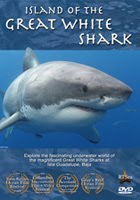
First, there will be a full slate of exciting and thought-provoking films - from professionals to student films - for the public to view. My documentary, Island of the Great White Shark, has been accepted but the final slate of films to be screened has not been determined yet, so check their web site as the dates approach.

Secondly, there will be several presentations, panel groups, and awards - particularly, a Lifetime Achievement Award for Outstanding Ocean Advocacy to be given to Dr. Sylvia Earle, who I featured in a previous post. Many of the people involved in the panel groups are colleagues or mentors so I know the events will be enlightening for marine conservationists, filmmakers or just the curious.

Lastly, and perhaps in many ways most importantly, the festival is planning a road show of sorts, bringing many of the participating films to a broader audience through aquariums, festivals, and other public events. This is key to building greater public awareness (My loyal readers of this blog are dedicated conservationists, but are we reaching the unenlightened as well? - that is an important long-term goal.).

I will be attending the BLUE Ocean Film Festival and will be soaking in some of Savannah's historical ambiance and Southern hospitality. Hope to see you there.

For more information:
info@blueoceanfilmfestival.org
813-885-4142
Facebook: BLUE Ocean Film Festival group

Thursday, April 9, 2009

Australia: microcosm of global warming today

There's a very disturbing article in today's Los Angeles Times regarding the current impact of global warming on Australia. When we think of the impacts of climate change, we often think of the polar regions or maybe a few isolated regions affected by heavy rains or drought. But here is an entire continent showing negative impacts on agriculture, water supplies, wildlife, and even social effects that include higher rates of suicide.

Southern Australia is showing definite signs of a warmer, drier climate that has been devastating to many of the country's agriculture industries. Fruit orchards are showing drastic signs of reduced output and farmers are not able to afford to make the investment in shifting to different
crops - removing orchards, planting new crops, waiting for a sufficient new crop to begin to pay off. This has led many farmers to economic collapse and even an increase in suicide. And all throughout the southern region, water supplies have become precious to meet the demands of farmers, cattlemen, and urban cities.

In Northern Australia, climate change has produced heavy, monsoon-like rains and more cyclones - one of the topsy-turvy affects of temperature, wind, and ocean current changes. Throughout the country, temperature change is having an impact on wildlife, with species fighting for dwindling space as they migrate to better climates or dying out if favorable conditions cannot be found. And Australia's Great Barrier Reef continues to show the dramatic effects of temperature-induced coral bleaching to the extent that the reef could be "extinct" in 40 years.

"Something is happening in Australia," firefighter Dan Condon of the Melbourne Metropolitan Fire Brigade wrote in an open letter. "Global warming is no longer some future event that we don't have to worry about for decades. What we have seen in the past two weeks moves Australia's exposure to global warming to emergency status."


A royal commission is being convened to address the problem, but Australia's political response has been somewhat muted because to seriously address global warming means the nation
must rethink the foundation of its economy: coal. Australia is the world's largest exporter of coal and depends on coal for 80% of its electricity. This nation is a microcosm of what the world faces today. The shift to alternative energy sources, the steps needed to be made to reduce greenhouse gas emissions - these will not be easy and, more and more, we are seeing anecdotal and empirical evidence that it must be done now and in a big way.

Read the entire Los Angeles Times article with excellent video.

Tuesday, April 7, 2009

Offshore Oil Drilling: Santa Barbara County readies a ban

In California, Santa Barbara County supervisors are preparing to reinstate a "ban" on offshore drilling, reversing a controversial decision made 8 months ago. The county will deny permits for onshore processing, which effectively halts any new offshore drilling - the actual drilling being something the county has no jurisdiction over. The new position reflects a change of heart (and a change in the board's make up) in favor of alternative energy sources before drilling is even considered.

"I feel strongly that we've been a national leader in conservation and alternative energy," said board member Doreen Farr. "That's the direction we need to go. We can't drill our way out of this."


But not everyone is in agreement. Many Santa Barbara County residents have no problem with tapping into undersea resources, contending that evolving technology has minimized the risk of catastrophic spills.
"It's irresponsible not to develop offshore drilling and production, with a serious eye to making certain it's safe -- which it can be," said Joni Gray, a supervisor who represents the Santa Maria and Lompoc areas.

The new proposed resolution will be considered next week, the timing being in conjunction with an Interior Department hearing in San Francisco on offshore drilling. While there are those who advocate that offshore drilling technology has improved, the memory of the disastrous 1969 Santa Barbara oil spill is still fresh in the minds of many.

Monday, April 6, 2009

A Question From RTSea: how's the blog doing?

Just a quick question to my readers . . . What would you like to see from this blog?

I have basically taken the approach of being a news aggregator for nature issues (partial to marine conservation with a specialty interest in sharks) and have tried to keep my opinions as diplomatic as possible (I find too many blogs seem to be forums for rudely spouting off, thereby fomenting partisanship and not pushing the agenda forward).

Give me your thoughts as to what you would like to see. If I'm on the right track, let me know. If not, let's hear your ideas. With so much mass communication flying around these days, the last thing I want to do is waste any one's time.

Thanks.
RTSea

Saturday, April 4, 2009

Wind Turbines: part of rethinking energy policy

Wind turbines off U.S. coastlines could potentially supply more than enough electricity to meet the nation's current demand. A conclusion drawn by a pro-wind environmental group or wind turbine lobby? No, it comes from the U.S. Interior Department in a recent report on wind turbine potential. (Read Los Angeles Times article.)

The report cited that wind turbines in the shallow waters off the eastern coast could produce up to 1,000 gigawatts of electricity - enough to handle 25% of the nation's demand. But it's not all a bed of roses. West coast wind turbine potential is hampered by the underwater terrain - primarily deeper waters that make the placement of turbines more difficult.

The report also touched on a sensitive issue with many environmental groups: offshore oil reserves and the possibility of more offshore oil drilling. This points to the need for a comprehensive and cohesive energy policy - no easy task and one that has eluded us to date because it was always easier to just keep drilling for more oil.

My thoughts . . .

A national energy policy is faced with having to address several important issues: the economic/political ramifications of our dependence on oil, particularly foreign oil; the need to develop a wide range of alternatives - some of which may not be as cost effective but may benefit the environment; the need to address the environmental safety issues in developing any and all forms of energy; and the reliance on objective science to determine the impacts of any new or existing form of energy. It's a mouthful any way you look at it.

The "drill, baby, drill" contingent that would like to see offshore and Arctic drilling resume or begin in earnest are opposed by many in the environmental movement. But a middle ground may have to be found here. I sense that germ of compromise in many of the comments from eco groups stating that objective scientific research is needed to determine the impacts of drilling (in other words, they are not entirely opposed to the idea as long as we don't repeat the oil spill disasters and environmental mistakes of the past). That holds true for many other forms of energy development. We need to focus our technological capabilities toward ensuring the highest degree of environmental safety for every form of energy under consideration - wind, solar, and yes, even nuclear and oil.

I'm not sure that our society can beat its addiction to oil by going cold turkey; we'll need to ween ourselves off of it. But if any new drilling does take place, it can't be for the purpose of returning to the status quo. Whatever oil is used, it must be done more efficiently - it becomes a two-fold issue: where we get it and how we use it. The underlying goal being to eliminate as much use of carbon/CO2 producing energy sources as possible.

Science and technology must play a massively critical role in all of this, in both developing the technologies that will provide efficient energy use that is economically reasonable while also determining what is safe for the environment. The two go hand in hand - with one caveat: to sacrifice the environment for the sake of expediency or the dollar would lead to irreparable damage. We are at that critical ecological tipping point.

Friday, April 3, 2009

Palau's Shark/Fishing Legislation: a reputation for conservation at risk

Palau has been a favorite dive tourist destination for many years because of its wonderful reefs and bountiful fishlife. And the island has, in the past, taken active steps to protect its shark populations with aggressive action against illegal shark finning operations. All of these efforts have contributed to the island's tourist economy and sound conservation policy.

But that all could potentially be undone with recent legislation that was introduced to both allow for commercial shark fishing and allow for the use of purse seining - a method that brings in a large amount of by-catch. Palau commercial fishing interests have been working with Philippine fishing groups and the combined influence on Palau legislators has produced SB8-44 (which drops the ban on shark fishing) and SB8-50 (which drops an export tax on fish caught by purse seining).

According to FinsMagazine, the collective result of the laws would be:
  • To permit and encourage the killing of sharks in Palau’s waters
  • To promote shark finning
  • To promote fishing methods that according to Monterey Bay Aquarium “result in large amounts of unintended catch” including sharks, dolphins, turtles, rays and juveniles:
    http://www.montereybayaquarium.org/cr/cr_seafoodwatch/sfw_gear.aspx
  • To exempt fishing companies from any export taxes on fish taken from Palau’s waters
  • To make it practically impossible for Palau’s law enforcement personnel to successfully prosecute alleged violators in the courts
  • To risk destroying Palau’s sustainable tourism industry
  • To risk destroying Palau’s marine resources through unsustainable practices
  • To gamble on all of the above for no apparent gain to Palau or Palauans.
This issue has made the rounds of several shark blogs recently, but opinions from everyone - from divers to land-bound ocean advocates - are needed to remind the Palau government that the negative impact on tourism and the island's marine ecology will ultimately outweigh the short-term gains in a working relationship with Philippine commercial fisheries.

Email the Palau Chamber of Commerce (
pcoc@palaunet.com) and Belau Tourism Association (bta@palaunet.com) and the government tourism office Palau Visitors Authority (pva@visit-palau.com) .

Thursday, April 2, 2009

Omnibus Land Act: taking steps to learn more about the oceans

As we have often heard, mankind knows more about the backside of the moon than it does about the oceans on our own planet. There's so much that we don't know, so many incredible secrets to be uncovered - many of which can prove to be beneficial to our existence, present and future.

So, when legislation is based with the purpose of learning more about the oceans, that's always a good thing. The recent signing of the Omnibus Public Land Management Act puts forth provisions to study the oceans to learn more about the effects of global warming and industrial influence. Specifically there are four:

The Ocean and Coastal Exploration and NOAA Act authorizes the National Ocean Exploration Program, National Undersea Research Program, and the Integrated Ocean and Coastal Mapping Program within the National Oceanic and Atmospheric Administration to increase scientific knowledge for the management, use and preservation of oceanic, coastal and Great Lake resources.

The Coastal and Ocean Observation System Act authorizes the establishment of an integrated system of coastal and ocean observations for the nation's coasts, oceans and Great Lakes.

The Federal Ocean Acidification Research and Monitoring Act authorizes a coordinated federal research program on ocean acidification.

The Coastal and Estuarine Land Protection Act authorizes funding for a program to protect important coastal and estuarine areas that have significant conservation, recreation, ecological, historical, aesthetic, or watershed protection values, and that are threatened by conversion to other uses.

It's very simple: if we want to save it, we need to know what to save and how to save. When you have the knowledge then the debate becomes secondary to the need for action.