Following up on my November 10, 2013 post regarding the fate of orcas kept in captivity in aquatic amusement parks like Sea World, the public pressure seems to be continuing as several major contemporary music acts have cancelled their appearances at Sea World, thereby gutting a major entertainment series Sea World was heavily promoting.
As important as the environmental issue is regarding captive orcas and dolphins, it will be changes in economics that will be the actual thumbscrew to bring about change. Less paying customers at the gate will most certainly catch the attention of Sea World management.
At present Sea World is waging an aggressive public relations campaign that refutes many of the assertions made in the documentary, Blackfish, which has greatly accelerated the debate. Sea World claims that many of their other more admirable marine mammal activities are funded by the revenue drawn from the whale and dolphin shows, and that may be correct. For Sea World to change its course would require a major change in revenue acquisition and distribution.
At the same time, there are other alternatives to Sea World for the public to see whales. Whale watching is one such activity and competing tourism operations in the San Diego area are capitalizing on Sea World's woes by promoting their own eco-tourism whale watching operations.
The Marriott International Corporation, with its many hotels in the San Diego area, are promoting their whale watching program. This is the time of year for observing migrating gray whales as they cruise along the California coast, on their way to Baja, Mexico.
The following infographic illustrates the gray whale migration and when they pass by the waters off San Diego. The infographic was "Powered by Marriott."
Seeing whales in the wild in California, whether it be gray whales, blue whales, or even a pod of orcas (which recently cruised the California coast ), this is a much more natural and respectful manner in which to better appreciate these marine mammals for what they truly are - magnificent marvels of the oceans, not trained servants jumping through hoops. Many thanks to the Marriott corporation for the use of the infographic. If you would like to read more about whale watching and the program that the Marriott has available, click here. Source: Marriott International Corporation
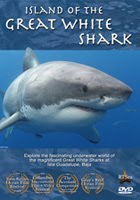
Here's a bit of fun news, perfectly timed as Discovery Channel's Shark Week prepares to launch this coming July 31st. In his blog, Outdoors, action and adventure, Pete Thomas reports on a Southern California whale excursion boat that was able to provide a little extra for its passengers - in the form of a great white shark.
After watching several blue whales, which will frequent the local California waters as part of their annual migratory trek, the passengers and crew of the Dana Pride were briefly visited by a juvenile white shark, perhaps measuring around 10 feet. There are some shark researchers who say female white sharks will give birth along the coast and as they move on as part of their normal migrations, the juveniles will remain in the area, feeding on fish and growing until the migratory lightbulb goes off in their heads and, as they reach adulthood, their feeding habits switch to seals and sea lions as the preferred prey.
However, they don't spend much time near the surface, so sightings are fairly rare. But they're there all the same. As evidence, many of the white sharks that the Monterey Bay Aquarium has had on display over the years, as part of their successful captive white shark program, have been juveniles caught by fishermen in their nets in, you guessed it, Southern California.
The captain, Todd Mansur, was able to take a short video on his cellphone of the approaching shark. Although one reader of Pete's article commented that it was a mako shark, it appears to me to be a juvenile white shark, not only because of its size and proportions but because of its relaxed movement in the water.
Having been to Isla Guadalupe, Baja to film the white sharks that migrate there in the fall months (I'll be there again this October), I have seen many familiar toothy faces return to the island year after year. But, unfortunately, there are a few sharks who have not been seen in some time, so I always enjoy hearing or seeing evidence of potential future generations of these important predators whose numbers have greatly diminished over the past few decades.
Read Pete Thomas' account of the visiting white shark.
Shark diving, whale watching, safari tours, mountain gorilla expeditions - all fall under a single heading: Ecotourism. It's a complex activity that brings together conservation, education, and economic development - all for good or for evil depending on the motivations of the operators.
Many conservation organizations or NGOs (Non-Governmental Organizations) are turning to ecotourism as a new strategic direction. In many parts of the world, conservation legislation and regulations which have been put in place - but unsupported logistically or economically - have proven less than effective. Ecotourism has the potential for both enlightening the public and providing economic incentive to governments or local economies. But it must be structured in a way that insures safety to the animals, safety for the participants, and minimizes it's ecological footprint while at the same time remaining economically viable.
There will always be an element of adventure associated with ecotourism - the thrill of seeing an elusive, endangered, or even potentially dangerous animal in the wild, and that will remain a major component as to its allure. See this online video promo I produced on shark diving for SharkDiver.com, emphasizing the mystique of these incredible animals (as opposed to promoting some macho, life-threatening experience).
Once participants are attracted to this unique opportunity, then it is imperative that the operators stress the concepts of education, conservation and protection. If not, then they are just profiteering and that greed can lead to lax policies that endanger people and animals. Shark Divers.com, for which I am an on-call consultant, provides professional services to help advance the future of responsible shark eco-tourism by assessing potential sites and recommending detailed safety and environmental procedures that require strict compliance on the part of the operators.
Ecotourism is no "silver bullet" solution or panacea. It can be abused by unscrupulous operators just like any other commercial venture. But many in the conservation and ecology movement are finding that a greater level of awareness - a more personal connection - is in order and ecotourism may be one way to help reach that goal.
It seemed in the 70's that cetaceans (whales) were quite the darlings of the conservation movement. A groundswell of respect and sympathy for these great oceanic mammals that were commercially hunted reached its zenith with the adoption of whaling restrictions and moratoriums for several species by the International Whaling Commission. Over the decades, whale eco-tourism has flourished and the populations of some species have improved. But there are still critical issues that require changes in strategies.
With whale eco-tourism, the need exists for greater scrutiny of procedures to better insure whale safety. A recent report cited in SeaWeb's Marine Science Review - 227, showed that in the northeast region of the U.S. where whale watching boats adhere to a voluntary program of "speed zones" regarding speed and distance from migrating whales, an alarmingly high number of boats were not in compliance and most operators approached the maximum speed limits routinely.
Of greater importance is the overall change in attitudes between the pro- and anti-whaling communities over the years. Another report cited in the same SeaWeb review, assessed the new "norm" that sprang from the anti-whaling movement. It was a fragile peace that has become weaker in recent years - culminating in Japan's recent definition of whaling for "scientific research" involving Humpback Whales.
One of the great challenges conservationists face is in dealing with commercial enterprises that have a strong cultural component. When you criticize the industry, the community takes it personally. It's not just black and white, dollars and cents - there's a definite emotional component that has to be considered. The anti-whaling strategies of the past have not fully won over public opinion in the pro-whaling countries and, according to the report, have even produced a boomerang effect. If you attack something with a strong cultural base without providing an alternative or substitute, or some sort of cultural "compensation", you face slow-building resistance and resentment. Which we are now seeing with Japan's recent actions and those of other nations who have a long history in commercial whaling.
Not to give up, but there needs to be a renewal in strategies, clever approaches in public relations, and diplomacy that rivals Middle East negotiations.
The RTSea Blog was started in 2008 and now includes over 950 entries available for media or academic background research use, including observations on a wide range of topical issues and events involving the oceans, sharks, and nature in general. After a brief break in 2012-13, there will now be more posts forthcoming.
Use keywords in the Search tool below or at the bottom of this web page to locate articles of interest.
Cinematographer/media consultant & producerRichard TheissandRTSea Mediaadministers this blog with the intent that information will be disseminated across the Internet and, in so doing, will illuminate others as to the serious challenges that lay before us in preserving and protecting our natural resources.
Search This Archive
Richard Theiss - DP/Media Consultant & Producer
Available for HD video assignments, media consulting, and speaking engagements. For contact information, click on the image above.