skip to main |
skip to sidebar
The Pew Environment Group, based in Washington, DC, has been making real quantitative, measurable progress in shark conservation. They put much of their focus on working with governments and political decision makers while also putting out some of the hard facts about the current condition of the shark species.
Here's a great infographic they just made available on their website. If you have a conservation website of your own, they provide the embedding code you would need or you can just save the image.
 This past week, I was away from the RTSea Blog as I was on the road, traveling to Washington, DC and Columbia, South Carolina.
 In Washington, DC, I briefly met with the members of the Pew Environment Group's (PEG) Global Shark Conservation Campaign, headed up by Matt Rand. PEG is an arm of the Pew Charitable Trusts and their focus is on making inroads in national and international policy. Much of what is currently proving to be fruitful in advancing the cause of shark conservation involves this higher political level. PEG's Global Shark Conservation Campaign has been involved in some noteworthy successes of late, particularly the establishment of shark sanctuaries in Palau and Honduras. The group is now looking forward to an upcoming CITES meeting this year and the next United Nations-sponsored FAO meeting wherein they will discuss revitalizing a decade-old "international plan of action." It's at international events like these that policies regarding the protection of sharks in international waters - outside the borders or boundaries of national marine protected areas or sanctuaries - can be hammered out.
From the U.S. capitol, I then moved south - through a tiring, circuitous route of flights - to Columbia, South Carolina to film a corporate video for a major pharmaceutical company. The location was an oncology (cancer) treatment center and I was very impressed by the range of services and the quality of care this facility was providing cancer patients.
In scouting various potential locations within the center for filming, we were shown many of the treatment areas and, at one point, the head of the facility brought out some of the chemotherapy medications that are currently being used. Some of these medications cost as much as $2500  per injection and patients would be receiving these treatments sometimes as often as twice a week.
It made me ponder on one of the challenges that conservation issues face. Mankind invests a considerable amount of effort and expense in treating disease, partly because, if we look at it as "connect the dots," it's a very short and simple connection. Many of us falter when it comes to, say, issues of diet and obesity because there are a few more dots to connect before we see a consequence that has personal impact.
And for many people, conservation is a long series of connecting dots and the immediate or personal consequences begins to feel remote. But the impact(s) of dismissing conservation are very real, as real as any cancer, and while we all certainly need to care for ourselves and others who may be afflicted by disease, we must also be aware that the planet is ailing and if we choose to ignore this one patient, Earth, we could be setting ourselves up for a terminal condition that is beyond a cure.
As we wrapped up filming after two days, I thought of the hundreds of patients that come through this oncology center's doors each day. It was comforting to know that these people had a place to go and that medications were available, albeit costly because of the challenges in manufacturing and the exclusive nature of these medications. Now, if we can get more people to see that conservation needs as dedicated a commitment in effort and resources, we just might be able to prevent the planet and the human species from flatlining.
 The islands that make up Bermuda lie just west of the center of the Sargasso Sea in the northern Atlantic Ocean. Further north and a bit removed from its Caribbean cousins, Bermuda has nonetheless enjoyed a fairly healthy tourist trade and is home to a variety of sea life It's aquatic abundance is due in no small part to the Sargasso Sea with its large floating mats of sargassum seaweed which provides a haven for many juvenile fish species.
The Pew Environment Group, as part of its Global Ocean Legacy program, is working to have a national marine park established in Bermuda, similar to marine parks found in other island nations.
“Our goal is to work with the Government of Bermuda, non-government organisations and scientists to establish a very large, no-take marine reserve to protect Bermuda’s ocean habitat within its Exclusive Economic Zone [EEZ], which extends from the islands’ coastline out to 200 nautical miles, and is part of the Sargasso Sea,” said the Pew Environmental Group, which launched the marine national park scheme in 2010.
Such a marine park would not only protect Bermuda's coastal marine resources and contribute to an international effort to establish safeguards to protect at least 10 percent of the world's oceans (I know, 10 percent is not much, but it's a start), but it would also provide protection for the Sargasso Sea and its namesake seaweed.
There is quite a variety of sea life that call the floating sargassum home, from juvenile reef fish to young turtles, invertebrates, and all of the larger predators that might feed on the juvenile populations. And it's not just animals that you would expect to find living locally to Bermuda. There are species that travel great distances to use the sargassum as a breeding ground and nursery. As an example, scientists have documented eel species coming from rivers as far away as North America and even Europe to spawn within the sargassum. The young eels mature in the Sargasso Sea and ultimately migrate back to the rivers.
Six hundred and forty miles from the coast of North Carolina, Bermuda is also surrounded by deep water which provides for a variety of deep sea life, again ranging from small larvae right up to deep-diving whales.
Bermuda might seem a bit remote on the map but it is not immune to the threats of climate change and commercial fishing. The Sargasso Sea is home to tuna, dolphin, wahoo, billfish, sea turtles, and the Porbeagle shark (just recently passed over for protection by the ICCAT). And there are thirty-six species local to Bermuda that have been declared threatened and placed on the IUCN's Red List.
“Given this highly productive ecosystem, scientists, Bermudians and others are concerned about protecting this area from emerging threats, such as proposals to harvest Sargassum for biofuel,” said Pew.
As part of the Global Ocean Legacy program, Pew will be focusing on Bermuda as home to a marine park, as well as areas in the Indian Ocean, Australia's Coral Sea, Hawaii, the Mariana Trench and the waters surrounding Pitcarin - famed for the late-17th century mutineers from the HMS Bounty who came to the remote island from Tahiti.
Here's a brief video about Bermuda's rich ocean resources, produced by National Geographic and narrated by Dr. Sylvia Earle.
Source: Bermuda News & Culture Source.
 Follow up to yesterday's post, "Sharks of the Atlantic: new report cites dismal international conservation efforts" . . .
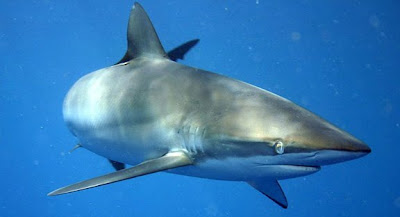
 The results of the ICCAT's 22nd Regular Meeting of the Commission in Instanbul, Turkey produced a mixed bag of results, leaning towards more disappointment than satisfaction. ICCAT agreed to establish greater protection for the silky shark - one of the most sought after sharks in the Atlantic shark fishing industry - but protections for the porbeagle, blue, and shortfin mako sharks were passed over, along with other important shark conservation measures that were recommended by Oceana and other conservation groups.
Maintaining a diplomatic stiff upper lip, an Oceana press release stated, “'It is a great day for silky sharks,' said Elizabeth Griffin Wilson, senior manager of marine wildlife at Oceana. 'ICCAT should be commended for its continued effort to protect the oceans top predators. Today’s decision to protect silky sharks is a strong step forward in protecting one of the most commonly found species in the international shark fin trade.'
Oceana did voice concern that ICCAT failed to reach consensus on several important shark measures, including those to protect vulnerable porbeagle sharks, establish science-based precautionary catch limits for blue and shortfin mako sharks and improve the current finning measure by requiring that sharks be landed with their fins wholly or partially attached in a natural manner."
Also in attendance at the ICCAT meeting were representatives of the Pew Environment Group. "Protecting one shark species a year and adopting no other measures for their conservation will not be enough to ensure the survival of these animals across the Atlantic Ocean," said Max Bello, senior advisor on global shark conservation for Pew.
Progress with international organizations can be painfully slow and patience is one of the founding principals of diplomacy. However, incremental steps at this stage may not be enough to preserve endangered shark species like the porbeagle which, it has been reported by scientists, would need a minimum of several decades and possibly more than 100 years to fully recover.
Read Oceana's press release on the results of the ICCAT meeting.
Read comments from the Pew Environment Group in the San Francisco Chronicle.
 In June of 2006, one of the year's high points in ocean conservation occurred with the designation of the Northwestern Hawaiian Islands as a marine monument, providing well-needed federal protections as a marine sanctuary and no-take zone. A similar effort is being promoted for the Northern Marianas Islands.
 The Northern Marianas Islands, a commonwealth with political ties to the United States (it abides by most federal laws and citizens carry U.S. passports), is part of the Marianas Island chain ranging from Guam in the south to the northern islands that include Saipan, Rota, and Tinian. Geologically linking these islands is the famed Marianas Trench, the lowest point on the Earth's crust.
 The Pew Environment Group is leading the charge, with the support of the Coral Reef Alliance,
  to have the northernmost area of the islands designated as a marine monument, similar to what was done for Hawaii. The area in question is relatively remote with pristine reefs, several species of seabirds and sea turtles and, of particular interest, deep sea vents due to the area's undersea
  geologic/volcanic activity - a terrific potential deep sea laboratory.
At this point, the campaign to have the area designated a marine monument is in the early stages, with public awareness as a key motivating factor. Log on to the Pew Environment Group or Coral Reef Alliance web sites to learn more and add your name to a growing letter campaign to make the designation a reality.


 This past week, I was away from the RTSea Blog as I was on the road, traveling to Washington, DC and Columbia, South Carolina.
 In Washington, DC, I briefly met with the members of the Pew Environment Group's (PEG) Global Shark Conservation Campaign, headed up by Matt Rand. PEG is an arm of the Pew Charitable Trusts and their focus is on making inroads in national and international policy. Much of what is currently proving to be fruitful in advancing the cause of shark conservation involves this higher political level. PEG's Global Shark Conservation Campaign has been involved in some noteworthy successes of late, particularly the establishment of shark sanctuaries in Palau and Honduras. The group is now looking forward to an upcoming CITES meeting this year and the next United Nations-sponsored FAO meeting wherein they will discuss revitalizing a decade-old "international plan of action." It's at international events like these that policies regarding the protection of sharks in international waters - outside the borders or boundaries of national marine protected areas or sanctuaries - can be hammered out.
 per injection and patients would be receiving these treatments sometimes as often as twice a week.
 The islands that make up Bermuda lie just west of the center of the Sargasso Sea in the northern Atlantic Ocean. Further north and a bit removed from its Caribbean cousins, Bermuda has nonetheless enjoyed a fairly healthy tourist trade and is home to a variety of sea life It's aquatic abundance is due in no small part to the Sargasso Sea with its large floating mats of sargassum seaweed which provides a haven for many juvenile fish species.
 Follow up to yesterday's post, "Sharks of the Atlantic: new report cites dismal international conservation efforts" . . .
 The results of the ICCAT's 22nd Regular Meeting of the Commission in Instanbul, Turkey produced a mixed bag of results, leaning towards more disappointment than satisfaction. ICCAT agreed to establish greater protection for the silky shark - one of the most sought after sharks in the Atlantic shark fishing industry - but protections for the porbeagle, blue, and shortfin mako sharks were passed over, along with other important shark conservation measures that were recommended by Oceana and other conservation groups.
 In June of 2006, one of the year's high points in ocean conservation occurred with the designation of the Northwestern Hawaiian Islands as a marine monument, providing well-needed federal protections as a marine sanctuary and no-take zone. A similar effort is being promoted for the Northern Marianas Islands.
 The Northern Marianas Islands, a commonwealth with political ties to the United States (it abides by most federal laws and citizens carry U.S. passports), is part of the Marianas Island chain ranging from Guam in the south to the northern islands that include Saipan, Rota, and Tinian. Geologically linking these islands is the famed Marianas Trench, the lowest point on the Earth's crust.
 The Pew Environment Group is leading the charge, with the support of the Coral Reef Alliance,
  to have the northernmost area of the islands designated as a marine monument, similar to what was done for Hawaii. The area in question is relatively remote with pristine reefs, several species of seabirds and sea turtles and, of particular interest, deep sea vents due to the area's undersea
  geologic/volcanic activity - a terrific potential deep sea laboratory.