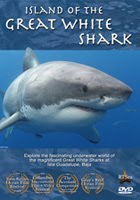
Shark Nets - long standing shark "deterrents" strung along some of the more popular beaches in South Africa and Australia - have become a source of concern among conservationists. It's a concern perhaps not as widely shared among the general population, or beach goers in particular, because of a fundamental lack of understanding as to what the nets can or cannot do.
In an excellent article in Africa Geographic, written by premier underwater photographer Thomas Peschak, chief photographer for the Save Our Seas Foundation, the history and issues regarding South Africa's shark nets are detailed.
As Thomas, a South African himself, points out, the nets have been in place in his country for over 40 years, totaling some 27 miles by the late '80s. The problem with the nets is that they actually don't deter or keep out the sharks - they catch and kill them. The Natal Sharks Board reported that nearly 34 thousand sharks were caught in these nets from 1978 to 2008, the majority of which were species that posed no threat to humans. Interestingly, for those who felt safe from any "killer" shark, a large percentage of the sharks were caught on the beach side of the net, as the shark was making its way out of the area.
But the nets - basically gill nets by design - are random killers, catching turtles, dolphins, and even whales. This unintended bycatch has fueled the conservation debate and the trend in South Africa is slowly moving towards the use of drum lines (baited hooks) and even a possible reduction of the use of any nets or deterrents at all in less populated beaches.
Peschak takes the realistic position that we can not expect all nets or deterrents to disappear any time soon; as long as there are large numbers of beach goers - representing a sizable tourist economy - then the priority of providing a "safe" beach will probably prevail. But he asks the proverbial question: if science can make such advances as cancer cures and moon landings, could we not come up with a method of shark deterrence that is less destructive? I concur. The methods have not changed much in 3 to 4 decades and have only reinforced both the idea that humans have a greater right to the oceans than its inhabitants and that sharks as a whole are dangerous and must be dealt with severely (an attitude illustrated in the Australian press regarding the government policy to hunt down and slaughter any shark reported to have been involved in biting a human).
Click here to view a great video of Thomas Peschak discussing the history and status of SA shark nets (contains a PDF download link to his Africa Geographic article).
Ever since movie-goers watched Dorothy step out of the farmhouse and into the rainbow-hued Technicolor world of the land of Oz, filmmakers have worked with color film and video but often kept a soft spot in their hearts for black and white imagery. There's a stark beauty in its expression of pure contrast; and yet, it provides a myriad of subtle shadings - something that millions of colors cannot achieve.
From the gritty photos of Matthew Brady and war photographers like Joe Rosenthal and many others, to Ansel Adams' striking images of Yosemite and other U.S. forests and national parks, to the black and whites films of the '30s and '40's; monochromatic images have often been a welcome respite to color pictures and films.
When it came to underwater images, it seemed that color would understandably have a strong foothold. Capturing the explosive vibrant color of coral reefs and exotic fish seemed a natural fit and it has remained the established format to date.
But black and white can be fun and challenging - and sharks can lend themselves as excellent subjects because of their basic gray color and contrasting counter-shading (check out the Oceanic Dreams blog for some wonderful examples of b&w stills of sharks). For video, it usually requires more time spent in post-production, because what might look great in color, may not deliver in black and white without some tweaking of gamma, black, and contrast levels. But the end results can be worth all the effort.
Here's a brief experiment I completed recently using footage shot in the Bahamas of lemon and tiger sharks. Black and white helps bring out some of the wonderful effects of sunlight beaming through the blue water of the Bahamas. And leveling the playing field to just black and white helps focus attention on the graceful movements of the sharks. But it can be tedious work, requiring each and every shot to be adjusted and compared to the rest. Tedious but worth it.
In the United States, shifts in the manufacturing base, heightened by the economic challenges of the past couple of years, have lead to the collapse of the business base of many American cities. No city better personifies this predicament than Detroit. With the loss of its automotive manufacturing backbone combined with high unemployment, home foreclosures. and the flight of its citizenry (the population has dropped from 1.8 million in 1950 to a current population of 800,00 and still dropping), Detroit is a city with considerable land that is going idle.
So, what does this have to do with nature and conservation, you ask? The latest issue of Fortune magazine reports on an interesting solution for Detroit's abandoned acreage: urban agriculture. And we're not talking about rooftop tomato gardens. No, what is being proposed is major, full-scale farming but utilizing the latest techniques in an attempt to produce maximum yield with as low of an impact (energy consumption, CO2 emissions, chemicals, etc.) as possible.
Currently, the plan is primarily the brainchild of John Hantz, a Detroit stockbroker, who has been consulting with Michigan State and the Kellogg Foundation for advice. And he is gaining support from Detroit civic leaders and a variety of potential investors. Hantz is prepared to make the initial $30 million investment himself and plans to begin planting this spring.
Wouldn't it be better to attract people - homeowners and businessmen alike - back to Detroit to use that idle acreage for suburban or industrial purposes? Perhaps, but it's been clear for some time that homeowners won't be coming back to Detroit any time soon if there's no work, and the industrial base has definitely moved on - either elsewhere within the country or overseas.
There are environmental benefits to this approach if it's done right. More CO2-absorbing plants rather than concrete, steel or aluminum siding. The use of compost-fed farms, thereby recycling various waste and using less chemical fertilizers. And supporting more locally grown produce, reducing the cost and environmental impact from national or international shipping.
Admittedly, the environmental benefits are not the biggest priority in Hantz's plan; he is more concerned with revitalizing Detroit's abandoned acreage - which currently totals nearly 30% of the city's 139 square miles - and seeing both a profit and revitalization of the former Motor City. And he is not without his critics who are skeptical that he is hoping for a major land grab. But something needs to be done for Detroit and anyone who steps up to the plate is most likely going to do so with some expectation of making a viable and profitable enterprise. The city's problems are just too enormous to realistically expect any other type of action.
So, we'll have to see. Maybe someday, while passing through the mid-west, you'll buy some plums grown in downtown Detroit!
FYI: I read a variety of publications, from conservative Fortune to liberal Rolling Stone, as I find it's a great way to get a feel for the pulse of things. I typically read Fortune to see what is being adopted in the world of technology gadgets - if it's in Fortune, then it's probably going mainstream.
Several weeks ago, the Copenhagen Climate Conference (COP15) concluded and the dust from all the commotion, protests, political positioning has finally settled. And do you know what was settled? Do you know what the accord that will now be circulated amongst member nations actually proposes? Well, don't be shy. Many people don't, so you're in good company.
The World Wildlife Fund (WWF) assembled a very nice primer on the building blocks of a pre-conference anticipated agreement, in language we can all understand. The New Climate Deal: A Pocket Guide is a PDF download that reviews the key points, the reasons behind each one and the implications faced by developed and developing nations.
Wikipedia summarizes the final outcome, the actual Copenhagen Accord. Brazil, China, South Africa, and the United States drafted the non-binding document and it has received some strong criticism from other nations, criticism that runs the gamut from proclaiming the accord is unfair or punitive to the accord not being strong enough or doing enough to have any measurable impact on climate change.
Whatever its deficiencies, it's a start in the right direction. But, like the controversy being played out in the U.S. over healthcare reform, settling for a half-way measure may be worse than no measure at all. Yet having no measure at all would be equally disastrous. Climate change is probably the first truly unifying global issue facing mankind and a monumental test of international diplomacy, understanding, and compassion.
Click here to download a PDF of the WWF report. Click here to view the Wikipedia summary of the Copenhagen Accord.
Just a little over a week ago, I posted information about new regulations for longline fishing in Hawaii and Florida that would further imperil the loggerhead turtle. Several conservation groups were engaged in legal action with the National Marine Fisheries Service to get them to act on behalf of the endangered turtles by implementing required provisions of the Endangered Species Act.
In a more positive development, the National Oceanic and Atmospheric Administration (NOAA) has proposed designating 70,000 square miles along the U.S. west coast, from Northern Washington to Southern California, as critical habitat for another endangered sea turtle, the leatherback turtle.
This ruling would provide a measure of protection for these turtles when they come to forage after their long Pacific migration. Every summer and fall, leatherback turtles travel 12,000 miles - the longest migration of any marine reptile in the oceans today - from nesting grounds in Indonesia to the western U.S. coastline to feed on jellyfish, a favorite food source of many sea turtle species. And these are BIG sea turtles, reaching lengths of nine feet and weighing in at 1,200 pounds! But they are on the edge of extinction; according to the Monterey Bay Aquarium, their numbers within the past 30 years have dropped by as much as 95 %, well below what many aquatic species can recover from.
There are two hiccups with NOAA's proposal, according to the conservation groups (The Center for Biological Diversity, Oceana, and the Turtle Island Restoration Network) who have been applying the pressure for this habitat designation. One, this is only a proposal, so there will be a public comment period open until March. You can expect opposition comments from the longline fishing industry, so if you would like to add you own voice in support, here is a link to NOAA's public response web site.
The second issue is that the proposal leaves out some key foraging areas and excludes fishing gear as a threat. This hearkens back to the same issue with Hawaii's and Florida's loggerhead turtles - the impact on their numbers from accidental catch by longlines.
“Today’s proposal marks the first step in making sure that these giant turtles have a safe and productive place to feed after their amazing swim across the entire Pacific Ocean,”said Andrea Treece, an attorney with the Center for Biological Diversity, in an Oceana press release.“NOAA now needs to take the next step and improve its proposal by incorporating more of the species’ key habitat areas and addressing one of the worst threats to leatherback survival – entanglement in commercial fishing gear.”
Orcas, or if you prefer, killer whales - are one of the most distinctive cetaceans in the world. Though often associated with cold water regions, these intelligent and highly social predators are actually found in all the oceans. But probably nothing personifies the classic image of the orca as the pods of orcas that frequent the waters in Puget Sound in the northeastern Pacific Ocean - tall dorsal fins cutting through the blue water or whales fully breaching from frigid waters with picturesque forest shoreline backdrops.
But something ominous is taking place in this northern wilderness: the whales are slowly disappearing. There are several theories being studied that could explain the whales decline. But whether it's one cause or a combination, it all springs from one source: mankind.
Outdoor adventure writer Thayer Walker has written a very interesting article for the online Sierra Club Magazine about the decline of these orcas, known by researchers as the "Southern Residents." I had the opportunity to work with Thayer before and he is a gifted writer with a terrific appreciation for our natural resources, from geography to biology.
Thayer writes about the dedicated work of Ken Balcomb, who formed the Center for Whale Research and has been studying the orcas of San Juan Island in the Puget Sound for over 30 years. Balcomb has documented the gradual decline of the number of whales in the area, impacted in the '60s and '70s by the demand for orcas for aquariums and amusement parks. But what appears to be happening now points to possible poisoning from pollution and, perhaps in equal or greater measure, the decline of the whales primary food source - chinook salmon.
Changes in the salmon population, from either overfishing or man-made interference or damage to the salmon's fresh water breeding grounds, have either pushed the orca pods to search for new hunting grounds or, as unfortunately suspected, doomed the whales to starvation. Orcas are known for their highly complex social structures; whales will stay within a pod for life and will stake out territories that are often not easily abandoned.
But also pollution plays a critical role in this threatening scenario. Much like the chemicals that can accumulate in sharks and dolphins, the blubber in orcas can retain a variety of pollutants that would not necessarily harm the whale (unless absorbed in great quantities) as long as the whale remains vibrant and well-fed. However, when food is scarce the orca will begin to burn some of its fat, thereby releasing stored pollutants into its system which weakens the immune system and the overall health of the whale deteriorates.
The demand for fresh-caught salmon combined with development in the area - including dam building, forest-clearing, and urban growth - are all contributing to the decline of one of the oceans' most magnificent hunters, one that has cruised these frigid waters for eons but is now faced with a threat for which its cunning and intelligence provides no defense.
Kudos to Thayer for "Empty Sound", a great story. To read the entire article in the Sierra Magazine, click here.
A last minute reminder from Oceana: today is the last day for U.S. citizens to submit comments to the U.S. Fish and Wildlife Service regarding the upcoming CITES convention. At the 2010 meeting, scheduled for March, several ocean species will be considered for protection under CITES' Appendix I, II, or III listings.
Under consideration are:
Bluefin Tuna - heavily over-fished in the Atlantic and the Mediterranean.
8 Sharks - spiny dogfish, porbeagle, oceanic whitetip, dusky, sandbar, and the scalloped, smooth, and great hammerhead sharks.
Red & Pink Corals - harvested for jewelry.
CITES has taken significant steps in the past to curb the trade in endangered species like rhino horns and elephant tusks. Here is an opportunity to make significant progress with several important aquatic species.
Again, this is the last day for U.S. public comments to reach Dr. Rosemarie Gnam, the U.S. representative for the CITES meeting. If you're a U.S. citizen, let your voice be heard!
Click here to send a message via Oceana (if the link does not work properly, go to the Oceana web site and sign up for their Wavemaker e-activist program).
In the United States, the Obama administration is considering ordering all federal agencies to evaluate any major actions to be taken by considering either their impact upon or how they would be affected by climate change. As reported by Jim Tankersley in the Los Angeles Times, the order would expand the scope of the National Environmental Policy Act and represents a step forward in recognizing the impact of global warming in the U.S. and is considered a victory for environmentalists.
"The act already requires federal agencies to consider environmental impacts such as land use, species health and air and water quality when approving projects. By formalizing a requirement to consider effects on climate -- a step some agencies already take -- the administration would introduce a broad new spectrum of issues to be considered."
But it's not a done deal yet. According to Nancy Sutley, head of the White House Council on Environmental Quality, the decision is not yet final. This will provide time for climate change opponents and business interests to get their lobbying efforts into high gear. Admittedly, the current environmental impact report process is a drawn out one that has delayed more than a few projects in the past. Having to make the additional consideration as to whether a shoreline road project might impacted by rising sea levels or whether rising temperatures might mean that different species of trees would replace trees cut down in a clear-cutting project - as was cited in the Times article - will provide environmentalists with additional reasons to question certain federal agency plans. So, expect the battle lines to be drawn.
But if the current administration is going to hold true to its concerns about addressing climate change, then this step is probably a good one.
The article quoted David Bookbinder, chief climate counsel for the Sierra Club as saying, "People will think longer and harder and smarter about what they build when they understand that the environment around them is changing."
On the other side of the globe, in Australia, the Great Barrier Reef Marine Park Authority (GBRMPA) has dismissed claims from some local scientists that the corals of the Great Barrier Reef are currently not at risk from climate change. GBRMPA chairman, Dr. Russell Reichelt said there is strong scientific consensus, research and fieldwork to confirm that the increase in ocean temperatures brought on by global warming poses the greatest risk to the future health of Australia's coral reefs. This refutes the contrary position taken by Dr. Peter Ridd, who believes the threat is greatly exaggerated.
According to an article in the online Cairns.com.au, Dr. Reichfelt says that coral bleaching is the most compelling evidence of the effects of temperature change and that the incidence of coral bleaching and its severity have been increasing over the past two decades.
"You’ve got animals and plants there that are adapted to withstand up to the normal [temperature] limits,"Dr. Reichfelt said. "If you’ll take it above what they’re adapted to, they’ll die."
Here are two news items from the Center for Biological Diversity that not only benefit the environment but will also have definite proactive effects on our lives.
EPA proposes new pesticide regulation The Environmental Protection Agency (EPA) has announced a proposed regulation that will require pesticide manufacturers to list both active and inert ingredients on their products. Apparently, the manufacturers currently are only required to list active ingredients which are those designed to kill the intended pest. So-called inert ingredients can actually turn out to be hazardous. Chemicals like formaldehyde, sulphuric acid, or known carcinogens have been used for this purpose and the EPA has recently designated 350 inert ingredients as being hazardous.
If this proposed regulation is enacted, you, the consumer or farmer, will be able to better decide what product to use (if you are inclined to use any pesticides) by knowing ALL of the ingredients that would be entering the air, soil, or water.
But as with many proposed regulations, there will first be a public comment period that will commence shortly. It is anticipated that the pesticide manufacturers will add a dissenting voice. If you would like to add your own voice of support, click here.
Happy with your junk mail? I suspect not, yet millions of pounds of the stuff gets crammed into our mailboxes each week. And that printed material represents the loss of thousands of trees. But there's a way you can help to put a stop to it by visiting 41pounds.org. This organization gets its name from the fact that the average adult currently receives about 41 pounds of junk mail each year.
For a 5-year membership fee of only $41USD (that breaks down to $8.20USD a year), 41pounds.org will block your name from leading mailing list agencies in addition to catalogers you specify. They guarantee that within 6-8 weeks you will see a noticeable drop in unwanted mailings, credit card offers, and catalogs.
41pounds.org is a non-profit organization and, just to be clear, I'm not getting any compensation for plugging this group. You could do all the leg work yourself and save the cost of membership - if you are tenacious enough. But as a former marketing exec, I can tell you that the direct mail industry counts on the fact that you won't bother. To visit their web site and learn more, click here.
2009 has been an "interesting" year - a mix of achievements and setbacks, as readers can tell just from the over 230 postings that ran in this blog over the past year. We're still in short supply when it comes to a full awareness in the minds of the public and the decision-makers as to the scope of the issues facing the oceans, the earth, and the air. Perhaps it's time for less lip service around the water cooler and more proactive efforts on the part of those who get it, those who are committed. Perhaps it's time for more action in 2010.
Patric Douglas of SharkDivers, who authors one of the leading shark conservation blogs, feels the time is right for all of us to get more involved. The Shark-Free Marinas Initiative he started is making significant progress, thanks in no small part to it's director, Luke Tipple, and the participation of many marinas worldwide.
And we have the CITES meeting in March to look forward to, where important, jeopardized species will be considered for protection (or heightened protection) under the current international agreement which has claimed success for many other threatened flora and fauna.
But with the economic turmoil of the past view years offering only glimmers of improvement with which to start the new decade, many non-profit organizations - including many of our conservation favorites - are still feeling the pinch. This has impacted their outreach ability as they struggle to try to do more with less. I know this because I have been putting effort into promoting more film making/media communications for research groups and NGOs - and to say it has been a challenge would be a gross understatement.
But if we are to make any headway with the fence-sitters, the Doubting Thomases, or the outright critics of important issues - like global warming, ocean acidification, overfishing, and the consequences of deforestation, development, and the quest for fossil fuels - then science needs to make its work more visible and get its data and conclusions out into the public forum, not sequestered in libraries and scientific journals.
So let's make this next decade the time when we really put our money where our mouths are. We don't need to tear down the walls; we can work with the system (or maybe around it, when necessary). But it is definitely time to move from passive awareness to committed action.
May the new year be a good one for you, your friends, and family - and, of course, for mother Earth!
The RTSea Blog was started in 2008 and now includes over 950 entries available for media or academic background research use, including observations on a wide range of topical issues and events involving the oceans, sharks, and nature in general. After a brief break in 2012-13, there will now be more posts forthcoming.
Use keywords in the Search tool below or at the bottom of this web page to locate articles of interest.
Cinematographer/media consultant & producerRichard TheissandRTSea Mediaadministers this blog with the intent that information will be disseminated across the Internet and, in so doing, will illuminate others as to the serious challenges that lay before us in preserving and protecting our natural resources.
Search This Archive
Richard Theiss - DP/Media Consultant & Producer
Available for HD video assignments, media consulting, and speaking engagements. For contact information, click on the image above.

 Shark Nets - long standing shark "deterrents" strung along some of the more popular beaches in South Africa and Australia - have become a source of concern among conservationists. It's a concern perhaps not as widely shared among the general population, or beach goers in particular, because of a fundamental lack of understanding as to what the nets can or cannot do.
 Peschak takes the realistic position that we can not expect all nets or deterrents to disappear any time soon; as long as there are large numbers of beach goers - representing a sizable tourist economy - then the priority of providing a "safe" beach will probably prevail. But he asks the proverbial question: if science can make such advances as cancer cures and moon landings, could we not come up with a method of shark deterrence that is less destructive? I concur. The methods have not changed much in 3 to 4 decades and have only reinforced both the idea that humans have a greater right to the oceans than its inhabitants and that sharks as a whole are dangerous and must be dealt with severely (an attitude illustrated in the Australian press regarding the government policy to hunt down and slaughter any shark reported to have been involved in biting a human).