Showing posts with label television programming. Show all posts

Wednesday, June 27, 2012

Shark Week: annual event reaches the quarter century mark

Once again, it's that time of year.  No, not the seasonal dusting off of your flip flops or scrounging around for those beach chairs and umbrella.  No, it's that annual ritual known as Shark Week.  Discovery Communications has launched its press kit for the series slated for August and the news outlets are eating it up like a ravenous you-know-what.

This season marks the 25th airing of the week-long slate of shows.  Imagine, an entire quarter century of shark-related programming.  That is a testament to the enduring fascination that people have with sharks, a fascination that has kept the series continually profitable for Discovery Communications.  And it would appear there's no end in sight.

Discovery has endured much criticism from shark advocates over many, if not most, of the programs produced over the years.  And there is no getting around it: many of the shows have played on the audience's fear of sharks, focusing on shark attacks and perpetuating certain myths or half-truths.  And why is that?  Quite simply, because television is a business and Discovery shrewdly knows who their core audience is, who it is that helps to support the advertising fees that the network charges.  And it's not the shark advocates - they only make up a very small portion of the 30+ million viewers who tune in each year.  In fact, I contend that the more the critics complain, the more Discovery knows they are appealing to their most profitable audience.

The slate of programs for this year is an interestingly mixed bag.  Some, like Shark Week's 25 Best Bites or Sharkzilla are designed to stimulate the fear factor, while others seem to be geared towards content a bit more substantial - exciting entertainment mixed with some historical or scientific  information.  As I reviewed the lineup with a somewhat cynical eye, I actually found myself intrigued with several of the programs on tap.  

As listed by Entertainment Weekly:
How Jaws Changed the World  “From the importance of music scores to special effects, from natural history to human behavior — careers were made and lives were altered with the feature film. Meet the people impacted by a single shark that changed the world.”
Shark Fight  Not what you think! This special actually focuses on shark-attack survivors who’ve become shark advocates and fight to save them.
Great White Highway  In partnership with Discovery, Dr. Barbara Block, professor of marine sciences at Stanford University, has developed new tagging technology that allows her to track great whites in real-time. “They can track where the sharks are migrating, where they are meeting and possibly mating, and maybe eventually where they go to give birth — something that continues to elude scientists.”

In co-production with the BBC, Discovery Communications has presented some amazing programs like Blue Planet or Frozen Planet.  However, with attention-deficient audiences willingly tuning in to low-budget, contrived reality shows of the lowest common denominator, the Discovery Channel - as well as other channels like National Geographic or Animal Planet - will stick primarily with programming that excites viewers, keeps advertisers happy, and continues to infuriate those who remember when nature programs were truly educational.  It's a business.  It's economics.  

Perhaps the future for educational media lies outside of the advertiser-broadcaster revenue model.  Educational filmmakers will need to investigate the full potential of online or mobile media formats.  So, break out the popcorn for Shark Week and maybe save your thinking cap for your iPad.

Thursday, April 15, 2010

3D Technology: new format can benefit nature conservation

Sometimes the technologies developed for our own entertainment or amusement can also have additional benefits as well. As an example, computers have taken game simulator technology to a level that benefits science (NASA simulators) and the military (pilotless drones). And in the 1950's, a crazy movie experience came and went, with red and blue glasses that made monsters or native spears fly out of the movie screen at us.

Yes, the early days of 3D or "stereoscopy" was an interesting fad - and now, thanks to the success of movies live-action films like Avatar and many animation films like Up, it is back and could very well be here to stay.

I just returned from the National Association of Broadcasters (NAB) annual convention and trade show, held in Las Vegas. This is a BIG show, covering every aspect of broadcast technology, from cameras and support gear to broadcast production and distribution equipment. And this year, 3D was the hot item, with televisions, cameras, and all the toys for launching 3D-dedicated channels. Networks were lining up with Discovery, ESPN and DirectTV all dedicating future channels to this new viewing format.

But the underlining question was: Where is the content? And, secondly, what does this have to do with a nature & conservation blog?

Well, for one: nature documentaries, properly shot using the latest in 3D technology, can be absolutely stunning. The ability to enrich the viewer's experience can add immeasurably to the
power of the message. The ability of 3D to draw you in, with that sense of "you are there," can help communicate to the viewer - whether or not they are a nature lover - the importance of ecosystems, be they on land or under the sea.

Now, this has been done successfully in movie theaters and large format venues like IMAX. But the new technologies are now focusing on the small screen: television. And this avenue has the means to make 3D ubiquitous and the next wave of technology that will simply become part of our everyday lives. That can empower conservation groups and filmmakers with the ability to provide content which can be more impactful, more meaningful to the average audience.

Scientific research can also benefit from 3D technology. 3D can provide details and subtleties to images from faraway Mars to the bottom of the sea that no 2D or conventional image could provide - particularly in situations where a manned presence would be prohibitive. At the NAB show, I attended one presentation on advanced scientific imagery and learned that many respected scientific organizations are now fully committed to 3D technology - regular 2D video is becoming yesterday's news.

But as with many steps forward, there will be a transition, not a simple "out with the old, in with the new." Many don't remember, it took more than a few years for color television - something we take for granted - to be adopted both by the industry and by the viewers themselves. There are plenty of challenges that must be dealt with - from optimal viewing (3D TVs without glasses are being developed) to replacing or modifying existing viewing platforms (TVs) to the quantity and quality of programming.

So, no one is suggesting you throw out that new high definition flat screen you just bought. But for those of us who work so hard at getting people to appreciate the magnificence of our natural resources - from the beauty of an Amazon forest, to the delicate explosion in color and variety of a coral reef, to the warm interplay between a family of threatened wolf cubs - there is another communication tool that is on the horizon for our disposal.

Tuesday, July 28, 2009

Annual Shark Buzz: carrying the torch during Shark Week

I will be leaving tomorrow for the Tennessee Aquarium in Chattanooga, TN to be part of their campaign to promote shark education and conservation, piggybacking on the growing hype as Discovery Channel prepares to launch its 22nd year of Shark Week. Many aquariums recognize the popularity of this annual event and try to use it to their advantage, providing special events, screenings, lectures, etc. that will enlighten visitors to the many threats facing sharks today and what it would mean to the health of our oceans if sharks were no more.

For many people who are concerned with shark issues and the public perception of these animals, Shark Week is a very sharp, two-edge sword. On the one hand is Discovery's recognized success with this annual programming to attract a very large number of viewers. Think about it: year after year, far longer than most successful television series', attracting as many as 29 million viewers. In broadcasting, that represents an enormous revenue stream and, therefore, is typically a formula not to be tampered with.

On the other hand - or other edge of the sword, many shark advocates and conservationists object to the programming because it often focuses on shark-human interactions (aka shark attacks) and reinforces misconceptions or preconceived notions of sharks as malevolent man-eating devils. And there is a fair amount of validity to their concerns. Discovery has a Shark Week web site with a lot of pro-shark and conservation information in it (working with the Ocean Conservancy), but Discovery recognizes that using the general public's attitude about sharks as dangerous predators is what attracts viewers to the broadcast programming. It's television economics, plain and simple.

Sensationalistic? Over the top? Sure, but so is every movie trailer for a sci-fi film, comedy, or thriller. It's the nature of the entertainment industry and the Discovery Channel is no different. Yes, they have a quasi-science, quasi-nature, quasi-educational mandate, but they are also a for-profit company. So, until the ratings drop or the advertisers balk at the ad rates, don't expect Shark Week to change any time soon.

So what are the shark advocates to do? Well, they must carry on with their message. And it must be a message based on truth and facts: that sharks are predators - not puppy dogs - and that as predators, they play an absolutely critical role in maintaining the health of our oceans. Can we be at risk? From certain species in certain situations, sure. There is no getting around that and to portray those apex predator species as anything other than what nature evolved them to be, is actually doing them a disservice.

I have said in the past, shark conservation is a tough sell. I don't think we can take the average person's near primal fear of sharks and turn it into unabashed love (that seems reserved to the small band of avid shark advocates). No, our goal must be respect and with that an appreciation of the importance of these animals. You can't have the cute bunny without the coyote, the fawn without the wolf, the antelope without the lion - and you can't have the pretty reef fish or playful seal without the shark.

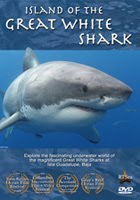
So this week in Tennessee I will be speaking to a group of Aquarium Day-Campers as to why they, as land-locked Tennesseans, should care about sharks. I will present my documentary to the Aquarium staff and docents to remind them as to the majestic beauty of white sharks and give them a taste of the ongoing research taking place to better understand these animals. And I will be giving presentations and conducting Q&As with the Aquarium visitors so that they can better understand the shark's role in the marine ecosystem. And, ironically, it will be Shark Week's sensationalism that will stimulate their curiosity to ask questions and learn more about the sharks that they fear.

We just have to make sure that we are there to give them the truth.