Showing posts with label economics. Show all posts

Thursday, October 18, 2012

Pricing Ecosystem Services: can conservation be achieved through economic values?

Came across an interesting article in UK's The Guardian, What's Wrong With Putting a Price on Nature?, that addressed the concept of placing a price or economic value on the ecosystem services that nature provides.  What is a forest's ability to sequester carbon worth?  How much would it cost to secure land and maintain it's undeveloped state if that helps provide a local source of fresh water?

Trying to place a monetary value on ecology has been around for a while as a concept.  It is often referred to as valuating ecosystem services, and it has been applied in several circumstances that have proved to be successful.  Determining a value of a live shark in related tourism dollars, as opposed to the revenue gained from a caught shark, has been used as a supporting argument for marine protected areas or shark sanctuaries.  And as shark conservation becomes more and more and international regulatory issue, economics plays a greater role in moving policy than does the emotional reaction to shark finning.

The Guardian reported, "Stuart H. M. Butchart, a researcher at BirdLife International, replies that embracing the ecosystem services idea doesn't necessarily mean abandoning the argument that species and habitats have intrinsic value. But making the economic case often 'has more resonance' for decision-makers."

However, pricing ecosystem services has plenty of critics.  There is concern that when economics forces get involved in determining the pluses and minuses of any ecological areas, you can find many of the same abuses that occur in the financial arena.  Undervaluing property, making environmental changes to cut costs that can then have serious environmental consequences, and just the idea that the environment could be turned over to the same free market forces - big corporations, etc. - that caused some of our ecological challenges in the first place.

I don't see it as a concept that can be applied broadly, like some silver bullet to all of the environment's problems.  If it were to be considered at all, it must be on a case-by-case basis.  However, in the realm of international environmental policy, economics can often play just as influential a role as scientific data and intrinsic value.

The article in the Guardian, written by Richard Conniff, is quite in-depth and I would recommend that you take a few minutes and read it.  You might find yourself to be in support of the concept or completely opposed, but at the very least, it must be considered as a strategic tool in some situations for selling conservation to those who may feel threatened by environmental policymaking that is done without a thorough concern for all that have a vested interest - the environment, threatened species, mankind itself and . . . business. 

Source: The Guardian

Tuesday, July 10, 2012

The Coral Triangle: scientists warn of social & economic implications

The Coral Triangle is an area of tropical waters in the South Pacific that ranges from the Philippines to the north, the Solomon Islands to the east, and Indonesia to the west.  It is considered to be the center of marine biodiversity, having the greatest range and number of aquatic species in the world.

And it is one of the most fragile and threatened regions in the ocean.

The Philippine's ABS-CBN.com reported on the consensus of several recognized marine scientists that a concerted effort must be made to protect the Coral Triangle from the effects of climate change, acidification, and other man-made threats.  It was interesting to note that their concerns focused on the social-economic and political implications of what would happen should the Coral Triangle continue on it's current path.  Considering the implications on mankind, as opposed to the ecosystem itself, is often a good strategy in gaining the attention of policy makers.

Interesting article, so I thought I would post it here in its entirety.


International experts pressure PH to protect reefs

CAIRNS, Australia - The Philippines and the other countries in the Coral Triangle should step up their efforts and investments to conserve “the most productive” reef ecosystem in the world, scientists said on Tuesday.

Overfishing, pollution, coastal development, climate change and ocean acidification are endangering the coral reefs of Southeast Asia and Western Pacific, which could lead to conflicts, food insecurity, and political instability in the region.

Jamaluddin Jompa, director of the Coral Reef Research at the Hasanuddin University in Indonesia, said: “All the pressures are going up and up...We need to do something to bring these down.”

Jompa said national governments and international donors should invest in the survival of the Coral Triangle because of its profound economic and political impact.

Maurice Knight, chief of party of the USAID Coral Triangle Support Partnership, said the international donors and national governments should address the preservation of the regional reefs since it has massive socio-political impacts beyond the Pacific. He noted that the cost of saving the Coral Triangle is huge.

“We need to come to grips with the costs of conservation,” he said, adding that ignoring the health of the area would be more expensive for the countries in the long run.

The collapse of the Coral Triangle could lead to lesser sources of food and livelihood to millions of people all over the region, Knight said. This could lead to political instability and conflicts, as well as internal and external migration, making the Coral Triangle's health a “global” issue.

The Coral Triangle Initiative, which started in 2009, is an alliance of six countries in the so-called Coral Triangle region, the center of marine biodiversity in the world. The initiative, which is supported by the governments of Australia and the United States, aims to preserve the health of the coral reef systems in the region.

The regional waters provide various services to more than 130 million people living in the region. The reef ecosystems are sources of food, employment, and revenue from tourism for the Coral Triangle countries.

The World Resources Institute released the report Reefs at Risk on Monday at the International Coral Research Conference in Cairns, Australia, which put a spotlight on the status of corals in the Coral Triangle. According to the WRI, 85% of the reef cover of the Coral Triangle is in decline.

The threats come from overfishing, watershed-based pollution, and coastal development. Factors such as climate change, ocean acidification increase the number of threatened reefs to 90%, the WRI study said.

Source: ABS-CBN.com

Friday, February 24, 2012

World Oceans Summit: international financiers and ocean advocates seek solutions

There's a lot that needs to be done to protect the planet and its natural resources. Our lives and those of countless plants and animals depend on action being taken, but sometimes the scientific facts, the ecological implications, are not enough to motivate people to take quantifiable steps either in action or in attitude.

This week, in Singapore, The Economist sponsored a World Oceans Summit, bringing together many of the recognized leaders in ocean conservation with leading international financiers because it will be the economic impacts that stimulate the policy and decision makers to act on behalf of the environment. And in today's complex world economy, developing nations can have an impact on major powers and vice versa.

At the summit, Robert Zoellick, president of the World Bank Group, proposed "a new S.O.S.: Save Our Seas." In opening remarks, he expressed the importance of sound ocean conservation and management as a source of potential economic prosperity for many developing nations that have come to depend on the riches of the sea as a major food source and economic engine. But they are not alone. The major developed nations are invariably linked to the future of developing nations and so it is in every one's best interests that we look at what is happening to the oceans.

For some conservationists, talking about the worldwide economic ramifications may not be as "sexy" as sticking to strictly scientific or aquatic subject matter, but it can't be ignored. If we are to move mountains to protect the seas, it will be economics that stimulates the effort required.

"Oceans are the home of an under-recognized and under-appreciated "blue economy." At a time when the world is looking for sources of growth, there is huge potential for "blue growth" - wisely preserving and investing in the value of ocean ecosystems to fight poverty and improve lives," said Zoellick.

Recognizing that individual efforts by nations and NGOs, as important as they may be, are not enough to stem the worldwide degradation of the oceans and its resources, Zoellick promoted the need for a greater international commitment, including a financial commitment - one in which there will be a return on the investment.


"Today, I want to propose a new approach - an unprecedented Global Partnership for Oceans. This Partnership will bring together countries, scientific centers, NGOs, international organizations, foundations, and the private sector to pool knowledge, experience, expertise, and investment around a set of agreed upon goals. These goals can sharpen our focus, encourage common and reinforcing efforts, and compel us to measure performance.

Together, we will build on the excellent work already being done to address the threats to oceans, identify workable solutions, and scale them. We can also mobilize financing where there are gaps. I've seen in other areas that the World Bank Group is fortunately positioned to catalyze and help organize such a global partnership effort.
"

He also put forth several goals that his proposed Global Partnership for Oceans should achieve.

"We should rebuild at least half the world's fish stocks identified as depleted: About 85 percent of ocean fisheries are fully exploited, over-exploited, or depleted. This includes most of the stocks of the top ten fish species, or about 30 percent of the world's marine capture fisheries production. There's no room for further expansion - we need to start rebuilding.

We should increase the annual net benefits of fisheries to between $20 and $30 billion. We estimate that global fisheries currently run a net economic loss of about $5 billion per year. We need to turn this around, by allocating and enforcing the rights of fisheries and reforming subsidies.

We should more than double the area covered by marine protected areas. Currently, less than 2 percent of the ocean's surface is protected - compared to around 12 percent of land. Let's increase this to 5 percent

We will need to work with governments and stakeholders to identify and establish sound marine protected areas where they can contribute direct economic benefits. The scale will depend on the context: for example, in some areas, we might work with communities to introduce small-scale protected areas on local coral reef systems, while in others we may work with national governments to identify and protect large areas as part of a wider strategy for the country's ocean ecosystems.

We would build on the idea of supporting networks of marine protected areas, such as island chains in the Pacific. A number of these networks already exist, but have yet to be fully implemented.

And we should increase sustainable aquaculture to provide two thirds of the world's fish. Today, that figure is about 50 percent, but there are serious concerns over disease management, feed use, and introduction of non-native species. We need to do much better, not only to help secure a reliable source of food, but also to take the pressure off of ocean fish stocks."

These goals sound very much like what you would here from a leader in ocean conservation, fishery management, or ocean research. But it's coming from an international banker. What makes an event like the World Ocean Summit noteworthy is that it demonstrates that environmental issues, like ocean conservation, are not feel good issues of the moment that can be easily set aside or disposed of when politically inconvenient. They represent both ecological and economical implications that can have a profound effect on humankind.

Click here to read Mr. Zoellick's entire opening remarks. Also in attendance was Dr. Sylvia Earle, leading ocean advocate and National Geographic Explorer-in-Residence. Click here to read and hear some of her remarks.

Tuesday, November 1, 2011

California's Cap-and-Trade: guest post looks at proposed economic solution to carbon pollution

Beginning in 2013, a major component of AB 32, California's climate change legislation, will commence: cap-and-trade regulations. California will lead the United States in the initiation of cap-and-trade policies and much of the country will be watching as to whether it proves to be a viable approach to stemming carbon emissions.

Cap-and-trade has it proponents, and at first blush it does seem to look good on paper. But it has its detractors, too - from businesses opposed to more government regulations to environmental groups opposed to the idea of polluters buying their way out of trouble. (Nature does not take into account a polluter's ability to pay for its own mess and then simply mitigates the negative impacts accordingly.)

One encouraging note is that, whether or not the cap-and-trade provisions of AB32 succeed and continue or fail and are discarded, the legislated overall reduction in carbon and greenhouse gas emissions will continue. At least that is what the politicians are currently saying.

Reported in the Los Angeles Times, former Governor Arnold Schwarzenegger said,
"Today's adoption of a cap-and-trade program is a major milestone for California's continued leadership on reducing the world's greenhouse gases. As I said both when we signed the legislation in 2006, and when we fought to protect it last year when Texas oil companies attempted to overturn it with Proposition 23, the most critical phase in the fight against climate change is diligently, aggressively, and correctly implementing this law."

Elaine Hirsch, writer and affiliate with MastersDegree.net, a clearing house for online degree programs, has contributed the following guest post on the subject of California's cap-and-trade program. In it, she examines how cap-and-trade hopes to find an economic motivator to address an environmental issue.

Why Cap-and-Trade in California Should be Given a Chance


Scientists , policymakers, and academics have intensely argued about the validity of climate change since the late 20th century. With over seven billion humans inhabiting the Earth, the negative externalities of consuming energy and polluting the atmosphere are becoming increasingly pertinent problems. Regardless of arguments over climate change or increasing energy prices, it doesn't take a master's degree in climate science to realize that the amount of energy consumed is increasing at an unsustainable rate. Either consumption needs to be capped from excessive use or alternative resources must be found. California recently announced that it's pioneering a cap-and-trade system for carbon emissions, which will help exacerbate both problems mentioned above.


Benefits of Cap-and-Trade

Starting in 2013, California's Air Resources Board will dole out carbon credits to carbon emitters in the state. Companies can use all of their credits on emissions or buy/sell credits to others. The idea behind this system is that California will be able to control how much total emissions businesses will be able to produce as a whole, allowing the state to reduce its carbon-dioxide emissions 25% below 1990 levels by 2020. Furthermore, policymakers expect this system to become a $10 billion market by 2016. Essentially, California would be creating a market out of thin air while cleaning the state's air quality.

Although a cap-and-trade system is ultimately dictated by the state government, it retains a market approach which will please many businesspeople. Theoretically, allowing parties to dictate the costs of negative externalities is the most efficient way to find a true cost for a good. Since valuing the price of carbon is a little-researched topic, allowing businesses to essentially bid on the price will be a simple way to value the substance.


In addition to financial benefits, capping the amount of carbon emissions would act as an incentive for companies to innovate alternative energy methods. Say, if the price of a carbon credit would be too expensive for start-up companies, these companies would increase the demand for alternative energy forms such as solar, wind or nuclear. This demand would help fund initiatives for energy companies to seek cheaper alternative energy sources, creating a sustainable future for the state (and the world!).


Far From a Solution

With that said, cap-and-trade is nothing close to a panacea for our energy woes. A classic argument opposing cap-and-trade stems from disdain towards government interventions in the marketplace. Removing government intervention from markets theoretically allow businesses to most efficiently allocate their capital. Imposing the extra costs of buying carbon credits would drive up business costs and create inefficiencies for businesses.


For less free-market adherents, an alternative proposition would be a carbon tax in lieu of a cap-and-trade model. Although it would set no hard limit for how much emissions are released into the atmosphere, the state will gain tax revenue and create an incentive for businesses to find alternative energy sources to relieve taxes.


Obviously, non-believers of climate change will also be against a cap-and-trade policy. Both economists and policymakers admit that cap-and-trade would create business inefficiencies and dead-weight-losses, which will be a central focus during a time of stagnant economic growth and dismal unemployment numbers.


Hopefully, this article has illuminated many of the tangible and ideological arguments for and against a cap-and-trade system. With the cost of pollution being a hard commodity to value, implementing a cap-and-trade system in California is a great way to test how the system would work in a real-world setting. California is a large state with a vibrant economy and prominent businesses, which provides a solid framework for such a social experiment. The upside of this project would lead to less carbon emissions, higher tax revenues, and innovations in energy ideas. The downside would be an increase in government control in private enterprise and further economic stagnation. Finally, if the experiment were to fail, the costs of reversing the policy would be much less than if the United States were to reverse policy on a national level. Regardless,
the entire country will be watching this social experiment, so it may be wise for both proponents and opponents to wait for the results before citing arguments based solely on economic and/or scientific models.
Elaine Hirsch, MastersDegree.net

Read more about cap-and-trade in the Los Angeles Times.
And you can read more in FastCompany.com.

Friday, January 28, 2011

Dr. Gregory Stone: understanding ocean conservation on the world stage

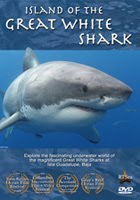
I first met Dr. Greg Stone some years back when he was heading up research and expeditions for Boston's New England Aquarium. I was there conducting a screening and meet-and-greet for my documentary, Island of the Great White Shark. We spent some time chatting about the oceans and he was kind enough to give me a copy of his book, Ice Island, about Antarctica's largest iceberg.

We next met when I corralled him to be on the shark conservation discussion panel for the inaugural BLUE Ocean Film Festival and Ocean Summit. Soon after that event, Greg took the position of Chief Scientist for Oceans with Conservation International. In that capacity he has been instrumental in working with the Kiribati government to establish the Phoenix Island Marine Reserve, the second largest marine reserve in the world.

Greg was kind enough to once again join the shark conservation panel I organized for the BLUE Ocean Film Festival this past August. His contributions were most insightful as he has not only an extensive grasp of the scientific issues surrounding many of our most pressing ocean conservation issues, but also has a mastery of the political, economic, and diplomatic realities that are crucial in making quantitative progress. We continue to stay in touch and I look forward to meeting up with him again soon, although he has lately been racking up frequent flyer miles like nobody's business. He's currently at the World Economic Forum in Davos, Switzerland, which follows recent meetings in London, Washington D.C., and Australia. He heads back to his new home base in New Zealand when schedules permit.

Greg has been a featured presenter for TED.com and a new interview was just posted on Treehugger.com. Below are a few interview excerpts followed by the Ted.com presentation. Greg is someone who understands both the critical issues of marine conservation and how the world works. And with that, he gets things done.

"Part of Conservation International's (CI) work builds upon a strong foundation of science, partnership and field demonstration. We empower societies to responsibly and sustainably care for nature and our global biodiversity, for the well-being of people. That last part is key. We humans need healthy ocean ecosystems and abundant natural resources to thrive."

"The issue of profitability is less critical than the understanding and belief that sustainably
managing nature actually improves lives by providing new, diversified or more stable income opportunities. For example, if there are abundant fish and healthy coral reefs, eco-tourism and small-scale fisheries that depend on these resources are more likely to grow and succeed. If people see the livelihood benefits in responsible stewardship of ocean resources, they are more likely to become incentivized to support conservation."

"In order to save the oceans we need to begin to look at the issues in a collective way. In the past marine conservation has been issue driven and hasn't looked at the bigger picture. Now through marine reserves, marine protected areas, seascapes and now oceanscapes we can focus efforts on larger areas of ocean and can work with governments on collectively managing them. As we scale up in size, these areas will provide healthy habitats for diverse and abundant marine life, and also provide homes and income for millions of people."

Monday, August 30, 2010

BLUE 2010 Shark Conservation Panel: discussing new strategies to protect sharks

The BLUE Ocean Film Festival & Conservation Summit came to a close this past Sunday, leaving behind a terrific week of conversation seminars, ocean films, and meetings with some of the ocean's leading defenders in the film, scientific, and political arenas. The film festival's big prize winner was Bag It, by Reel Thing, a personal journey of one man to learn and unravel the issues surrounding the use and impact of plastics on the environment.

On Saturday, I moderated a discussion panel, New Strategies in Shark Conservation, at the Monterey Conference Center's Steinbeck Forum. I was honored to have four panelists who have been deeply involved in shark conservation, and their particular perspectives were very insightful as to what the future holds for shark conservation.

Shark Conservation Panelists
Peter Knights, executive director of WildAid: Peter's work with WildAid has been focused on the illegal trade in endangered species and he typically directs his battles toward the international frontlines. In particular, he sees great potential in bringing the issue directly to the people of China. This is a nation that not only has a sizable population - one that he says is not fully aware of the implications of the commercial shark market - but is also a nation that can have influence on many other Asian nations. WildAid continues with its campaign of public awareness to Asian-speaking populations with the wide use of Asian celebrity endorsements.

Stefanie Brendl, involved in Hawaii's recent shark fin prohibition legislation: Stefanie, as owner of Hawaii Shark Encounters, has jumped feet-first into the legislative arena, seeing what can be realistically accomplished through the halls of regional, state, and national politics. She is currently working with WildAid, which is based in San Francisco, to determine ways in which possible legislation can be initiated in California. The Hawaiian anti-fin bill can be an inspiration but, for California and anywhere else, a new political initiative means a minefield of new players, political influences, and constituencies. One of Stefanie's observations was that many of the emotional issues that fuel the shark conservation movement on a personal level have no resonance in the world of politics - it's a matter of economics and political logic supported by hard, undeniable data.

Laleh Mohajerani, director of Iemanya Oceanica: Mexico brings together many components involved in the shark conservation issue - governmental regulations and the viability of enforcement based on available resources; public awareness to a population whose focus can be on more fundamental needs of food and survival; and a local fishing population that has not fully been afforded economic alternatives to the overfishing of valuable marine resources. Laleh's organization is directing campaigns to bring not only more awareness to the Mexican public in general but to also show local fishing communities ways to support themselves without decimating the populations of sharks, turtles, and many other ocean species. These types of directives can be applied to other second and third world nations.

Dr. Greg Stone, senior scientist of the oceans, Conservation International: Greg brings a wealth of both scientific and international diplomacy experience and much of what Conservation International has been involved in has included scientific research that provides the hard, indisputable data for the policy and decision makers. The organization also works by bringing together the interests of multiple nations to form large-scale policy and regulatory agreements, such as the Phoenix Islands marine reserve and the Pacific Oceanscape - examples of large geographic zones where marine resources are protected, monitored, and enforced. Greg emphasized the importance of having the accurate facts and data to define the important role that sharks play in maintaining a healthy marine environment and that the larger organizations, - like Conservation International, WildAid, and the Humane Society - are perhaps best equipped to accomplish these critical, large-scale international goals that can produce quantifiable results.

Shark Conservation Maturing
The shark conservation movement is at a critical stage of maturation. It has been fueled by emotional hot buttons like the cruel hunting methods of shark finning and the seeming waste of a luxury item like shark fin soup or shark cartilage. But there was much agreement within the panel that, as important as these components are to the debate, to see quantifiable change in policy we must deal with the harsh realities of politics and economics. There are fundamental cultural differences between peoples that may never be resolved regarding attitudes towards sharks or seafood in general. And to challenge or resolve those cultural roadblocks may take too long or be too divisive. Instead, developing fact-based platforms that speak to the specific needs of nations will more and more become the model for future progress.

So where does this leave us as individual advocates and supporters? The panel still felt there was a strong need for the individual efforts, the grass-root movements. Concern was raised though that with so many "save the shark" groups today, each fighting for a measure of recognition and funding, the movement can become dissipated. Peter Knights noted that the individual choices we make regarding sharks and seafood in restaurants and supermarkets, what we tell our friends and acquaintances about the shark problem (calmly and matter-of-factly), all still can have a tremendous impact. Greg Stone commented that we all need to make careful, informed decisions about what organizations we support financially, learning what groups can show real and tangible accomplishments.

Stefanie Brendl noted that, while many shark supporters are inundated with one petition after another from a variety of groups and causes and may question whether so many of these are nothing more than feel-good exercises to rally the troops, the concept of the petition (or personal email, hand-written letter, or phone call) can be effective if properly directed to the right policy or decision-maker. And that is something that can often be best accomplished by yourself rather than relying on another group to be your water boy.

And, as a filmmaker, I reiterated my position that sharks need to be represented accurately and without over-sensationalism or, as sometimes happens with ardent shark supporters, misrepresentations of sharks as cuddly pets. Shark conservation is a tough enough proposition for many in the general public (or in the halls of congress) to appreciate; no need to come across as shark-hugging lunatics to those we are trying to persuade.

The Future
In the future, we may see a combining of efforts that will bring many shark advocate organizations to align themselves with larger organizations to consolidate power. This will be an important step in securing sensible political and economic measures on both a national and international level. And all of us will need to take greater personal responsibility for our involvement - mindful of the impact of rational and reasoned arguments in a complicated multi-cultural world, and cautious as to who we support and why.

Wednesday, April 29, 2009

Marine Life and Supply Side Economics: another reason for aquaculture

Both, the Shark Divers and Beqa Adventures blogs picked up on this post from the Southern Fried Science, a South Carolina marine biology grad student. It's a disturbing look at supply and demand economics regarding fisheries and it bolsters my attitudes regarding the importance of developing successful aquaculture. Here's a portion of the post:

"The basic premise is that many fisheries are completely supply limited. Even if we were to reduce 90% of the demand for certain fish, the remaining demand would still be great enough to consume 100% of the supply. If 100 people all love grouper, but only 10 grouper are being produced at any given time, then even if you convinced 90 people to never eat grouper, the other ten would still eat the 10 grouper being produced, and nothing would change. I was surprised that it’s taken me this long to start understanding what that means.
"

This also relates to shark products, particularly regarding the dollar value that increases with their continuing scarceness, even with reduced consumer demand. You can read the entire post here.

Sunday, October 12, 2008

United Nations and World Bank: weigh in on the future of commercial fisheries

One of the ways to get commercial interests to move in more eco-friendly directions is to appeal to base instincts. In this case, economic viability. The Food and Agriculture Organization (FAO, part of the United Nations), in conjunction with the World Bank, has released an assessment of marine fisheries and, as one might suspect, it shows a massive loss of revenue due to a decline in catch. (Read the press release.)

But poor management is as much to blame as is declining seafood populations. Commercial fisheries are plagued by over-capacity and over-efficiency - too many boats and advanced fishing techniques. The rising cost of fuel might be a nail in the coffin, but the problems were brewing long before fuel became an issue. Basic business economics says when you have a limited market (or resource, as in the case of seafood) and you expand operations, at some point the rate of revenue will decline. How many businesses have we seen become victims of expansion beyond what the market can bear? From computer chips to coffee shops.

The commercial fishing industry must address the need to scale back its operations to become more efficient - which will have a positive effect on seafood populations and can actually prevent market prices for seafood from skyrocketing. But it requires a shift in the industry, moving and retraining manpower and resources into other related areas, such as aquaculture/aquafarming.

(Read the complete report.)