Thursday, October 18, 2012

Pricing Ecosystem Services: can conservation be achieved through economic values?

Came across an interesting article in UK's The Guardian, What's Wrong With Putting a Price on Nature?, that addressed the concept of placing a price or economic value on the ecosystem services that nature provides.  What is a forest's ability to sequester carbon worth?  How much would it cost to secure land and maintain it's undeveloped state if that helps provide a local source of fresh water?

Trying to place a monetary value on ecology has been around for a while as a concept.  It is often referred to as valuating ecosystem services, and it has been applied in several circumstances that have proved to be successful.  Determining a value of a live shark in related tourism dollars, as opposed to the revenue gained from a caught shark, has been used as a supporting argument for marine protected areas or shark sanctuaries.  And as shark conservation becomes more and more and international regulatory issue, economics plays a greater role in moving policy than does the emotional reaction to shark finning.

The Guardian reported, "Stuart H. M. Butchart, a researcher at BirdLife International, replies that embracing the ecosystem services idea doesn't necessarily mean abandoning the argument that species and habitats have intrinsic value. But making the economic case often 'has more resonance' for decision-makers."

However, pricing ecosystem services has plenty of critics.  There is concern that when economics forces get involved in determining the pluses and minuses of any ecological areas, you can find many of the same abuses that occur in the financial arena.  Undervaluing property, making environmental changes to cut costs that can then have serious environmental consequences, and just the idea that the environment could be turned over to the same free market forces - big corporations, etc. - that caused some of our ecological challenges in the first place.

I don't see it as a concept that can be applied broadly, like some silver bullet to all of the environment's problems.  If it were to be considered at all, it must be on a case-by-case basis.  However, in the realm of international environmental policy, economics can often play just as influential a role as scientific data and intrinsic value.

The article in the Guardian, written by Richard Conniff, is quite in-depth and I would recommend that you take a few minutes and read it.  You might find yourself to be in support of the concept or completely opposed, but at the very least, it must be considered as a strategic tool in some situations for selling conservation to those who may feel threatened by environmental policymaking that is done without a thorough concern for all that have a vested interest - the environment, threatened species, mankind itself and . . . business. 

Source: The Guardian

Monday, October 15, 2012

World Primates At Risk: IUCN issues report listing 25 most threatened

The United Nations' Convention on Biological Diversity is being held right now in India and during the convention the International Union for the Conservation of Nature (IUCN) issued a report listing the 25 primates most threatened with extinction.  The list included many small monkeys and apes that are found in Southeast Asia, Africa and South America.

Primates like lemurs, langurs and other species of monkeys, along with apes like the mountain gorilla made the list.  These animals are being threatened by the loss of their habitat - tropical jungles being leveled for lumber or agricultural growth - in addition to being hunted for food or for the illegal wildlife trade.

Several species are standing on the brink of extinction, such as the Madagascar's northern sportive lemur, of which there are only 19 left in the wild.  More than half of the world's 633 primate species are at risk of extinction.

"Lemurs are now one of the world's most endangered groups of mammals, after more than three years of political crisis and a lack of effective enforcement in their home country, Madagascar," said Christoph Schwitzer of the Bristol Conservation and Science Foundation.  "A similar crisis is happening in Southeast Asia, where trade in wildlife is bringing many primates very close to extinction."

However, there are some success stories that alter the balance sheet somewhat.  Thanks to conservation efforts, several species - like India's lion-tailed macaque or Madagascar's greater bamboo lemur - have been brought back from the edge and the world has not lost a single primate species to extinction so far this century.  But we are very close to having that happen to some of these threatened species if decisive action is not taken.

So, there is a catastrophe looming, we have made some progress, but there is much more to be done.

However, progress can be painfully slow.  In February of 2010, the IUCN issued a very similar report - listing 25 threatened primates, again primarily in Africa and Southeast Asia.  The small primates, like lemurs, were particularly at risk.  But, as with the current report, there were some bright spots regarding species whose numbers were increasing due to conservation efforts.  The two reports were eerily similar.

It would seem there is a tug of war taking place in the jungles of some of our richest areas in terms of biodiversity.  Loses are being challenged by some gains, keeping the score at a sort of ecological draw.  The question is what will it take to significantly push the score in favor of the primates?  

Source: Huffington Post
Source: IUCN Red List

Sunday, October 14, 2012

Shark Conservation in Arabia: first international workshop concludes

Last Sunday I posted some information about a shark conservation conference to be held this past week in Dubai.  The focus of the event was to be on the state of shark populations in Arabian waters, the impact of commercial shark fishing and exporting of shark fins, and the level (or lack of) of regulations and enforcement.

Representatives from several Arab nations were in attendance along with scientists and others from conservation organizations in the region.  As this was the first such gathering - labeled as the Shark Conservation in Arabia Workshop - I did not expect anything earth-shattering regarding the outcome.  Such is the nature of international diplomacy, even when it involves pressing issues such as the possible loss of shark species in and around the Persian Gulf.  Agonizing baby steps.

After listening to the latest scientific data on shark populations - which, unfortunately, is a bit scant - and the reports and opinions from nations as to the amount of illegal shark fishing taking place, and who is doing what regarding the regulation of shark product exporting, a collective "wish list" was proposed which included stricter regulation and enforcement.

As reported in the Gulf News, Ralf Sonntag, director for the German branch of International Fund for Animal Welfare, said there is an enormous collective will throughout the Gulf region to better protect sharks from growing fin harvesting by the fishing industry. “This is a good start,” Sonntag said.  “It’s the start of a dialogue in order to improve the situation. We have some very constructive discussions.”

However, all is not rosy.  There are some serious challenges to be faced regarding the politics of the situation.  The commercial shark fishing industry is a powerful one on several different levels and there is some hair-splitting semantics taking place.  Earlier in the week, the UAE Ministry of the Environment and Water declared that its country was not a major harvester of sharks and but that other nations were entering UAE waters and taking sharks.  Additionally, what laws are in place in the UAE for the protection of sharks are reportedly being routinely ignored.  The lack of enforcement has emboldened fishermen to sell shark fins and carcasses in the open marketplaces in plain sight; nothing "black market" about it. 

The UAE Ministry's comments are troubling because the UAE is the fifth largest exporter of shark fins in the world.  They may wish to deflect criticism by saying they are not a major player in harvesting, but their role as an exporter must not be taken lightly.  To use an analogy, they may say they are not making the drugs, but as a big time dealer they are equally caught up in the supply chain from production to distribution to use.

The influence of those who benefit economically from either fishing or distributing shark products could be felt by comments regarding the lack of scientific data regarding species population levels.  This past Thursday, Gulf News reported that the shark harvest is “commercially important because of its value nowadays mainly due to its fins... in the UAE, fishing of sharks is not a bigger concern than the re-export of shark fins,” said Mohammad Tabish, fisheries specialist for the UAE Ministry of the Environment and Water.  “Due to lack of stock assessment studies and species specific data, it is still premature to say that sharks are overfished. But, yes, fishing does exist.”  

This is the great challenge facing shark advocates now, as they enter more and more into the international and political arena.  Policy decisions are made based on an established robust economic enterprise versus the environment.  Just as we have in the oil/energy industry, the desire to maintain the status quo rather than adopt alternatives is very strong.

For shark conservation to truly succeed, all elements must be addressed: altering market demand, drying up distribution channels, eliminating harvesting, and providing worthwhile alternatives for both commercial and local fishermen.  One organization, Fin4Fins, is focusing its efforts on "offering subsistence shark fishing communities an alternative through a tourist industry based on scuba diving."  This is an approach that is being successfully used with several Pacific island nations, and it needs to be seriously considered for protecting Arabian sharks.  It's not a "silver bullet" solution but is certainly a strategy that must be included with all of the others.

In the end, the Shark Conservation in Arabia workshop was a good start but there are significant challenges to the realization of concrete regulation and enforcement among Arab nations and the implementation of viable alternatives for fishermen.  It would have been better to have seen this occur 10 or 20 years ago.  And to say, "Well, better late than never" is not very consoling.

But let's dig in and get the job done.

Source: Gulf News 10/09, 10/11, 10/12 

Free Fall at the Edge of Space: successful jump back to our home planet

A little piece of technological history was accomplished today high - very high - over the dry scrubland of New Mexico.  Felix Baumgartner, supported by the Red Bull Stratos team of scientists and technicians, was taken aloft in a helium balloon to an altitude of over 128,000 feet - 3 times the altitude of a jetliner and the highest for any human in a balloon.  He then did what he had set out to do beginning nearly seven years ago when this project started. He jumped from the capsule he was riding in to make a free fall descent in which he reached a speed in the thin outer traces of the atmosphere of 833 miles per hour, becoming the first human to break the speed of sound (without an aircraft) at 1.24 Mach.  Opening his chute at around 5,000 feet, he safely landed in the New Mexico desert and is concluding a press conference as I write this post.

Undoubtedly, this event will be the talk of many Internet circles today and will get several days worth of news coverage.  There will be talk of what scientific data was gathered by the many sensors and equipment that both Baumgartner and the Red Bull Stratos capsule was carrying.  And there will be those that will describe it as nothing more than a high-tech stunt, which to some degree is a valid comment, akin to why do we climb that mountain? Because it's there.  

An event like this taps into the little boy adventurer in all of us.  Growing up, I wanted to be an astronaut, I watched all the space movies, had all the space models, and never missed the coverage of every launch in the U.S. space program.  Reality, though, said that being strapped into the next Apollo moon flight wasn't going to happen.  However, that didn't stop me from channeling my adventurism into something that I found equally fulfilling: an aquanaut.  And as I grew older I realized that what I was becoming involved in - the oceans and our aquatic resources - had greater consequences for myself and the planet.

So, I found myself vicariously living Baumgartner's moment in history today (beamed with spectacular clarity via live Internet feeds) but without any sense of regret whatsoever.  The same thrill that people might get by watching events like today's jump into near space, I get every time I jump beneath the waves.

Interestingly, what I saw from the video cameras perched outside of the Red Bull Stratos capsule reminded me once again of how small planet Earth is in the grand scheme of things.  How this is our home base - enclosed, encapsulated within a thin sheet of atmosphere protecting us - a truly finite ecosystem moving through the void of space.  It's all we have.

This is something that Felix Baumgartner realized as he stood on the step, looking out at the blackness of space all around him and then turning to the bright blue planet beckoning him home.  Asked by a reporter what he was thinking at that moment, Baumgartner said he thought of how small we all are.

So, congratulations to Felix, his entire crew, and to the corporate sponsors who once again proved that, as with SpaceX (the private spacecraft company supplying the International Space Station) and other companies involved in science technology ventures, non-government enterprises can often accomplish great things for science and the environment.  Ocean research needs more of that kind of commitment - funding the Aquarius undersea research lab would be a good start - as the outlays are comparatively small and the returns can be enormous and truly live saving.  

Visit the Red Bull Stratos website.    

Wednesday, October 10, 2012

About White Sharks & Conservation: presentation at the Explorers Club in San Diego

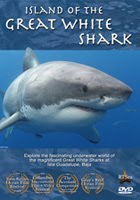
This coming Tuesday, October 16th, I will be giving a presentation at the San Diego Chapter of the Explorers Club.  The presentation will be "Understanding Great White Sharks and the Future of Shark Conservation."  I will be recalling some of my experiences from over 7 years of filming the white sharks at Isla Guadalupe. Also, I will be touching on some of the important issues facing shark conservation as it evolves from a grass roots cause to an international movement, involving new players both pro and con and new strategies.

I have been a member of the Explorers Club, Southern California Chapter, for several years and I find the members to be a varied and interesting bunch.  There are well known members like Dr. Sylvia Earle, Buzz Aldrin, Don Walsh, James Cameron, and many others.  But there are many others who are simply die hard explorers at heart, travelling all around the globe and gaining a great appreciation for the environment and the people that call it home.

The evening starts with a reception followed by dinner, and then it's my turn.  Click here for a PDF that has all of the details if you happen to be in the San Diego area. Or for more information or questions, you can email sandiegoexplorersclub@gmail.com.

Tuesday, October 9, 2012

Nature At The Pols: essay reminds us that nature has no political ties

An essay caught my eye today that I would like to share.  Written by David Yarnold, president and CEO of the National Audubon Society, it is titled "Love of nature not right, left or center, it's common sense." 

It's a simple reminder that nature knows no political affiliation and, outside of Washington DC, there is a large number of people who see that nature is something to be preserve for all people.

David quotes several people from across the country, people who understand that conservation benefits all of us.

Said Lorie [no last name] from Pennsylvania, "Since when did breathing clean fresh air, drinking pure clean water and protecting our precious natural resources and environment become something that only Democrats should value? Too often now I hear key Republicans ridicule people that care deeply about the environment as over-zealous crazies. It makes me feel almost embarrassed to be a Republican." 

Mark from California said, "I sure would like to be hearing candidates even mention the environment during their campaigns. There's a lot of talk about the deficit and the burden it will place on future generations. Think of the burden placed on them if their world is deprived of clean air, clean water and an abundance of wildlife and wild places." 

Certainly we have pressing economic issues to contend with.  However, the challenges facing nature roll on 24/7; nature won't set them aside and wait patiently until we get around to addressing them.

And Nature and all the animals and plants within her domain don't vote.  What would happen if they could? 

Click here to read the essay in the Kennebec Journal.


Sunday, October 7, 2012

Saving Sharks in Arabia: conference to look at regulating commercial shark fishing

A step in the right direction for shark conservation might be on the horizon in Dubai. A conference will be held this coming week to discuss regulations regarding commercial fishing for several species of hammerhead sharks.  Organized by the UAE Ministry of Environment and Water and Sharkquest of Arabia, the four-day Shark Conservation in Arabia will include government officials and scientists.  

The goal is to determine whether shark fishing, particularly involving the great, smooth and scalloped hammerhead sharks, should be regulated or even banned altogether if the scientific evidence provided by the participants dictates it.  There lies part of the challenge as scientific evidence regarding the populations of these sharks in Arabian waters is a bit on the slim side.

With examples like the reduction in hammerhead populations in and around Mexico and in the Mediterranean, where the loss of hammerheads is estimated at as much as 99.99%, it would seem logic would dictate that Arabia's hammerhead sharks are likely not different from other populations in terms of their slow reproductive rates.  And so, even if the population was robust, at current demand levels for shark fins the Arabian population would evaporate rather quickly if commercial shark fishing went unabated.

It is the hope of local shark conservationists that strong regulations will be proposed and agreed to at the conference.  Such regulations would then be formally proposed at the March meeting of CITES (Convention on International Trade in Endangered Species).  This is necessary as the current trade in sharks in the region, both importing and exporting, involves several different countries.  So the end result must be international regulations or bans, and that is the primary role of CITES.

However, strong opposition can be expected as there is a considerable economic incentive at risk here.  Worldwide, the market for shark fins has been estimated at $1.2 billion USD.  And as pressure continues to mount against it - and as the populations of shark species continue to decline - that dollar figure will go up per pound. 

Hammerheads are not the only shark species at risk.  Sonja Fordham, president of Washington, DC-based Shark Advocates International, recently posted a picture on Facebook of thresher sharks lining a dock in Dubai.  While thresher shark meat can be found on the menus of some higher end seafood restaurants, these sharks are most likely bound for the shark fin market as shark meat can spoil quickly when not properly treated and refrigerated.

The UAE is the fifth largest exporter of shark fins and, judging by these few pictures, it's not hard to see how.  That makes this week's Shark Conservation in Arabia conference all the more important.

Source: The National                    

IUCN Green Lists: proposed approach to recognize conservation successes

For those of you who have read this blog with any regularity, you have noticed that every once in a while I will post something that is just for fun, something on the lighter side that perhaps shows nature or the oceans at their very best.  With so many weighty issues to address, every once in a while we all need a break.

And when we see healthy ecosystems or species, rather than be lulled into a false sense that all is well, it is hoped that people will be encouraged that the steps being taken and the steps that need to be taken are bearing fruit. Success stories propel us to do more.

That is the basic philosophy being adopted by the IUCN (International Union for the Conservation of Nature).  This worldwide organization is well-known among conservationists for its Red Lists which list and rate threatened or endangered species and ecosystems.  The Red Lists are helpful in identifying specific plants, animals and ecosystems that deserve our immediate attention.  However, they are negative indicators - what's going wrong - and taken as a whole, one can conclude that the whole world is going to hell in a handbasket.  The IUCN recognizes that we also need success stories and so they are preparing to launch two new programs: a Green List for species and one for managed protected areas.

"The concept of a green list is that it can throw a spotlight on things that are actually working," Trevor Sandwith, director of IUCN's Global Protected Areas program, was quoted by OurAmazingPlanet. "We already have well-managed, protected areas in the world, which no one is recognizing."         
Several national parks or protected areas are being put forth as test cases for the Green List concept.  Columbia's Parques Nacionales Naturales is one; Tayrona National Park, within the Parques area, along Columbia's Caribbean coast is another.  Successfully managed ecosystems and species can serve as models for other nations to observe and follow.

The Green Lists program was proposed at the IUCN's recent World Conservation Congress and the plan is to have a formal program adopted at the next congress to be held in 2016.  It is frustrating that movement on this idea has to be measured so slowly, but it will require the cooperation of all the member nations of the union and that will take time to iron out the details.  In the meantime, it does represent an optimistic, positive-thinking approach which many believe is needed in light of the challenges we face.

"We need to show that conservation is much more than just avoidance of extinction," said Elizabeth Bennett, president of the World Conservation Society (which strongly supports the concept of Green Lists as an important companion to the equally important Red Lists. 

Source: OurAmazingPlanet

Wednesday, October 3, 2012

One World One Ocean: harnessing multimedia for National Seafood Month

Two years ago, MacGillivray-Freeman Films, makers of well-received IMAX films, turned their attention to the plight of the oceans and its inhabitants.  Spurred on by the concerns voiced by leading ocean conservationists like Dr. Sylvia Earle, they formed a new foundation, One World One Ocean, and a coinciding bold media initiative to utilize a variety of mass communication tools, from 3D IMAX to online interactive programs, for the purpose of enlightening the general public to the challenges facing our marine ecosystems.

One World One Ocean is pursuing a wide range of strategies that touch on different issues.  I received information today from the organization regarding their support of National Seafood Month.  The purpose of National Seafood Month is not necessarily to promote a greater consumption of seafood - too many species are already being adversely impacted by industrial commercial fishing as it is.  No, sustainability is the keystone of this month-long recognition and One World One Ocean has launched a group of educational initiatives that cover several age groups.

Here's some of what One World One Ocean is launching:

This week, we officially kick off our GO Fish! Campaign – an effort to make National Seafood Month sustainable. Rather than hearing from us about why making sustainable seafood choices matters, we thought you should hear straight from the source.

Introducing Toro the Bluefin Tuna, a fish who’s got something to say about his current less-than-desirable situation. Don't let his surfer cool fool you -- his message is sincere.

Populations of western Atlantic bluefin tuna have declined 83% since 1950 due to overfishing. If our consumption rates don't change, many popular seafood species will likely be wiped out within 40 years.

We want to ensure that Toro and his buddies have a healthy ocean where they can thrive for decades to come.Visit our new GO Fish! hub where we’ll be sharing videos, infographics, blogs, recipes and more, throughout the month of October.

Fishing for some awesome prizes? Enter our video contest or create a sustainable seafood Pinterest board for a chance to win OWOO gear or a GoPro camera!

When it comes to protecting the ocean, even the smallest act can create a big impact. We look forward to making waves with you this October.

MacGillivray-Freeman Films is harnessing their considerable media skills to bring a variety of communication platforms as a means of educating people of all ages regarding ocean conservation.  While I do not fully agree with the idea of seafood sustainability (I advocate aquafarming), I do commend One World One Ocean for making people aware of the plight of seafood in today's high volume commercial fishing industry.

Sustainable seafood may not be the long-term solution, but it could be interim step that may buy us a little time, while we committed conservationists try to get the decision makers to get off their arses and start thinking about the future of the oceans and mankind.

Source: One World One Ocean

Tuesday, October 2, 2012

Coral Reef Cornucopia: rich coral biodiversity off Madagascar

With so much dire news these days regarding the world's coral - from coral bleaching, to ocean acidification, to over a majority of the reefs being degraded - it's always good to get some good news every once in a while.  Guarded news perhaps, but it reminds us that all is not lost if we act responsibly and act now.
Scientists from the Coastal Oceans Research and Development in the Indian Ocean (what a mouthful), also known as CORDIO, have reported the results of a study from 2002 to 2010 on reef-building corals in the West Indian Ocean.  Their survey shows a high level of coral biodiversity, particularly around Madagascar, the large island off the central east coast of Africa.
In the Mozambique Channel, between Madagascar and the African continent, the scientists found as many as 200 to 300 coral species at various sites in the area.  In other locations within the West Indian Oceans, there were less than 200 species, making the Mozambique Channel especially rich.

Throughout the West Indian Ocean, the scientists found 369 species of coral and estimated that there could be as many as 450 species.  That would put the area head-to-head with other well-known coral reefs like the northern Great Barrier Reef.

As healthy as the reef-building corals in Madagascar and surrounding waters may be, they are not immune to the challenges and threats against them, particularly as Africa attempts to build its economy and infrastructure.  Pollution from urbanization, overfishing, and energy exploration are just a few of the dangers these reefs face. 

Coral reefs of the Western Indian Ocean need careful management and protection if they are to realize their full potential for improving human well-being in this critical developing region," said Steve Katona, managing director of the Ocean Health Index.

While coral reefs provide natural protection from storms and an ecological foundation for healthy fish populations - all of which are beneficial to mankind, Katona added they are also "threatened by warming sea-surface temperatures, ocean acidification, pollution by chemicals, nutrients and sediment, ultraviolet light, invasion by alien species and direct habitat destruction from unsustainable fishing techniques, divers, boat anchors, coral collection or mining and dredging."

But for the moment, we can revel in the knowledge that healthy, pristine reefs can still be found in the world.  Now it is our job, our duty, to not only preserve this coral oases but to build upon their success elsewhere. 

Source: LiveScience