Tuesday, July 13, 2010

Failing Fishery Management: report and video illustrate excesses by EU and Japan

The logic is so simple: if you harvest from a finite resource without giving back then you will deplete it.

But combating that is the economic principal that requires the use of available resources to meet market demand and sustain business growth.

These are the concepts that fishery management has been wrestling with for decades - and it is becoming more and more apparent that economic interests win in the short term and the environment loses in the long term.

I have sited in past postings the European Union's inability to effectively manage its industrial fishing. It has failed to the extant that it moves from one species to another, harvesting until there effectively is no more in their territorial waters. And so they export their trade to other countries, fishing in the territorial waters of developing countries who are lured by the economic gains of providing fishing rights and/or fishing crews to prop up struggling economies - ultimately sacrificing their natural resources for short term gain.

A report recently published by the New Economics Foundation declares that the EU has now basically consumed all of its own fish and must look elsewhere to meet demand. The report says the EU has reached a "fish dependence day" and is now having to live off the rest of the world when it comes to seafood.

The report, Fish Dependence: The Increasing Reliance of the EU on Fish From Elsewhere, states,
"In a context of finite resources and growing populations, the current EU model is unsustainable. The EU's increasing fish dependence has implications for the fish stocks in other countries, which are also overfished, and for the communities that depend upon them."

It makes me recall the science fiction film, Independence Day, which portrays an attack on the earth by malevolent aliens that travel the galaxies, plundering all the natural resources of a victim planet before moving on to the next one. We don't need fictional aliens to see that that is exactly what is happening right now in our oceans.

Click here to download a copy of the report.

Also making the rounds of various online forums right now is a startling video from Alex Hofford, showing industrial shark fishing at its most graphic. In the Japanese city of Kesen-numa City,
blue sharks and salmon sharks are piled high like cord wood, awaiting processing which includes the removal of their fins and, in the case of the salmon sharks, their hearts. In watching the video I was struck by the methodical way in which the workers went about their business - with gentle musak playing in the background and visitors walking above.

Here are hundreds and hundreds of sharks - animals that, because of their low reproductive rates, can in no way withstand such massive harvesting - all being dispatched like cattle in a slaughterhouse. And to the Japanese, that is exactly what it is. This is something that many western pro-shark advocates fail to appreciate: to the Asian markets, seafood is food, no different than beef or poultry. The butchering of sharks to them is no different than the butchering of cattle or chickens.

But there is one crucial difference: cattle and poultry are breed and raised for consumption; the majority of seafood is not.

The Asian markets may not have developed sizable cattle and poultry operations, and they may never will. But if any society - Asian, European or otherwise - is going to respond to a growing market demand for seafood, then they must make a concerted commitment and effort in developing effective and environmentally-safe aquaculture while also radically changing open-water commercial fishing as we know it today. Unless capable of being successfully grown in an aquaculture environment, some commercial species will need to be severely restricted, if not off limits all together.

The EU report states, "There is only so much fishing that our oceans can sustain. So for fisheries policies to be sustainable, they need to acknowledge and respect the ecological limits of the marine ecosystems on which they depend."

The logic is simple. But the motivation to act in the face of a bleak future is apparently difficult.

Read more about the EU fisheries report in the Guardian.
See the shark fishery video at Alex Hofford Photography.

Monday, July 12, 2010

Climategate Ends: independent review clears researchers but science has lessons to learn

As the world faces more and more critical environmental issues and turns to science for possible answers, the need for the scientific community to re-evaluate its ability to develop meaningful communication with the general public becomes imperative. Now, along with such disciplines as hypothetical testing, methodology, and results analysis, must be added media communications and public relations. No greater example of this need could be better demonstrated than by what has come to be called "Climategate."

Just before the recent March Copenhagen Climate Conference, a series of emails from the highly respected Climate Research Unit (CRU) of the University of East Anglia were somehow hacked and posted online. While all basically taken out of context, the emails seemed to imply that the researchers were denying access to or hiding data that did not support their research conclusions. Having hit the online community - a community made up of legitimate news outlets, bloviating blogs, and a soapbox for any person with an opinion no matter how extreme - it exploded into a public relations disaster for climate change advocacy. Charges of worldwide scientific conspiracies, corrupt scientists, and bogus global warming theories flooded cyberspace and, according to some, impacted the effectiveness of the Copenhagen conference. And collectively, it all came to be known as Climategate.

Now, an independent review of CRU's work, published last week, has officially cleared the research group and the participating scientists of any wrongdoing. In the end, there were no nefarious schemes, no attempts to corrupt or circumvent the peer review process, and no forcing of the data to meet preconceived notions regarding global warming.

But, in general, the media reacted to this new development with a big yawn.

If you are someone familiar with public relations and crisis communications, you know that this does not come as a big surprise. It doesn't make for a splashy headline; it's not sexy; and it means that all prior media exposure was potentially inaccurate - and that's a confession that's not going to necessarily make the 6 o'clock news.

The lessons to be learned from Climategate are the need for science to have complete transparency and, by doing so, to better understand how the language can be understood or misunderstood by the media and the general public. These are lessons that we are demanding our politicians and corporate leaders get attuned to, and so the scientific community will need to do the same.

When the research emails first exploded on the news, I recalled reading about one item of terminology that caused quite a stir. In preparing a graph presentation, a CRU researcher referred to using a "trick" in representing the data. It was not meant to be a deception but a reference to a valid technique for preparing data in a graph, one of many "tricks" that can be used to effectively illustrate information. The connotation of it being something devious was ascribed by the media and, in particular, the critics of climate change - and so a full-fledged PR boondoggle was born.

That particular use of terminology struck me because of my background in the film business. In describing stunts or clever events taking place in a film or television program or commercial, the term "gag" is often used by industry people - "We're going to shoot the car explosion gag next." "The commercial ends with the gag of the dog talking." The gag may not necessarily be funny - it could be sad, poignant, or even dangerous - but it's still referred to as the "gag." But it's that kind of insider lingo that can also be misconstrued or distorted, as was the case in Climategate.

The reviewers of the CRU research, while exonerating the participants of any wrongdoing, did level some general criticisms about the level of secrecy that exists with regards to the safeguarding of data. The comment was less directed to the CRU as it was to the scientific community as a whole.

As reported by Damian Carrington in the Guardian Observer,
"'Like it or not, this [demand for openness] indicates a transformation in the way science has to be conducted in this century.' That, say many, will be the lasting legacy of the independent review published last week into the controversial emails between climate scientists that were stolen from the University of East Anglia and posted online."

Scientists will need to look inward into their own culture, rethinking the processes that researchers use to collect and sometimes shield data from the prying eyes of other researchers - a protective attitude that can backfire and become suspect by the media. And with such globally important environmental challenges as climate change, ocean acidification, and chemical pollution gaining more attention and momentum with each passing day, scientists must be more cognizant than ever that what they say and how they say it - basic media communications 101 - must be skills they need to master, rather than leaving it to others to misinterpret.

Unlike the detail and precision of scientific instruments, the microscope of the media and public perception can be wildly inaccurate.

Read the independent review of the climate change email controversy.
Read the Guardian Observer article.
More reaction to Climategate distortions from change.org

Sunday, July 11, 2010

New Deep Ocean Species: RRS James Cook studies the Mid-Atlantic Ridge

Perhaps you have heard it said that over 75% of the Earth's surface is covered by water but that we have explored less than 5% of the world's oceans. Some have said we know more about the backside of the moon than we do about the ocean depths right here at home.

Whenever scientists pull back the curtain and gaze into the depths, something new is always discovered - a new species, a new geographical formation, or a new process invaluable towards understanding the complex inner workings of marine ecosystems.

The renown U.K. research vessel, RRS James Cook, has recently released pictures taken of several potential new species from the ocean depths along the northern portion of the Mid-Atlantic Ridge. Using the ROV named ISIS, which was able to view the creatures alive and free swimming at depths as deep as 8800 feet (2700m), researchers from the University of Aberdeen noted the marked differences in sealife on either side of a 10-mile wide span of the ridge (where northern cold waters meet warmer southern waters).

Click here to view a series of images taken by ISIS, published in the Guardian.

The Mid-Atlantic Ridge actually is the meeting of two major tectonic plates in the Atlantic Ocean and runs a considerable distance beginning near Greenland and extending all the way into the South Atlantic, below Africa. Along the way, there are deep trenches and mountain ridges. In the past, scientists have trawled the bottom to see what type of animals live there, but such methods often did considerable damage to the specimens. With today's advanced submersibles and ROVs, researchers are now able to see these animals unharmed and living in their natural environment.

The deep oceans are a major part of the macro-marine ecosystem and so it is important that we study and gain a better understanding of these mysterious regions as to how they survive, how they interact with and impact shallower bodies of water, and how our activities can affect these great depths which, in turn, could alter the overall health of the oceans and the planet.

Saturday, July 10, 2010

Seen & Unseen: Dave Gallo talks about some of the ocean's amazing ways

Here's just a little reminder - a fun one - as to why the ocean and all the animals that call it home need our support in conserving and protecting this vital environment. David Gallo, Director of Special Projects for the Woods Hole Oceanographic Institution, is a great speaker and puts on presentations that always leave the audience in awe and amazement. Here is a wonderful video clip from 2007 given at a TED meeting (TED is an interesting organization, dedicated to Technology, Entertainment, and Design - which means a wide range of fascinating speakers and subjects):


Bioluminescence in the greater depths and a cephlapod's camouflage through manipulation of skin color and texture - two of nature's fascinating ways it perpetuates life in the aquatic kingdom.

Thursday, July 8, 2010

FishPhone: great iPhone app for making sound seafood choices

For all you iPhone users and ocean fanatics, there is a new app to add to your phone. The FishPhone app from Carl Safina's Blue Ocean Institute is a great extension to Blue Ocean's Guide to Ocean Friendly Seafood.

The app lists a wide variety of seafood items using the guide's informative labeling system that covers ratings in population health, wild vs. farmed health, and pollutant levels. The app then takes another step by listing, for appropriate choices, some healthy recipes and wine selections. Most of the recipes come from chef Barton Seaver, noted for his work with sustainable seafood.

So, it's not only an informative app to have when you go to a restaurant or supermarket but, with the recipes and wine selections, it also makes it more palatable (excuse the pun) for those who are perhaps unenlightened about the issue of sustainable seafood - no shaking of the finger, saying "No, no, no!" which could be a turn-off to those who may be the most in need to understand the importance of making responsible choices when it comes to seafood.

While there are some who choose not to eat seafood altogether (and that may certainly be the ultimate solution), a larger portion of the populace has a place in their diet for seafood. And so anything that can help people transition from irresponsible choices to better choices to ultimately contemplating what is right for the ocean environment as a whole should be considered a useful step in the right direction.

And the app is FREE!

Congratulations to Carl and his team at the Blue Ocean Institute for putting together a terrific educational tool.

Get the app at Apple's iTunes/App Store.
Learn more about the Blue Ocean Institute.
Download Blue Ocean's Guide to Ocean Friendly Seafood.

Wednesday, July 7, 2010

Shark Week Approaches: annual event nears; alternatives to sensationalism

Over the next couple of weeks, those of you who watch Discovery will be seeing advertising for the channel's annual Shark Week programming that takes place in the first week of August. For over 20 years this has been one of Discovery's most successful programming events with tens of millions of viewers - from die hard fans to the mildly curious.

For some shark advocates, the week's programs and the images they convey of the shark have been a source of disdain. Over-sensationalized programs that focus on shark attacks involving humans perhaps appeal to a dark, lower common denominator interest in sharks but it is one that represents, unfortunately, a wide segment of the Shark Week viewing audience. Discovery knows this very well.

What is in store for Shark Week 2010 is, at this point, anyone's guess - the Discovery Shark Week website is currently still listing last year's show schedule. Whatever it turns out to be, there are alternatives that can provide accurate representations of sharks and the efforts of those scientists dedicated to studying them - educational, enlightening presentations while still entertaining.

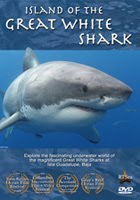
So, in a shameless plug, may I suggest Island of the Great White Shark. This award-winning documentary, which I produced in 2008, features the great white sharks of Isla Guadalupe, Baja, where I have been filming these magnificent predators/scavengers for over 6 years. The film paints a more realistic and natural portrait of the feared and often misunderstood white shark, while also documenting the efforts of dedicated researchers who study the sharks' day-to-day behaviors to better understand how best to protect and conserve them. The film also shows shark eco-tourism operators supporting the researchers' efforts while providing divers with a unique experience to see white sharks in the open ocean - something that has been responsible for generating many new shark supporters.

The Island of the Great White Shark DVD is available through Amazon.com and several aquarium gift shops nationwide. If you have purchased the DVD in the past, my thanks. If not, then learn more at the film's website and think about adding it to your DVD collection. Independent documentaries are generally not big money-makers for those involved - they usually are labors of love with participants dedicated to getting their message across. With Island of the Great White Shark, I am always hoping that someone will see these animals that are so critically important to a healthy marine ecosystem in a different light - one that will help to insure their continued survival.

Learn more at the Island of the Great White Shark website.
Learn more about the film at Amazon.com.

Tuesday, July 6, 2010

Disease Growth: as we alter the environment, watch out for the microbes

Increased levels of CO2 emissions, ocean acidification, melting polar ice - these are some of the major impacts of global warming, ones that have been brought up time and time again to warn us all of worldwide changes that need immediate corrective measures. But there are some very subtle changes also occurring; subtle and yet, if ignored, capable of delivering a measurable blow to terrestrial and marine life alike.

A recently published study highlighted one such change: expansion of fungal-based diseases in mammals. Now I know this sounds pretty obscure at first read and it certainly doesn't appear to have the attention-grabbing sensationalism of rising sea levels and increased hurricanes or tornadoes, but it does represent a real threat to many species including man.

Fungi can be a major pathogen for diseases in plants, insects, and amphibians. It does not usually pose a threat to mammals because of the complex immune systems and higher body temperature that all mammals regulate. In fact, in humans, fungi-borne diseases were not an issue until the late 20th century as a consequence of impaired immunity through medical intervention or HIV infection (in tropical Africa, there is a higher incidence of fungi-transmitted pathogens among AIDS patients because the warmer climate generates a greater variety of fungal carriers).

But the temperature gradient between most of the environment and a mammal's internal temperature acts as a protective barrier. With global warming that could all change. In the study by Monica Garcia-Solache and Arturo Casadevall in mBio magazine, the authors hypothesize that global warming will increase the geographical range of many fungi species and that these unique multi-celled organisms also have the potential for developing higher temperature tolerances, thereby thinning out the protective temperature gradient barrier between themselves and mammals.

And while we're on the subject of man-made environmental changes and disease, scientists are also looking at the ramifications to the environment from the use of phosphorous and nitrogen. There is a proper, ecologically-balanced level for these nutrients, but when it is artificially thrown out of whack, through fertilizing or waste pollution as examples, then the potential for emerging pathogens and/or diseases - including the West Nile virus, malaria, harmful algal blooms, coral reef diseases, and amphibian malformations - is magnified.

In a study published in Ecological Applications (Pieter T.J. Johnson, et al), the authors suggest that, "Interactions between nutrient enrichment and disease will become increasingly important in tropical and subtropical regions, where forecasted increases in nutrient application will occur in an environment rich with infections pathogens." They emphasize the importance of careful disease management in conjunction with anticipated continued global nutrient enrichment.

As we tamper with the earth, watch out for the big changes - but keep an eye on the little guys too.

Monday, July 5, 2010

Bottom Trawling: ROV used to study effects in California's soft sediment

Clear-cutting the Amazon that denudes acres of vital rain forest; strip mining that gouges deep into the hillside with discarded rubble filling valleys and streams - these are some of the industrial harvesting techniques that have a dubious if not villainous reputation with many conservationists and environmental scientists. In the oceans, bottom trawling has a similar reputation.

The technique of bottom trawling involves large nets that scrape along the ocean floor, catching bottom-dwelling fish and other animals like shrimp. The drawbacks to this technique are two-fold: there can be a tremendous amount of unwanted animals caught, known as bycatch, and the scouring motion can be very destructive to the ocean bottom, much like clear cutting and strip mining, leaving behind crumbled reef structures that took decades to build - a marine ecosystem totally disrupted, its recovery in question.

But a more prudent use of bottom trawling in soft, sandy bottom areas may be proved viable. At least that is the hope of fishermen along the Central California coast who are watching the ongoing efforts of researchers from the
California State University Monterey Bay in conjunction with the Nature Conservancy. They are conducting a three-year study to determine the long-term effect of bottom trawling on the soft sediment that makes up 70 percent of the Continental shelf along California.

In an area of 3.8 million acres that is currently listed as an "essential fish habitat" through an arrangement with the Nature Conservancy and the Pacific Fishery Management Council, tests are being conducted where a portion of the sea floor is bottom trawled and then 2 weeks later
an ROV does a fly-over to survey conditions, followed by a 6-month and one-year checkup. The use of the ROV provides a better picture of how the ocean floor is recovering and to document what interactions are taking place, compared to other sampling techniques.

“An ROV allows us to have our eyes underwater, looking at everything that’s going on.” said CSUMB professor James Lindholm said.

This research is confined to soft-sediment environments and Lindholm makes no projections as to what the final analysis and results, which are years away, will show.
“There’s just a handful of people doing trawl-related research worldwide and outside of really charismatic habitats, we don’t know very much,” said Lindholm. “If there’s one thing we’ve learned, it’s to not make any judgment based on what we see live when we’re flying over the bottom.”

But local fishermen are hoping that the research could help fisheries regulators develop management techniques that would allow limited bottom trawling in very specific areas.
“Fishermen have always said that grounds that are trawled are better fishing than non-trawled grounds — a lot of the organic nutrients get stirred up and reintroduced to the ecosystem,” said one local fisherman.

Bottom trawling will remain controversial as it has proven itself to be very destructive in many of the ocean environments where it has been used. Even with this ongoing California research, there is still the issue of bycatch - ranging from unwanted bottom creatures to open water animals like turtles and sharks. If the California studies show a sustainable level of recovery in soft sediment areas, there are still other serious ecological issues that must be addressed before regulators should endorse bottom trawling in any form.


Read more about this research in the High Country News.

Sunday, July 4, 2010

Eye of the Whale: entertaining fact-based novel with timely issues

The fact-based novel, much like a "based on a true story" film, is an interesting literary device - a cross between education and entertainment. When done right, meaning when the factual side is accurately portrayed, it can present information and issues (the non-fiction part) in the context of a personal human experience (the fictional part). This is something that non-fiction can sometimes miss, particularly when discussing science- or environmental-based issues.

There are many great examples. Carl Sagan's Contact, comes to mind, a novel combining present-day science in radio astronomy that then takes the reader a step beyond to our first contact with intelligent extra-terrestrial life. And that's the beauty of the fact-based novel, using facts to set the stage to then transport us to a fictional situation or premise that scientists may have actually dreamed of or bandied about over a couple of beers but would not openly propose without the research to actually support it.

Eye of the Whale, by Douglas Carlton Abrams (Atria Books) is just such a work - combining the topical issues of whale communication research, ocean pollution, and industrial/political influence to move the reader from what we know into what could be and, in so doing, takes us on an adventure with a dramatic ending and much to ponder as to our own future.

The story centers on Elizabeth, a young PhD candidate studying humpback whales and their songs in the Caribbean. Her research is in competition with local whalers and their paths cross in the opening act when, during a hunt, she detects a unique and abrupt change in the whales' communication. A baby whale is dying - not from a whaler's lance but from disease and this leads Elizabeth on both, a detective's investigation to find out what is causing whales worldwide to vocalize songs of concern for their offspring, and a crusade to save another humpback whale trapped in the brackish water far inland from San Francisco Bay - a whale that is trying to communicate an important message to its species and perhaps the world.

"Apollo swam northwest toward the summer feeding grounds - his long flippers not far from those of his two companions--
The three whales moved their flukes rhythmically and forcefully--their grace belying the extraordinary thrust of the broad tails propelling them onward--

Apollo could feel his companions by the lift and fall of water and the low sounds of the contact calls that groaned from within their great bodies--"


As Eye of the Whale unfolds, it lays a foundation of facts regarding whale intelligence, the insidious threat from chemical pollution and its impact on animals and man in even the most minute of quantities, and the multitude of players involved in maintaining the status quo for whaling and industrial chemical production. Abrams establishes a host of characters and locations with great detail and from there, the fictional novel takes over, culminating in Elizabeth literally fighting for her life - against those who are concerned as to what secrets she is uncovering - while racing against the clock to save the life of an important messenger whale.

The extent of Abrams research, with copious acknowledgments at the conclusion, is clearly evident and adds greatly to the believability of the story - an important component to any fact-based novel; the reader must be convinced of the factual foundation before any literary license is taken. And while some of the romantic dialog was a bit awkward at times, I found Eye of the Whale to be a riveting story, keeping one's attention to the end where the reader is left to ponder the real implications for the future that the story presents.

For lovers of whales, this book would certainly be an engaging read. However, and perhaps more importantly, if you have even a faint passing interest in environmental issues but resist those non-fiction works that sometimes seem to be factual digests of gloom and doom, then pick up Eye of the Whale. Every good yarn has a foundation of truth and Eye of the Whale accomplishes just that.

Available in hardcover, paperback, or Kindle from Amazon.

Thursday, July 1, 2010

China's Finless Porpoise: dwindling population faces extinction in Yangtze River

China's Yangtze River has been described as the "Asian Amazon" and, as seems to befall many large rivers in growing nations, it has seen its share of perils from urban development, commercial use, and industrial pollution. Unfortunately, many of the river's inhabitants pay the price - including the river's dwindling population of freshwater cetaceans.

The Baiji - a freshwater river dolphin with an unusual, elongated jaw/beak that roamed the Yangtze for tens of thousands of years - was declared extinct in 2007, eliminated from the planet in a matter of a few decades.

And now another rare dolphin species is facing a similar fate. As reported in the BBC Earth News, a new study published in the Marine Biology journal, says that the river's remaining population of finless porpoises are headed for extinction. The finless porpoise (so named because it lacks a dorsal fin) lives in the Yangtze, Yellow Sea, and South China Sea; and according to the study, there are genetic differences between the various populations. This would indicate that there is no co-mingling between the groups and this can add to their inability to withstand adverse changes to one group's environment.

This type of isolation and loss of mixing of the DNA gene pool is also what threatens land animal populations, like some of the wolf packs in the north central United States.

With everything from human waste and industrial chemical pollution, boat traffic, and commercial fishing taking place in the Yangtze River, the rapidly declining freshwater population of the finless porpoise - numbering less than 1,000 when last estimated in 2006 - will not survive without strong action on the part of the Chinese government.

The only hope is for a fundamental change in attitude in China regarding its aquatic natural resources. And there is some evidence of that which could produce results, hopefully before it is all too late.

While a major producer of CO2 emissions and the greatest exporter of seafood of any country, China is also realizing the environmental impact its economic growth is having on itself. The country is making sizable investments in alternative energy and, according to the Seafood Choices operational arm of SeaWeb, China's seafood distributors are beginning to show some interest in sustainability. Seafood Choices is holding seminars with seafood exporters in advance of a Sustainable Seafood Forum to be held in China this November.

Whether all of this will produce changes that will come in time to save the finless porpoise remains questionable at best. It is unfortunate that humans seem to be a reactionary species, responding to a tragedy that might spell a better future for some but leaving victims - like the Biaji and the finless porpoise - as reminders of what we could have done if only for a little foresight.

Read about the finless porpoise in BBC Earth News.
Read about SeaWeb/Seafood Choices progress in China.