skip to main |
skip to sidebar
 Back online after making a move of the RTSea Productions office (boy, is that ever temporary insanity or what? Boxes, cameras, furniture, computers . . . ugh!).
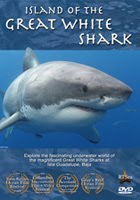
  Filming this week and back to shipping Island of the Great White Shark DVDs to Amazon and other distributors. Also, have some interesting projects coming up, but first, back to nature. New posts coming . . .
 Both, the Shark Divers and Beqa Adventures blogs picked up on this post from the Southern Fried Science, a South Carolina marine biology grad student. It's a disturbing look at supply and demand economics regarding fisheries and it bolsters my attitudes regarding the importance of developing successful aquaculture. Here's a portion of the post:
"The basic premise is that many fisheries are completely supply limited. Even if we were to reduce 90% of the demand for certain fish, the remaining demand would still be great enough to consume 100% of the supply. If 100 people all love grouper, but only 10 grouper are being produced at any given time, then even if you convinced 90 people to never eat grouper, the other ten would still eat the 10 grouper being produced, and nothing would change. I was surprised that it’s taken me this long to start understanding what that means."
This also relates to shark products, particularly regarding the dollar value that increases with their continuing scarceness, even with reduced consumer demand. You can read the entire post here.
 Let's have a little fun. Here's some interesting fun facts about our important and mysterious oceans:
- An estimated 50-80% of all life on earth is found under the ocean surface and the oceans contain 99% of the living space on the planet. Less than 10% of that space has been explored by humans. 85% of the area and 90% of the volume constitute the dark, cold environment we call the deep sea. The average depth of the ocean is 3,795 m (12,451 ft). The average height of the land is 840 m (2,756 ft).
- Currently, scientists have named and successfully classified over 1.5 million species. It is estimated that there are as little as 2 million to as many as 50 million more species that have not yet been found and/or have been incorrectly classified.
- The oceans cover 71% of the Earth's surface and contain 97% of the Earth's water. Less than 1% is fresh water, and 2-3% is contained in glaciers and ice caps.
- 90% of all volcanic activity occurs in the oceans.
- The pressure at the deepest point in the ocean is more than 11,318 tons/sq m, or the equivalent of one person trying to support 50 jumbo jets.
- Antarctica has as much ice as the Atlantic Ocean has water.
- Each year, three times as much rubbish is dumped into the world's oceans as the weight of fish caught.
- More refined oil reaches the oceans each year as a result of leaking automobiles and other non-point sources than the oil spilled in Prince William Sound by the Exxon Valdez.
- The swordfish and marlin are the fastest fish in the ocean reaching speeds up to 121 kph (75 mph) in quick bursts; the Bluefin Tuna may reach sustained speeds up to 90 kph (56 mph).
- Because the architecture and chemistry of coral is so similar to human bone, coral has been used to replace bone grafts in helping human bone to heal quickly and cleanly.
That's 10 reasons to protect, study, and preserve the oceans; our most precious natural resource and the cradle of our existence - past, present, and future.
Sources: Marinebio.org, Smithsonian Institution, Mote Marine Laboratory, US Geological Survey
 The issue of overturning many of the 11th hour steps taken by the previous U.S. administration that weakened environmental protections and regulations have been addressed several times in this blog in the past (Click here and here). But one of the big challenges we face is the tendency for government to procrastinate, stall, or stonewall acting on environmental or conservation issues until it is more convenient or financial feasible (as if nature is listening to our endless stream of rationales).
The Center for Biological Diversity(CBD) is focused on an upcoming deadline regarding a procedural process to undo crippling changes to the Endangered Species Act(ESA):
Dear Richard,
A crucial deadline is looming: By May 9, the Obama administration has to seize its opportunity to overturn last-minute Bush administration regulations that gut the Endangered Species Act, or it will miss the chance. The Bush rules exempt thousands of federal activities from review under the Endangered Species Act, and specifically exclude greenhouse gas emissions from regulation. If this administration doesn't withdraw those "extinction rules" by May 9, they will stay in effect -- a disaster for endangered species.
Congress specifically empowered Obama's secretaries of Commerce and Interior with the authority to overturn the Bush extinction regulations with the stroke of a pen. The secretaries of Commerce and Interior jointly administer the Endangered Species Act, with the National Ocean and Atmospheric Administration (under Commerce) responsible for marine species such as whales and sea turtles, and the U.S. Fish and Wildlife Service (in Interior) responsible for species such as wolves and polar bears.
While more than 80,000 people have written to Interior Secretary Ken Salazar demanding he revoke the Bush rules, Gary Locke has only recently been confirmed as secretary of Commerce and has yet to take a position on the issue. Similarly, Dr. Jane Lubchenco, the new head of the National Ocean Atmospheric Administration, has failed to take a public position on rescinding the extinction rules. Please contact Secretary Locke and Dr. Lubchenco and urge them to immediately revoke the Bush extinction regulations.
 The Endangered Species Act has served nature well for 35 years. And it's more important today than ever. Here's a link to a CBD web page where you can add your voice. Click here.
 California took a solid step today in dealing with reducing the state's carbon footprint with the state Air Resources Board voting 9-1 in favor of adopting new regulations for greenhouse gas emissions from fuel.
The regulation requires producers, refiners and importers of gasoline and diesel to reduce the carbon intensity of their fuel by 10% over the next decade. And it launches the state on an ambitious path toward ratcheting down its overall heat-trapping emissions by 80% by mid-century — a level that scientists deem necessary to avoid drastic global climate disruption.
 This is a first for any U.S. state and could set the standard worldwide. Regulations like this promote the development of alternative fuels, nudging the major energy companies to invest in greener alternatives like cellulosic ethanol made from trash, as opposed to the popular corn ethanol that is, in many ways, no better than petroleum-based fuels.
The regulation also is a positive step for entrepreneurs who are looking for new opportunities in alternative fuels. California will soon have its first cellulosic ethanol plant in Southern California's upper desert. The facility will process 170 tons of garbage a day to produce 3.7 million gallons of ethanol a year. Estimated cost per gallon: about $2, according to Arnold Klann of BlueFire Ethanol Fuels."California's low-carbon fuel standard is going to set the standard for the U.S. and, I expect, the standard globally," said Graeme S.S. Sweeney, a Shell executive vice president. "There will be a series of commercial-sized plants in the next five years. There will be different technologies. It will be good to see competition."
And that coming from one of the major energy/oil companies! I've always said that for energy companies to fully embrace a paradigm shift to alternative fuels, they will need to see the commercial advantage in it. Apparently, they are getting the message . . . and planet Earth should be the better for it.
 It's April 22nd, Earth Day has arrived. And while it might appear more as a public relations stunt than something more substantial, it does have value in focusing attention on important environmental and conservation issues of the day. What becomes equally, if not more, important than the event itself, is what we do the day after.
There will be various events taking place worldwide today and through the upcoming weekend. You can check out what's happening at several web sites:
Earth Day represents an opportunity for all of us to make a statement and then follow it up with sustained, proactive steps.
 Asian countries have often been the subject of conservation issues - ranging from illegal wildlife trade to overfishing to market demand for products from threatened or endangered species. And in many Asian nations, the rights of free speech and dissent are sometimes carefully monitored and controlled - and abused in the eyes of some.
Which is why I found this news item in the Australian online paper, Perth Now, interesting. (Read article.) The news was that a Singapore-based conservation organization, Animal Concerns Research & Education Society (ACRES), had recently held an anti-shark finning rally at Speaker's Corner, Singapore's only allowed venue for outdoor assemblies and demonstrations.
 It was particularly important because of ACRES's attempt to bring the issue directly to the people where the demand for shark fin products emanates. And it's a challenge because of the strong cultural history behind the use of these products.
"One of ACRES's supporters at the rally, physiotherapist Chng Chye Tuan, said he and his wife-to-be had decided against offering shark fin soup to guests at their wedding next month, despite opposition from both sets of parents."
 In reviewing the ACRES web site, I was impressed by the many animal issues the organization was taking on - not on an international level, but focused within Singapore. From animal treatment in zoos to protecting exotic or endangered animals like chimps, sharks, and tigers to even the humane treatment of pets, ACRES is trying to impress animal conservation and protection issues directly upon the Singapore people to change behavior and alter demand.
Bravo and best wishes for lasting success.
 Once again, because of lack of foresight combined with glaring local media coverage, shark ecotourism has taken another hit, this time as a local issue in Hawaii with implications that could impact responsible operators statewide.
In Maunalua Bay on the island of Oahu, a boat owner faced a room full of 200 angry residents protesting his proposed shark diving operation. With one man against an angry mob and news cameras at the ready, it was destined to be a one-sided argument (see story and video). After reading more articles to gather additional details, it would appear that there are two issues at work here.
First, the critics are citing the two common arguments in opposition to shark ecotourism: that the activity disrupts the natural feeding behavior of the sharks, thereby jeopardizing the sharks; and that the activity makes the sharks associate humans with food, thereby making humans a preferred food source.
Secondly, this brouhaha once again points to the importance of shark ecotourism operators to consider the conservation and political components of shark ecotourism, not just the commercial aspects. Better planning and solicited expert support on the part of the boat operator could have avoided all of this.
Okay, first issue: chumming/feeding disrupts the sharks' normal feeding behavior. Well, it's not that simple. First, there are several methods for attracting the sharks: using fish oil as a scent attractant, using ground or cut up fish, and/or using hang bait (for larger sharks) or feeding by hand (for smaller reef sharks). Secondly, what is the frequency? Several boats a day to the same location, feeding the same sharks day after day? Or occasional trips, sometimes dictated by seasonal shark migration patterns. And lastly, what shark species are we talking about? Feeding a white shark with 2-3 pound tuna or bonito scraps or feeding whole fish to small whitetip reef sharks?
There are many recognized shark researchers who will support the contention that, unless done with high frequency and volume, sharks will not become detrimentally dependent on the food sources of shark ecotourism operations. While I have my own personal and scientifically unsubstantiated concerns about some of the stingray tourist attractions that see a steady stream of visitors, my anecdotal experiences in filming great white sharks at Isla Guadalupe, as an example, indicate that the small hangbaits the sharks occasionally succeed in catching do not disrupt their normal predation of seals, sea lions, large tuna or floating carrion like dead whales. And again, there are recognized scientists that will back up that contention.
 The other criticism leveled is that shark ecotourism makes the sharks associate humans as a food source. This accusation plays on the fears the uninformed public has about sharks and once again there are experts who will debunk the myth. As a filmmaker, I have been exposed to sharks much more so than the typical cage-bound diver and I have yet to see a shark behave in a manner that says because of chumming/bait in the water it has re-programmed itself to select humans as a primary food source. Could a shark mistakenly bite a human in the presence of bait or some other attractant? Of course; mistaken identity is the cause behind the vast majority of shark-human interactions worldwide, regardless of shark ecotourism activities. In addition to my open ocean activities with sharks, I have spent over 8 years in aquarium settings feeding fish in the presence of sharks or feeding sharks specifically and never did I see the sharks make the A=B connection (food=humans) that critics propose.
One of the news articles cited a comment from a critic at the meeting who compared the situation to the dangers of feeding bears at Yellowstone Park. Apples and oranges. Mammalian intelligence is different from shark intelligence. Bears have a broader taste palette and due to their foraging through trash can develop a taste for the foods we eat - so they will tear apart a tent or rip off a car door to get at a bag of Famous Amos cookies or Oscar Mayer hot dogs. While it is true that bears can attack humans and even develop a taste for human flesh, that has not proven to be the case with sharks: we are not on their menu.
This takes us to the second major issue and the one that is at the crux of this incident. The boat operator failed because he did not have the foresight to see that shark diving is evolving into shark ecotourism - and with that evolution comes greater responsibility on the part of the operators regarding supporting and promoting safe protocols, providing conservation education, and considering the political/PR interactions with various factions (pro & con) and the media.
It would appear that the boat operator did not have all his ducks in a row and found himself up against a hostile crowd, totally unprepared and without any sound arguments or strategies. First, for any successful ecotourism operation there is site selection (as with any business: location, location, location). I'm not familiar with Maunaloa Bay, but perhaps it is not the best location for viewing sharks.  Human use density, shark biodispersion/density, dock facilities in relationship to other tourist activities (politics) - all have to be considered beforehand. And consideration must be given as to the species of sharks the operation intends to attract and the methods by which it will be done. Next, getting the support from recognized experts to counter the arguments mentioned earlier. Followed by developing relationships with local conservation, scientific, and community groups regarding educational opportunities and providing logistical support for scientific study. All has to be done before you put out your shingle and the first cage is lowered into the water.
All of this might seem to be a pain in the rear to someone who just wants to cash in on the growing shark craze but, sorry, that's where we are at today. The pure adrenaline adventure of seeing a shark is being supplanted by the opportunity to be enlightened to the beauty and importance of these animals which are vital to a healthy marine ecosystem. That's the difference between shark diving and shark ecotourism. And for the sharks, this extra burden of responsibility is a good thing.
An important sidebar to this entire incident has to do with an unfortunate loophole in the Magnuson-Stevens Fishery Conservation and Management Act which prescribes some very important marine conservation regulations but, as often is the case with other legislation, was subject to amendments which generate loopholes.  From 3 miles (beyond state regulated waters) to 200 miles offshore, the Act limits shark feeding to only harvesting or research. In other words, if you want to hook and either catch or release a shark, baiting/chumming is okay. But if you only want to observe and appreciate the shark, baiting/chumming is illegal. Shark ecotourism operators therefore must either operate illegally, or hook a shark (which runs counter to its conservation position), or insure that there is some valid research taking place on each boat trip.
How this loophole might be corrected is of major importance to all shark ecotourism operators in Hawaii and conceivably elsewhere. What the shark ecotourism operators need to do is to come together and agree on a set of responsible protocols regarding their operations, safety, conservation education, research support, and public relations so that they can present a unified position, backed by sound arguments and expert support, to local, state, and federal politicians and decision-makers. This may be asking a lot of local small businessmen, but it is what they are now faced with.
As a filmmaker, I have seen the advantages of responsible shark ecotourism in promoting shark conservation to the benefit, not the expense, of both sharks and people. I do not have a personal financial interest in any shark ecotourism operation but, as someone with a media and marketing background, I am willing to put my opinions forward as to the future direction of shark ecotourism. The real tragedy in all of this is what is happening to sharks populations right now worldwide. Responsible shark ecotourism can be one component in combating the slaughter of tens of millions of sharks.
 When discussing shark conservation, we typically focus on what could be called the "micro" or personal/public issues: shark finning, demand for shark fin soup and other shark products. These are important hot button issues that have emotional impact on the individual and can impact public demand. But there are also "macro" big picture issues that require action on the part of governments and/or commercial operations. Here are a few:
According to the Australian Journal of Agriculture and Resource Economics, illegal foreign fishing for sharks in Northern Australia has increased substantially over the last two decades. Not only has this affected the overall shark populations in the area, but it has possibly impacted the legal prawn, shark, and other fisheries due to altered predation patterns. Government intervention and enforcement is needed to protect both the sharks and the legal commercial fisheries.
 When we think of Asian demand for shark products, we often think of Asian commercial fishing fleets supplying that demand. Not always so. Ecuador is one nation that meets the demand but the extant of its efforts have been seriously under-reported over the years (if reported at all), escaping the attention, until recently, of the United Nations Food and Agriculture Organization (FAO). A study in Environmental Sciences reconstructs Ecuador's shark catch from 1979 to 2004 and puts the total at an estimated 7000 tons per year or nearly 500,000 sharks - 3.6 times greater than the FAO reported for 1991 to 2004. Ecuador has been hiding a dirty little secret.
Pelagic longline fishing (PLL) has been roundly criticized by many conservation groups because of, among other things, its level of accidental bycatch - much of which can consist of sharks. In the U.S. Atlantic, PLL has a strong impact on blue shark populations along with other species. An article in Reviews of Fish Biology and Fisheries examined this situation and studied, among other issues, the negative economic and operational impacts of shark bycatch in the form of damage to fishing gear, bait, and complications in shark management. It was determined that it was in the best interest of all stakeholders in the Atlantic to explore methods to reduce shark bycatch. Once again, finding an economic advantage is often the best way to motivate government or commercial decision-makers to respond to conservation issues.
Promoting these macro issues is where many responsible NGOs come in - organizations like Oceana, Seaweb, Center for Biological Diversity, and others. Many of these groups are based in Washington D.C. and other worldwide centers of political power and influence where they focus their efforts and resources towards taking the fight right to the top.
 I was reading through several scientific articles on geoengineering
.
Lots of big words and science jargon to stumble over, but I found it both fascinating and a bit alarming.
In a nutshell, geoengineering is the use of techniques and/or processes that alter some of the normal geological processes that nature has devised. As it relates to climate change, this is different than taking steps to reduce CO2 emissions (which we should continue to do regardless). Instead or in addition to, the attempt is made to counteract the ecosystem's reaction to the various influences that contribute to climate change. It's a bit like taking medicine to treat symptoms as opposed to preventive medicine - like taking a cold medication to alter your body functions to hopefully better fight the cold (symptomatic) as opposed to staying warm and eating right to avoid getting the cold in the first place (preventative).
Some of the approaches being considered range from seeding the stratosphere with certain sulfate aerosols that will counteract the global temperature change, or using seawater particles to seed maritime clouds which would "scrub" more heat-generating CO2 out of the atmosphere, to fertilizing select areas of the ocean with iron that would stimulate phytoplankton blooms which would capture and retain more CO2.
These are all very ambitious and large-scale concepts, but some scientists feel that this is what will be needed. There are those who feel that the global ecosystem has been pushed beyond its self-regulating capabilities to maintain the current status quo and will shift to a new status quo that will have drastic implications for life on this planet - and that this new condition will last for centuries or longer regardless of our immediate success in reducing greenhouse gases. Therefore, geoengineering is needed to either possibly prevent the shift or alter the effects of the new shift.
On the one hand, it all sounds very fascinating and illustrates some of the necessary forward-thinking that we need from our scientific community. But at the same time, the research is very new, does not have much baseline scientific study or modeling behind it, and there are a host of possible or unforeseen complications - just like the side effects of any medication.
It's interesting to read about but alarming to think that we have gotten ourselves to a point where such grandiose solutions must be considered.

 Back online after making a move of the RTSea Productions office (boy, is that ever temporary insanity or what? Boxes, cameras, furniture, computers . . . ugh!).
  Filming this week and back to shipping Island of the Great White Shark DVDs to Amazon and other distributors. Also, have some interesting projects coming up, but first, back to nature. New posts coming . . .